Key takeaways:
- Essential vet vocabulary includes 動物病院 (dōbutsu byōin, “animal hospital”), 診察 (shinsatsu, “examination”), and 予防接種 (yobō sesshu, “vaccination”), which you need before walking through the door.
- Describing a pet’s symptoms accurately requires specific Japanese verb forms and body-part vocabulary that general phrasebooks never cover.
- Vet visits in Japan follow a predictable pattern (reception, examination, diagnosis, payment), and knowing the phrases for each stage removes most of the stress.
- Practicing vet-visit role-plays with a Japanese tutor helps you answer urgent questions about symptoms, timing, appetite, stool, and medication without searching for words.

Find Your Perfect Teacher
Practice how to go to the veterinarian in japanese with a Japanese tutor who can correct pronunciation, phrasing, listening speed, and natural replies in real time.

Why vet visits in Japan require specific vocabulary
General Japanese conversation skills may not be enough at a vet clinic. The vocabulary is specific, the questions come quickly, and the stakes feel high because your pet cannot explain what hurts. You need words for body parts, symptoms, timing, treatment, and cost before you walk in.
Vets may ask detailed questions about eating habits, stool, energy, and when the symptoms started. If you can answer clearly, the appointment becomes less stressful and the vet gets better information.
The good news: vet visits follow a clear, repeatable structure. Once you learn the phrases for each stage, you can reuse them every time. This article breaks down those stages with the exact Japanese words and sentences you need.
This is a good situation for live practice because apps rarely cover pet symptoms in enough detail. A Japanese language tutor can act as the receptionist or vet and make you answer follow-up questions out loud before a real appointment.
Core vocabulary for a Japanese veterinary visit
Before learning full sentences, build the word bank you will hear and use at every appointment. These terms fall into four groups: places and people, animals, body parts, and common conditions.
Places and people
| Japanese | Reading | English |
|---|---|---|
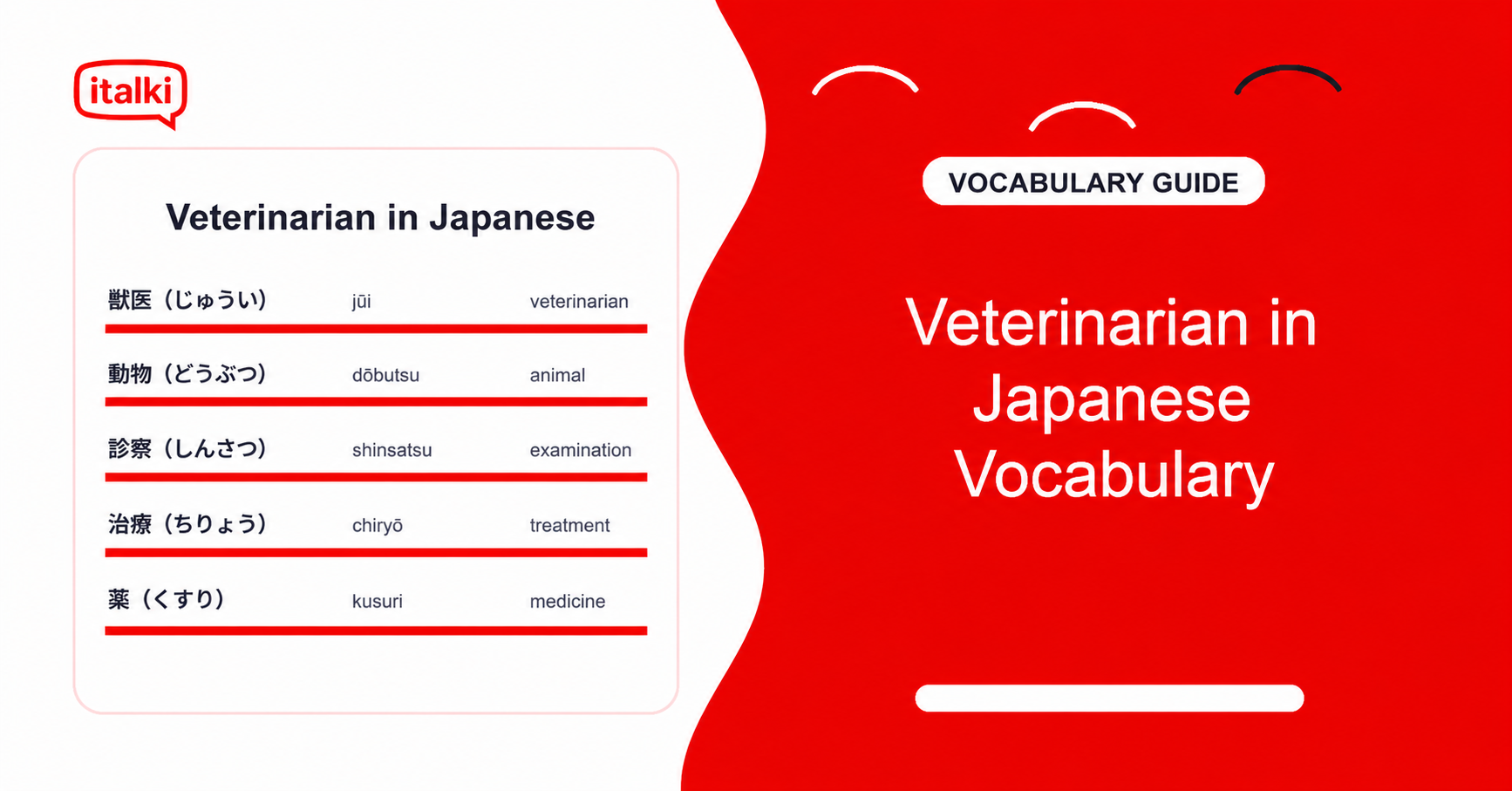
| 動物病院 | dōbutsu byōin | animal hospital / vet clinic |
| 獣医 | jūi | veterinarian |
| 受付 | uketsuke | reception desk |
| 待合室 | machiaishitsu | waiting room |
| 診察室 | shinsatsushitsu | examination room |
Animals
| Japanese | Reading | English |
|---|---|---|
| 犬 | inu | dog |
| 猫 | neko | cat |
| うさぎ | usagi | rabbit |
| ハムスター | hamusutā | hamster |
| 鳥 | tori | bird |
Body parts (for animals)
| Japanese | Reading | English |
|---|---|---|
| 目 | me | eye |
| 耳 | mimi | ear |
| 口 | kuchi | mouth |
| お腹 | onaka | stomach / belly |
| 足 | ashi | leg / paw |
| しっぽ | shippo | tail |
| 皮膚 | hifu | skin |
Common conditions and symptoms
| Japanese | Reading | English |
|---|---|---|
| 下痢 | geri | diarrhea |
| 嘔吐 | ōto | vomiting |
| 食欲不振 | shokuyoku fushin | loss of appetite |
| かゆみ | kayumi | itchiness |
| 腫れ | hare | swelling |
| 咳 | seki | cough |
| 元気がない | genki ga nai | lacking energy / lethargic |
| 血便 | ketsuben | bloody stool |
Memorizing these words gives you a foundation, but the useful step is turning them into sentences: “My dog has diarrhea,” “My cat has not eaten since yesterday,” or “There is swelling near the ear.” A private Japanese tutor can drill those symptom sentences until they come out without hesitation.
Find Your Perfect Teacher
Practice how to go to the veterinarian in japanese with a Japanese tutor who can correct pronunciation, phrasing, listening speed, and natural replies in real time.
How to make an appointment and check in
Most vet clinics in Japan accept walk-ins, but calling ahead is common, especially for non-emergency visits. Here is a basic phone script.
Making an appointment by phone:
- 予約をお願いしたいのですが。(Yoyaku o onegai shitai no desu ga.) “I would like to make an appointment.”
- 猫の診察をお願いしたいです。(Neko no shinsatsu o onegai shitai desu.) “I would like an examination for a cat.”
- 今日、空いていますか? (Kyō, aite imasu ka?) “Are you available today?”
- 何時がいいですか? (Nanji ga ii desu ka?) “What time works?”
When you arrive, the reception desk will hand you a 問診票 (monshin-hyō, “medical questionnaire”). This form asks for the pet’s name, species, breed, age, weight, vaccination history, and reason for the visit. Filling it out in Japanese is manageable once you know what each field asks.
Common fields on the questionnaire:
- ペットの名前 (petto no namae) “pet’s name”
- 種類 (shurui) “species”
- 犬種・猫種 (kenshu / nekoshu) “breed”
- 年齢 (nenrei) “age”
- 体重 (taijū) “body weight”
- 来院理由 (raiin riyū) “reason for visit”
- ワクチン接種歴 (wakuchin sesshu-reki) “vaccination history”
If a form field stumps you, saying すみません、これは何ですか? (Sumimasen, kore wa nan desu ka? “Excuse me, what is this?”) works perfectly. Clinic staff in Japan are used to helping, and most will point or explain patiently.
Reading these forms requires comfort with Japanese hiragana, since instructions often mix hiragana with kanji.
If forms make you nervous, search for an online Japanese tutor and practice a mock 問診票 before the appointment. Bring your pet’s age, breed, vaccination history, and symptoms so the practice matches your real situation.
How to describe your pet’s symptoms in Japanese
This is the hardest part of the visit, and where preparation matters most. The vet will ask どうしましたか? (Dō shimashita ka? “What happened?” / “What brings you in?”). The answer needs to be specific.
Template sentence: [time expression] + から + [pet] + が + [symptom verb/phrase].
This structure means “Since [time], [pet] has been [symptom].”
Example sentences:
- 昨日から犬が何も食べません。(Kinō kara inu ga nani mo tabemasen.) “Since yesterday, the dog hasn’t eaten anything.”
- 二日前から猫が吐いています。(Futsuka mae kara neko ga haite imasu.) “The cat has been vomiting since two days ago.”
- 今朝から元気がないです。(Kesa kara genki ga nai desu.) “Since this morning, the pet has been lethargic.”
- 右の前足を引きずっています。(Migi no maeashi o hikizutte imasu.) “The pet is dragging its right front leg.”
- 耳をずっと掻いています。(Mimi o zutto kaite imasu.) “The pet keeps scratching its ear.”
- お腹にしこりがあります。(Onaka ni shikori ga arimasu.) “There is a lump on its belly.”
Time expressions you will need:
- 今朝 (kesa) “this morning”
- 昨日 (kinō) “yesterday”
- 三日前 (mikka mae) “three days ago”
- 先週 (senshū) “last week”
- さっき (sakki) “just now / a little while ago”
Follow-up questions the vet may ask:
- いつからですか? (Itsu kara desu ka?) “Since when?”
- 食欲はありますか? (Shokuyoku wa arimasu ka?) “Does it have an appetite?”
- 水は飲んでいますか? (Mizu wa nonde imasu ka?) “Is it drinking water?”
- 便の状態はどうですか? (Ben no jōtai wa dō desu ka?) “How is its stool?”
- 他に気になることはありますか? (Hoka ni ki ni naru koto wa arimasu ka?) “Is there anything else you are concerned about?”
Answering these follow-up questions accurately is where many learners freeze. Knowing the vocabulary is only half the challenge. The other half is hearing the question at natural speed and forming a response before the pause gets awkward.
Find Your Perfect Teacher
Practice how to go to the veterinarian in japanese with a Japanese tutor who can correct pronunciation, phrasing, listening speed, and natural replies in real time.
Understanding the vet’s diagnosis and treatment instructions
After the examination, the vet will explain what they found and what happens next. This part moves fast, and it is normal to miss words. Here are the phrases you are most likely to hear.
Diagnosis phrases:
- 特に問題はありません。(Toku ni mondai wa arimasen.) “There is no particular problem.”
- アレルギーの可能性があります。(Arerugī no kanōsei ga arimasu.) “There is a possibility of an allergy.”
- 感染症かもしれません。(Kansenshō kamo shiremasen.) “It might be an infection.”
- レントゲンを撮りましょう。(Rentogen o torimashō.) “Let’s take an X-ray.”
- 血液検査をしましょう。(Ketsueki kensa o shimashō.) “Let’s do a blood test.”
- 手術が必要です。(Shujutsu ga hitsuyō desu.) “Surgery is needed.”
Treatment instructions:
- 薬を出します。(Kusuri o dashimasu.) “The vet will prescribe medicine.”
- 一日二回、食後に飲ませてください。(Ichinichi nikai, shokugo ni nomasete kudasai.) “Give it [the medicine] twice a day, after meals.”
- エリザベスカラーをつけてください。(Erizabesu karā o tsukete kudasai.) “Please put on an Elizabethan collar (cone).”
- しばらく安静にしてください。(Shibaraku ansei ni shite kudasai.) “Please keep it resting for a while.”
- 一週間後にまた来てください。(Isshūkan-go ni mata kite kudasai.) “Please come back in one week.”
If you do not catch something, use these phrases:
- もう一度お願いします。(Mō ichido onegai shimasu.) “One more time, please.”
- ゆっくり話していただけますか? (Yukkuri hanashite itadakemasu ka?) “Could you speak more slowly?”
- 書いていただけますか? (Kaite itadakemasu ka?) “Could you write it down?”
That last phrase is especially useful. If the vet writes the instructions down, you can check them later or bring them to a tutoring session for review.
Vet clinics may use polite or formal language in explanations. Familiarity with Japanese honorifics makes these interactions less confusing, especially when a simple instruction sounds longer than expected.
Run through diagnosis and treatment phrases out loud with a Japanese language instructor. Focus on the phrases you cannot afford to miss: medicine frequency, side effects, follow-up timing, and when to come back urgently.
Talking about costs, medication, and follow-up visits
Pet care in Japan is not covered by national health insurance, so costs come out of pocket unless the owner has pet insurance (ペット保険, petto hoken). Asking about cost upfront is completely normal and not considered rude.
Useful cost and payment phrases:
- だいたいいくらかかりますか? (Daitai ikura kakarimasu ka?) “About how much will it cost?”
- お会計はいくらですか? (Okaikei wa ikura desu ka?) “What is the total?”
- クレジットカードは使えますか? (Kurejitto kādo wa tsukaemasu ka?) “Can I use a credit card?”
- 領収書をお願いします。(Ryōshūsho o onegai shimasu.) “A receipt, please.”
Medication-related phrases:
- この薬の飲ませ方を教えてください。(Kono kusuri no nomase-kata o oshiete kudasai.) “Please explain how to give this medicine.”
- 副作用はありますか? (Fukusayō wa arimasu ka?) “Are there side effects?”
- 薬が残っていますが、続けた方がいいですか? (Kusuri ga nokotte imasu ga, tsuzuketa hō ga ii desu ka?) “There is medicine left over. Should the pet keep taking it?”
Scheduling a follow-up:
- 次はいつ来ればいいですか? (Tsugi wa itsu kureba ii desu ka?) “When should the next visit be?”
- 来週の火曜日に予約できますか? (Raishū no kayōbi ni yoyaku dekimasu ka?) “Can an appointment be made for next Tuesday?”
Being comfortable with Japanese numbers helps when processing costs and dosage amounts on the spot. Prices, dates, and medicine frequency often come in the same conversation.
Practice vet-visit Japanese with a tutor
Reading phrases on a screen is useful, but a vet visit adds pressure. Your pet may be uncomfortable, the vet is asking questions, and you need to answer clearly instead of translating word by word.
Working with a tutor turns these phrases into reflexes. A tutor can play the receptionist, the vet, and the pharmacist. They can ask unexpected follow-up questions about stool, appetite, water intake, energy, or medication, then correct your answer while the situation is still fresh.
This kind of specific role-play also builds conversational Japanese that holds up under pressure because you practice the exact questions you may hear.
A tutor can also review a 問診票 (monshin-hyō) form with you, including breed names in katakana, vaccination history, and past illnesses. Search for Japanese tutors for beginners if this is your first time using medical vocabulary, or look for a tutor experienced in helping pet owners living in Japan.
Ready to handle your next vet visit in Japanese?
Knowing vet vocabulary and symptom descriptions before walking into a 動物病院 helps you give clearer information when your pet needs care. Every phrase in this article becomes more usable after practicing it out loud with someone who can correct pronunciation and simulate follow-up questions about appetite, stool, medication, and energy.
Before the appointment, run through a full vet-visit role-play with a Japanese teacher, from the phone call to the pharmacy counter.
Find Your Perfect Teacher
Practice how to go to the veterinarian in japanese with a Japanese tutor who can correct pronunciation, phrasing, listening speed, and natural replies in real time.
FAQ
Do Japanese vet clinics have English-speaking staff?
Most small clinics do not have English-speaking staff. Clinics in major cities like Tokyo or Osaka occasionally have bilingual vets, but this is uncommon. Bringing prepared phrases or a written description of the pet’s symptoms in Japanese is the safest approach.
What should someone bring to a vet appointment in Japan?
Bring the pet’s vaccination records (ワクチン手帳, wakuchin techō), any previous medical records, and a residence card or ID. If the pet is on medication, bring the packaging or a photo of the label so the vet can check for interactions.
How do vet costs work in Japan?
Veterinary care in Japan is not covered by national health insurance, so all costs are out of pocket unless the owner carries private pet insurance (ペット保険). Prices vary widely between clinics and procedures. Ask だいたいいくらかかりますか? (Daitai ikura kakarimasu ka?) at the start of the visit to get an estimate before treatment begins.
Can pet insurance be used at any vet clinic in Japan?
Most major pet insurance providers are accepted at a wide range of clinics. Check with the clinic beforehand by asking ペット保険は使えますか? (Petto hoken wa tsukaemasu ka? “Can pet insurance be used here?”). Some clinics process the discount automatically at the register; others require filing for reimbursement later.
What is the difference between 獣医 and 動物病院?
獣医 (jūi) refers to the veterinarian, the person. 動物病院 (dōbutsu byōin) refers to the animal hospital or clinic, the place. You go to the 動物病院 to see a 獣医.
Want to learn a language at italki?
Here are the best resources for you!