Key takeaways:
- Spanish is one of the easiest languages for English speakers thanks to shared alphabet, cognates, and similar grammar.
- The biggest challenge isn’t learning Spanish. It’s speaking it confidently in real conversations.
- Common challenges like verb conjugations and fast speech can be overcome with consistent, focused practice.
- Daily speaking and listening are essential. Choose real conversation practice instead of passive study.
- italki helps you learn faster by connecting you with native Spanish tutors for personalized lessons, real-time feedback, and consistent speaking practice.
Learning Spanish for English speakers is easier than it may seem. For native English speakers, Spanish is often one of the easiest languages to learn because it uses the same alphabet, shares thousands of similar words, and follows many familiar grammar patterns.
Still, learning Spanish takes consistent effort. For most people, the hardest part is not understanding the basics but speaking the language with confidence.So if you’re considering learning Spanish or have just started, this article is for you.
I’m a language teacher and native English speaker who learned Spanish myself, so I know what it takes. I’ll break down the pros and cons of learning Spanish. I’ll also detail the best ways to get started, from finding Spanish tutors for English speakers to practical speaking tricks.

Find Your Perfect Teacher
Your Spanish doesn’t have to sound like a textbook. Get personalized lessons from native tutors who’ll help you speak naturally, not just correctly.
Book a trial lesson
Is Spanish easy to learn for English speakers?
Yes, Spanish is considered easy to learn for English speakers. The two languages share key similarities in their alphabets, vocabularies, and even parts of their grammar. Thanks to all this, the Foreign Service Institute classifies Spanish as a Category I language (the easiest to learn) Foreign Service Institut.
English and Spanish both use the Latin alphabet. This is a huge advantage because if you can read English, you can already read Spanish. You’ll need to pick up the right pronunciation and learn some nuances like accent marks. But this is all teachable with a little time and patience.
The Spanish language is also largely phonetic, meaning words are pronounced the way they’re written. So once you learn the sounds of each letter, you’ll be able to read any new words you encounter.
English and Spanish also have thousands of similar words, called cognates. For example, class – clase, animal – animal, and nation – nación. With a little context, you can probably figure out the meaning of cognates. So chances are, you already know thousands of Spanish words without even realizing it.
Finally, Spanish grammar shares some familiar structures with English, especially when compared to more distant languages like Japanese or Arabic. Sentence patterns, verb usage, and overall structure often feel intuitive, even if there are new rules to learn.
That said, “easy” doesn’t mean effortless. Spanish learners still need to know pronunciation rules, new vocabulary, and sentence structures to use the language. And how long it takes to learn Spanish ultimately depends on your strategy and dedication.
Want to make the learning process even smoother? With guided support in your native language, you’ll learn even faster. Try Spanish classes for English speakers today.
Find Your Perfect Teacher
Your Spanish doesn’t have to sound like a textbook. Get personalized lessons from native tutors who’ll help you speak naturally, not just correctly.
Book a trial lesson
Is Spanish hard to learn for English speakers?
No, Spanish is not hard to learn for English speakers, but it does come with some challenges.
Here are the main difficulties, along with ways to handle them:
Verb conjugations
Spanish verbs change based on tense and the subject (I, you, he/she, etc.), which is very different from English. For example, “to speak” becomes hablo, hablas, habla, and so on. This can feel overwhelming because there are many forms to learn.
The best approach? Don’t try to memorize full conjugation charts all at once. Start with the most common verbs and tenses (present, past, future). Practice them in real sentences. With enough repetition, they’ll begin to stick naturally.
Gender and agreement
In Spanish, nouns have gender (masculine or feminine), and adjectives must match. This doesn’t exist in English, so it takes getting used to.
The key here is to always learn new nouns with their article (el or la). Usually, el is masculine and la is feminine, which gives you a clue which adjective to use. Over time, these patterns will become more natural.
Pronunciation and regional accents
Spanish pronunciation is fairly consistent, but it’s still different from English. Sounds like the rolled r or the soft d can be tricky. On top of that, accents vary widely depending on the Spanish speaking country someone is from.
Focus on communication, not perfection. Pick one accent to get comfortable with. Find a Spanish tutor from that Spanish speaking country and practice speaking. You’ll start to learn their pronunciation and replicate it.
Fast, connected speech
Even if you understand written Spanish, spoken Spanish can feel super fast. Spanish speakers often speak fast, but it sounds even faster for beginners. They also blend words, drop sounds, and use slang.
The trick here is to build speed gradually. Listen to slow, clear Spanish first, then gradually increase speed. Pair listening with transcripts/Spanish subtitles so you can connect what you hear to what you see.
Vocabulary differences across regions
Spanish is one of the best languages to learn because it’s so widely spoken. But some everyday words change depending on the region. And different countries often have different Spanish dialects.
For this issue, stick to neutral, widely understood Spanish vocabulary first. As you advance, you can adapt your vocabulary based on the Spanish speaking country you plan to visit. A native Spanish teacher can help you navigate regional differences and build vocabulary that fits where you’re headed. Find a Spanish tutor today.
Find Your Perfect Teacher
Your Spanish doesn’t have to sound like a textbook. Get personalized lessons from native tutors who’ll help you speak naturally, not just correctly.
Book a trial lesson
Best ways to learn Spanish as an English speaker

The best ways to learn Spanish as an English speaker are through consistent, daily exposure and practice. Even better if that practice is with a native speaker who can offer guidance and feedback.
Here are some of the most effective ways for English speakers to learn Spanish:
- Take private lessons with a Spanish tutor for English speakers. This works well because they know how to explain Spanish in ways that make sense to you. You also get targeted feedback in real time as you practice. On top of that, these tutors understand the common mistakes English speakers make when learning Spanish.
- Focus on high-frequency vocabulary and cognates. Learn basic Spanish words and cognates before moving on to advanced or niche vocabulary. Focusing on the most-used words means you’ll be able to communicate more easily.
- Listen to Spanish every day. The more exposure you get to the language, the more familiar it becomes. You start picking up sounds, then words, then whole phrases with context. So play music or podcasts, watch Spanish movies, or check out the best TV shows to learn Spanish (use English subtitles until you feel comfortable).
- Speak in Spanish every day. Just like listening, Spanish speaking skills improve with practice. You can narrate your morning routine, sing along with music, or repeat after characters in a Spanish movie. However, real conversations with native speakers, like italki’s Spanish teachers, help you improve faster.
- Review grammar and verbs repeatedly. Tools like flashcards or apps help you review verb conjugations and grammar patterns frequently. This is especially useful for English speakers, who aren’t used to conjugating verbs as much. Consistent review helps you remember these rules.
The takeaway? Stay consistent and start speaking early. To achieve this, book a trial lesson with a Spanish tutor for English speakers.
Recommended reading: How to learn practical Spanish online for real-life conversations
Find Your Perfect Teacher
Your Spanish doesn’t have to sound like a textbook. Get personalized lessons from native tutors who’ll help you speak naturally, not just correctly.
Book a trial lesson
How italki helps English speakers learn Spanish faster
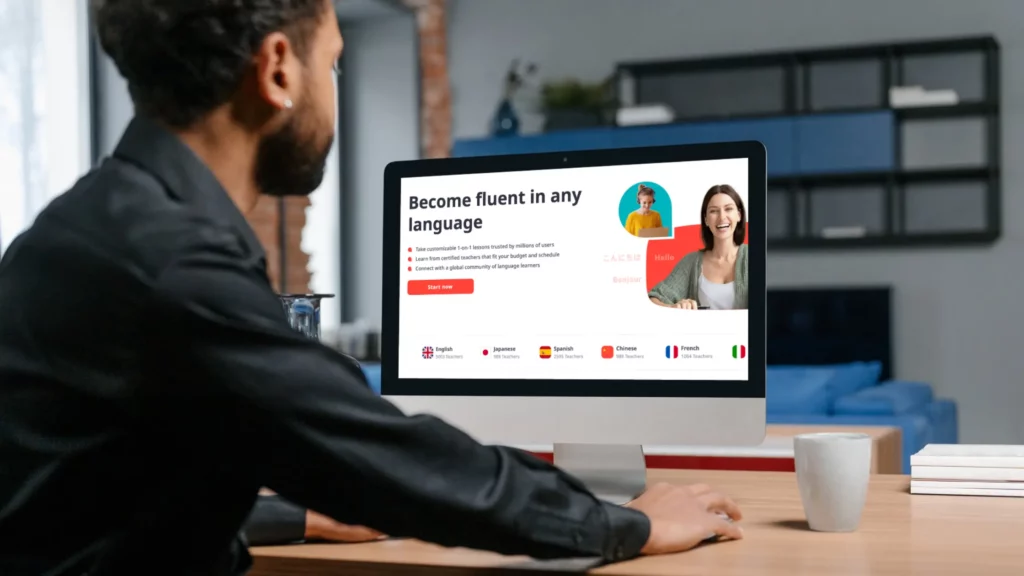
italki connects English speakers directly to native Spanish tutors for one-on-one, personalized lessons, so you get real practice, real feedback, and real progress.
This means you get:
- Real speaking practice. Many learners study foreign languages for months but struggle to actually use it. On italki, you start speaking Spanish from day one through real conversations with guided feedback, building confidence and fluency faster.
- Personalized, one-on-one lessons. No more generic lessons that don’t suit your needs. italki’s private classes means you can focus on your needs and weak points. Lessons move at your pace.
- Experienced teachers. With self-study, it’s hard to know where to begin and if you’re making any real progress. But tutors have experience and training. They know exactly how to take you from beginner to advanced as quickly as possible.
- Native tutors understand Spanish cultures. Using expressions and slang incorrectly? It’s hard to tell with self-study. But a native tutor can teach you the cultural nuances of the Spanish language.
- Instant feedback and corrections. Prerecorded Spanish lessons and language learning apps won’t catch all your mistakes. But italki’s tutors offer instant feedback and corrections. This prevents bad habits from forming and helps you improve faster.
Want to speed up the language learning process? Book a trial lesson with a native Spanish tutor
Ready to speak Spanish fluently?
Learn Spanish faster with personal guidance from expert online Spanish tutors trusted by over 10 million learners worldwide. Book a trial lesson today.
Find Your Perfect Teacher
Your Spanish doesn’t have to sound like a textbook. Get personalized lessons from native tutors who’ll help you speak naturally, not just correctly.
Book a trial lesson
FAQs
What is the best way to learn Spanish if you speak English?
The best way to learn Spanish if you speak English is to take personalized lessons with a native teacher. With tailored classes, you learn much faster than you would with self-study, group lessons, or language learning apps. Start Spanish lessons for English speakers for extra language support.
How long does it take an English speaker to learn Spanish?
With 1 hour of daily study, English speakers can learn Spanish within a year Spanish.sg. They won’t become fluent in this time, but can progress from beginner (A1) to elementary (A2) or intermediate (B1). They should be comfortable talking about simple, everyday topics.
How many Spanish words do English speakers already know?
English speakers already know about 20,000 Spanish words thanks to cognates. Frontiers in Education. These words sound similar in both languages. When you hear these new vocabulary words, you can probably understand them based on their English cognates.
What is the hardest part of Spanish for English speakers?
For most English speakers, the hardest part of Spanish is using the language in everyday situations. Most Spanish language classes are fairly rote. You complete repetitive exercises, but lack real world language skills. italki bridges this gap by connecting you to native Spanish tutors online for real world practice.
Want to learn a language at italki?
Here are the best resources for you!