Key takeaways:
- Fluent in Spanish means B2 on the CEFR scale, meaning you can hold a conversation on everyday topics without falling apart.
- Most English speakers need about 550 to 700 hours to reach B2.
- The number one reason Spanish learners stall is spending all their time studying and none of it speaking.
- Regular one-on-one speaking practice with a native Spanish speaker is the most direct route to B2-level fluency.
- Spanish is one of the easiest languages for English speakers to learn, thanks to its shared vocabulary and familiar grammar structures.
If you want to know how to become fluent in Spanish, here is the short version: stop waiting until you feel ready, and start speaking. Over 500 million people speak Spanish as a first or second language, making it the fourth most spoken language on the planet Ethnologue.
For English speakers, it is also one of the more approachable new languages to pick up, with a familiar alphabet, predictable sentence structure, and thousands of words that carry across from English.
This guide is for people who want to speak Spanish fluently, not just get by with a phrasebook. That means following native speakers at normal speed, holding real conversations on any topic, and never having to pause mid-sentence to piece together what you want to say.
We will cover what fluency looks like at each level of the CEFR (the international scale used to measure language ability), how long it realistically takes, why most learners stall, and what the research says about the fastest path forward.
Over 10 million learners worldwide trust italki to go from studying Spanish to speaking it. Book a trial lesson with a Spanish tutor and take your first real step toward achieving fluency.

Find Your Perfect Teacher
Your Spanish doesn’t have to sound like a textbook. Get personalized lessons from native tutors who’ll help you speak naturally, not just correctly.
Book a trial lesson
What is considered fluent in Spanish?
Fluent in Spanish is most commonly defined as B2 on the CEFR scale. At B2, you can discuss familiar and unfamiliar topics, follow native Spanish speakers in most situations, and express yourself clearly without stopping to translate in your head.
Here is how each level breaks down:
| CEFR level | What it looks like in practice | Approx. study hours |
| A1–A2 (Beginner) | Greetings, simple questions, basic phrases | 90–200 hours |
| B1–B2 (Intermediate) | Hold conversations on everyday topics, travel independently | 350–600 hours |
| C1–C2 (Advanced/Fluent) | Near-native range and spontaneity in any situation | 700–1,000+ hours |
Actual time varies depending on your native language, study method, and the amount of speaking practice in your routine.
Most learners set B2 as their Spanish fluency target. At C1, the Spanish language starts to feel instinctive. Responses come without conscious effort, and you no longer feel the pull to default to your native language mid-sentence.
Fluency does not mean speaking without errors. Native speakers make grammatical errors in their own language all the time. What it means, practically, is being able to communicate your meaning, recover when a conversation takes an unexpected turn, and keep going without grinding to a halt.
Not sure which CEFR level you are at? Most learners misjudge their level by one or two bands and end up practicing the wrong things. Connect with Spanish tutors on italki and get a clear read on where you stand and what to prioritize next.
Find Your Perfect Teacher
Your Spanish doesn’t have to sound like a textbook. Get personalized lessons from native tutors who’ll help you speak naturally, not just correctly.
Book a trial lesson
How difficult is it to become fluent in Spanish?
Spanish is not a difficult language for English speakers to learn. The Foreign Service Institute places Spanish in Category I, its easiest language group, alongside Italian and Portuguese, and well below Category IV languages like Arabic, Mandarin, or Japanese. Foreign Service Institute
English speakers need approximately 550 to 700 classroom hours to reach professional working proficiency in Spanish, roughly a third of the 2,200 hours required for Category IV languages. If you are already learning a Romance language like French or Portuguese, the timeline shortens further, since the overlapping grammar structures and shared Latin vocabulary carry across.
A significant reason Spanish moves quickly for English speakers is cognates. English and Spanish share an estimated 30 to 40 percent of their vocabulary in similar form Colorín Colorado. Words like “hospital”, “natural”, “conversation”, and “important” carry the same meaning in both languages, which means a learner arriving at their first lesson already knows hundreds of Spanish words.
The areas that require real work are verb conjugations (Spanish has more tense and mood variations than English) and noun gender, where every noun is masculine or feminine. These follow consistent rules, and most learners internalise the common patterns within a few months of regular speaking practice.
The key is not waiting until the rules are memorized before starting to speak. Holding back until your Spanish grammar feels perfect is one of the most common reasons Spanish learners take twice as long to reach B2 as they need to. Understanding how to learn Spanish grammar is less about memorizing rules and more about recognising patterns through regular speaking practice.
Grammar rules are easier to internalize through conversation than through drilling conjugation tables alone. Spanish teachers correct your errors mid-sentence, explain the rule in context, and help the correct pattern replace the incorrect one.
Learn Spanish online and start building the right patterns from day one.
Find Your Perfect Teacher
Your Spanish doesn’t have to sound like a textbook. Get personalized lessons from native tutors who’ll help you speak naturally, not just correctly.
Book a trial lesson
How long does it take to become fluent in Spanish?
Learners who practice consistently for one to two hours per day typically reach B2-level conversational Spanish within one to two years. The timeline depends on two things: total hours invested, and the proportion of those hours spent speaking rather than studying passively.
| Study hours per day | Target level | Estimated timeline |
| 1 hour/day | B2 (conversational) | Around 2 years |
| 2 hours/day | B2 (conversational) | Around 1 year |
| 3+ hours/day | C1 (fluent) | 9–12 months |
These figures assume active, output-focused practice: speaking, writing, and getting real-time corrections. Passive exposure adds value but does not move the timeline at the same rate. Your learning style also plays a role: learners who do 30 minutes of consistent practice daily tend to retain more than those who cram two hours on a weekend and do nothing in between.
The single factor that drives progress most reliably is regular conversation with a native Spanish speaker. Spanish tutoring sessions are particularly effective because the feedback is specific to your mistakes, not generic grammar points from a course covering the same content for every learner.
Most learners study Spanish consistently but speak it infrequently, which is why progress stalls around B1. italki lets you book speaking sessions with a native tutor at whatever frequency fits your schedule, so speaking becomes a regular habit rather than an occasional effort. A lot depends on how you structure your time, and how long it takes to learn Spanish comes down to one variable more than any other: how much of it you spend speaking.
Find a Spanish online tutor and make speaking a habit that moves your progress forward.
Why most learners never reach fluency
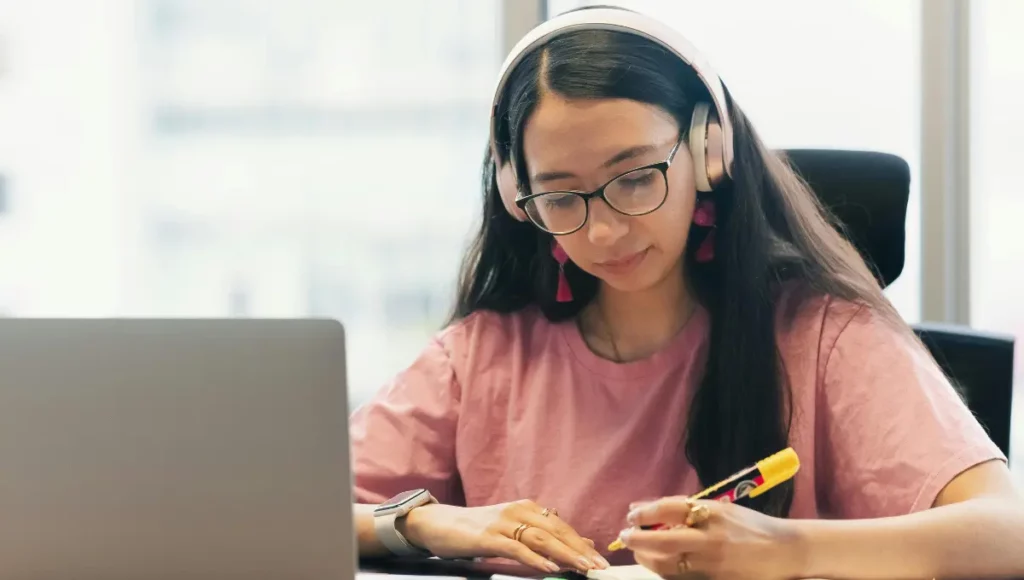
The reason most Spanish learners never reach fluency is simple: they study the language but never speak it.
Recognizing Spanish and producing it are two different skills. Passive study (vocabulary lists, grammar exercises, reading) trains your brain to decode the language. Speaking trains it to retrieve and form Spanish on the spot, under time pressure, with no script. Only one of those builds the skill you need in a conversation.
Without regular speaking practice, learners end up with strong reading and listening ability but no real capacity to respond. They understand what is being said. They just cannot say anything back.
Here are the patterns that keep learners stuck at the same level for months:
- Apps are useful for vocabulary and grammar drills, but they do not replicate the unpredictability of a real conversation.
- Spending months on grammar before attempting to speak means speaking ability falls months behind reading level before it even starts.
- Reaching for Google Translate at the first sign of difficulty builds a dependency that prevents retrieval skills from developing.
- Having no tutor or language partner means speaking practice never makes it onto the schedule.
The way out is straightforward: get into real conversations early, make mistakes in front of someone who can correct them, and treat speaking as non-negotiable. Studying Spanish in isolation builds knowledge. A Spanish teacher builds the conversational ability that self-study alone cannot.
Book Spanish lessons online and have your first real conversation today.
How to get fluent in Spanish quickly
The learners who reach B2-level Spanish fastest tend to share three habits: they speak from early on, they practice consistently, and they spend time with the Spanish language outside of formal study.
Speak Spanish from day one
Don’t wait until you feel ready. Every stumble, pause, or mistake helps your brain build the pathways needed to recall words and phrases faster.
Most learners overthink the starting point. Knowing how to speak Spanish from day one is less about preparation and more about getting into your first real conversation.
Practice every day, even for 20 minutes
Daily practice of 20 to 30 minutes outperforms a two-hour session once a week in terms of long-term retention. Languages are acquired through spaced repetition: repeated exposure to the same words and patterns across multiple sessions spread over time.
Missing three or four days in a row means your brain starts to lose access to what it consolidated in the previous session.
Focus your Spanish vocabulary where it counts
Knowing the 2,000 most frequent words in a language covers around 80 percent of the words you will encounter in everyday text and conversation Lextutor. Start your vocabulary acquisition there, focusing on high-frequency words that come up in conversations about work, travel, food, and relationships.
Learn new words in complete sentences not isolated lists. This provides grammatical context, helping your brain store and retrieve vocabulary correctly. Prioritize practical, everyday Spanish words over trying to memorize everything at once.
Build your Spanish listening comprehension deliberately
Native speakers talk fast, drop syllables, and use regional expressions that do not appear in textbooks. The most effective approach is content that sits just above your current level, specifically material you can mostly follow, with enough unfamiliar elements to push you.
For A2 to B1 learners, that means slow-paced Spanish podcasts and beginner TV series with Spanish subtitles. For B1 to B2 learners, native-speed podcasts, news broadcasts, and Spanish films with Spanish subtitles work well.
Using Spanish subtitles rather than English ones keeps your brain processing in the target language rather than defaulting to your mother tongue each time something is unclear. The best resources for learning Spanish are not always the most popular ones, but they are the ones that get you speaking sooner.
Build Spanish into the hours you already have
Increase the number of hours your brain spends processing Spanish without adding formal study time. Here are some of the best ways to learn Spanish you can easily incorporate:
- Switching your phone or social apps to Spanish
- Listening to Spanish music or podcasts during commutes
- Watching Spanish TV or YouTube with subtitles
- Writing a short Spanish journal daily
- Repeating phrases from your last lesson during routine tasks
This keeps Spanish active in your memory and complements your structured learning
Work with a native Spanish speaker one-on-one
Regular one-on-one sessions with a native Spanish speaker produce the fastest speaking gains of any study method. A native speaker models natural rhythm, intonation, and phrasing. These are the elements of spoken Spanish that grammar books do not capture.
They also respond to what you say, so you practice handling the unpredictability of a real conversation rather than rehearsing prepared sentences.
Contrary to what most language courses suggest, the easiest way to learn Spanish is not the one with the most structure, it is the one that gets you into real conversations fastest.
If you want to accelerate your learning, practice with a real person. An online Spanish tutor can adapt conversations to your level, correct mistakes as they happen, and help you build confidence speaking naturally.
Over 10 million learners use italki to get speaking time they cannot get from apps or textbooks alone. Find Spanish tutors online and book your first lesson today.
Find Your Perfect Teacher
Your Spanish doesn’t have to sound like a textbook. Get personalized lessons from native tutors who’ll help you speak naturally, not just correctly.
Book a trial lesson
How italki helps you speak Spanish and reach fluency faster
Most Spanish learners have no shortage of resources. What they are missing is someone to speak with. That is the gap italki fills.
Here’s how italki helps you speak Spanish online and reach fluency faster:
- Real conversation practice. italki matches you with a native Spanish speaker for one-on-one lessons online, so you can practice speaking on a schedule that works for you.
- Tailored lessons for your needs. Every session is customized to your Spanish level, language learning goals, and the skills that need the most improvement.
- Affordable lessons. With Spanish lessons starting around $4, two to three weekly speaking lessons are realistic for consistent practice
- Flexible scheduling. Book lessons around your week so speaking practice stays part of your routine, even when life gets busy.
- Personalized teaching approach. Tutors adjust each session based on what you know and what you need, ensuring every lesson moves you forward.
- Clear explanations in English when needed. English-speaking learners can find Spanish tutors for English speakers, who explain concepts in English when needed, making lessons easier to follow.
Learn Spanish faster with personal guidance from expert online Spanish tutors trusted by over 10 million learners worldwide. Book a trial lesson today.
Find Your Perfect Teacher
Your Spanish doesn’t have to sound like a textbook. Get personalized lessons from native tutors who’ll help you speak naturally, not just correctly.
Book a trial lesson
FAQ
How many months does it take to be fluent in Spanish?
With 1 hour of active practice per day, most English speakers reach B2 conversational Spanish in 18–24 months. With 2 hours per day, including at least 3 weekly hours speaking with a native Spanish speaker, fluency can be reached in about 12 months. The key factor is speaking practice, not total study time.
How can I learn Spanish without immersion?
You do not need to move abroad. Switch your phone and apps to Spanish, watch Spanish TV series with Spanish subtitles, listen to native-speed Spanish podcasts daily, and keep a short Spanish journal. Most importantly, speak regularly with native Spanish tutor online, which replicates the key benefits of immersion.
What is the best way to become conversational in Spanish?
Start speaking as early as A1, even if you don’t feel ready. Pair 2–3 weekly sessions with a native Spanish tutor. Grammar exercises help, but real conversations and feedback are what move learners from A2 to B2.
Want to learn a language at italki?
Here are the best resources for you!