Key takeaways
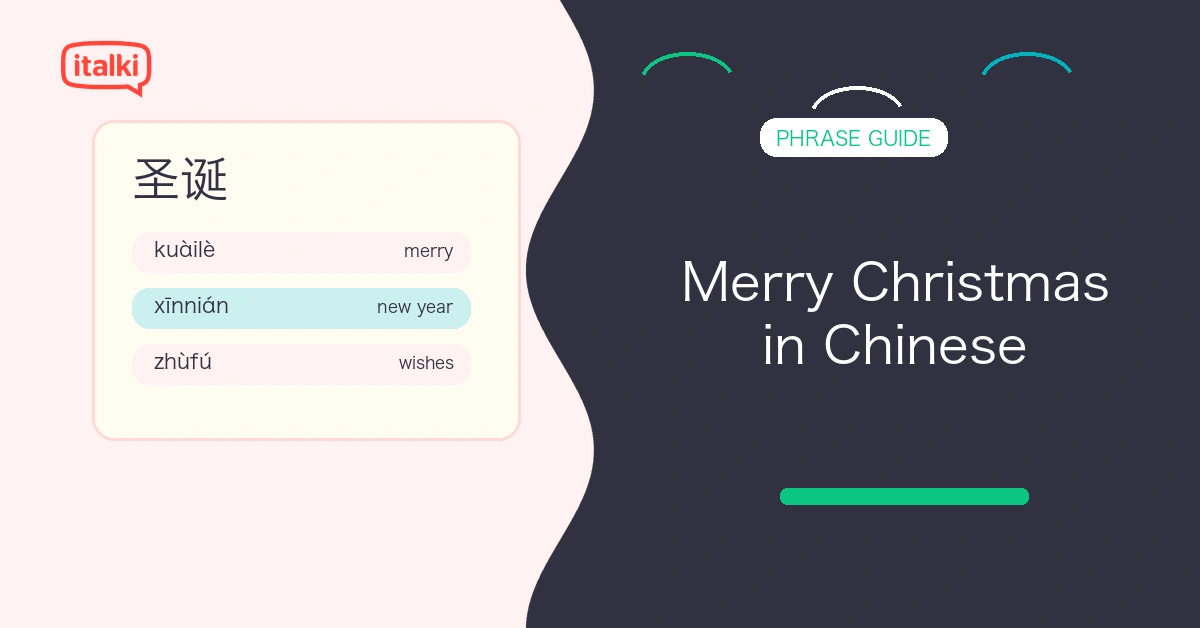
- Merry Christmas in Mandarin Chinese is 圣诞快乐 (Shèngdàn kuàilè). The characters mean holy birth happy: 圣诞 (shèngdàn) refers to Christmas and 快乐 (kuàilè) means happy. This is the standard greeting across all Mandarin-speaking contexts.
- In Cantonese (spoken in Hong Kong, Guangdong province, and by many overseas Chinese communities), Merry Christmas is 聖誕快樂 (sing3 daan3 faai3 lok6). The characters are the same as Mandarin but the pronunciation is completely different, and Cantonese uses Traditional Chinese characters.
- Christmas is widely celebrated as a commercial and social holiday in major Chinese cities, Taiwan, Hong Kong, Singapore, and among Chinese diaspora communities worldwide, though it is not an official public holiday in mainland China. Hong Kong observes Christmas Day and Boxing Day as public holidays.
- Christmas and the Lunar New Year (春节, Chūnjié) are often wished for together at the end of the calendar year. The phrase 圣诞新年快乐 (Shèngdàn Xīnnián kuàilè, Merry Christmas and Happy New Year) is a standard combined greeting for this period.
Christmas in Chinese-speaking contexts looks different from country to country. In mainland China, it is primarily a commercial holiday centered on shopping, gifts, and restaurant outings. In Hong Kong and Taiwan, it carries more of the traditions familiar from Western celebration.
Understanding this context helps you use Christmas vocabulary appropriately for the specific Chinese-speaking person or context you are communicating with.
Knowing the right greeting at the right time is a form of cultural fluency that native speakers notice immediately. italki connects you with Chinese teachers from mainland China, Taiwan, Hong Kong, and other Chinese-speaking communities who can explain the cultural layer behind these greetings and when each is most appropriate.
This guide covers how to say Merry Christmas in both Mandarin and Cantonese, key Christmas vocabulary, seasonal greetings, and the phrases used in messages, cards, and conversation during the Christmas season.
A Mandarin Chinese tutor can walk you through the seasonal greetings calendar in Chinese, from Christmas through the Lunar New Year, so your holiday vocabulary is complete and culturally appropriate.

Find your perfect teacher
Build real speaking confidence with personalized lessons from a teacher who matches your goals, schedule, and learning style.

Merry Christmas in mandarin Chinese
| Chinese | Pinyin | English |
|---|---|---|
| 圣诞快乐 | Shèngdàn kuàilè | Merry Christmas |
| 圣诞节快乐 | Shèngdànjié kuàilè | Happy Christmas Day (slightly more formal) |
| 祝你圣诞快乐 | zhù nǐ Shèngdàn kuàilè | Wishing you a Merry Christmas |
| 祝您圣诞快乐 | zhù nín Shèngdàn kuàilè | Wishing you (formal/respectful) a Merry Christmas |
| 节日快乐 | jiérì kuàilè | Happy Holidays / Happy Festival |
| 圣诞节到了! | Shèngdànjié dào le! | Christmas is here! |
Breaking down 圣诞快乐:
- 圣 (shèng) = holy, sacred
- 诞 (dàn) = birth
- 快 (kuài) = fast, quick (in this compound: happy)
- 乐 (lè) = joy, happiness
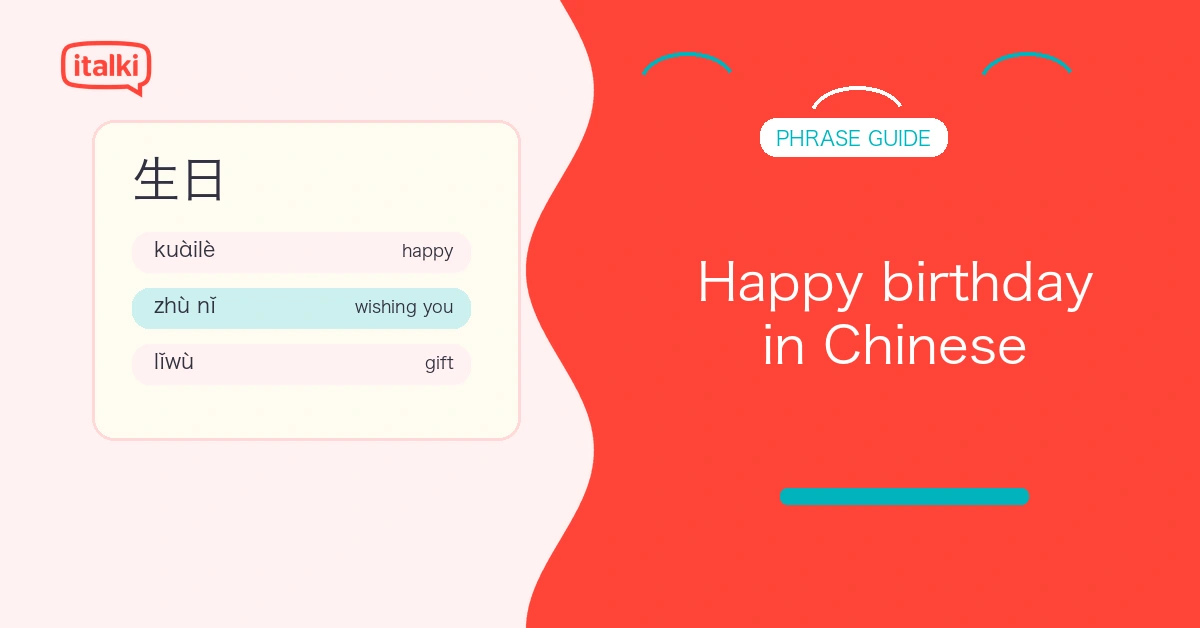
The greeting 快乐 (kuàilè) appears in many Chinese celebration phrases: 生日快乐 (shēngrì kuàilè, Happy Birthday), 新年快乐 (xīnnián kuàilè, Happy New Year). Learning it once makes all the holiday greetings systematic. For the full birthday vocabulary that shares this same structure, the guide to happy birthday in Chinese covers birthday greetings, wishes, and cultural customs alongside the 快乐 pattern.
Merry Christmas in cantonese
Cantonese (广东话, Guǎngdōnghuà in Mandarin; 廣東話, Gwong Dung Waa in Cantonese) is spoken primarily in Hong Kong, Guangdong province in mainland China, Macau, and by many overseas Chinese communities in Southeast Asia, North America, and the UK.
| Cantonese characters | Jyutping | English |
|---|---|---|
| 聖誕快樂 | sing3 daan3 faai3 lok6 | Merry Christmas |
| 聖誕節快樂 | sing3 daan3 zit3 faai3 lok6 | Happy Christmas Day |
| 祝你聖誕快樂 | zuk1 nei5 sing3 daan3 faai3 lok6 | Wishing you a Merry Christmas |
| 節日快樂 | zit3 jat6 faai3 lok6 | Happy Holidays |
Characters note: Cantonese uses Traditional Chinese characters (繁體字, fántǐzì). For 圣诞快乐 (Simplified), the Traditional equivalent is 聖誕快樂: the meaning and the characters are the same, but the writing system differs. If communicating in writing with Hong Kong contacts, Traditional characters are appropriate.
A Chinese tutor from Hong Kong can teach you the Cantonese pronunciation and cultural context behind these greetings, which are distinct from Mandarin in ways that go beyond vocabulary alone.
Find your perfect teacher
Build real speaking confidence with personalized lessons from a teacher who matches your goals, schedule, and learning style.
Christmas vocabulary in Chinese
| Chinese | Pinyin | English |
|---|---|---|
| 圣诞节 | Shèngdànjié | Christmas (the holiday) |
| 圣诞老人 | Shèngdànlǎorén | Santa Claus (literally Christmas old person) |
| 圣诞树 | Shèngdàn shù | Christmas tree |
| 圣诞礼物 | Shèngdàn lǐwù | Christmas gift |
| 圣诞袜 | Shèngdàn wà | Christmas stocking |
| 圣诞卡 | Shèngdàn kǎ | Christmas card |
| 圣诞装饰 | Shèngdàn zhuāngshì | Christmas decorations |
| 驯鹿 | xùnlù | reindeer |
| 雪橇 | xuěqiāo | sleigh |
| 雪人 | xuěrén | snowman |
| 平安夜 | Píng’ān yè | Christmas Eve (literally peaceful/safe night) |
| 圣诞节那天 | Shèngdànjié nà tiān | Christmas Day |
| 节日气氛 | jiérì qìfēn | festive atmosphere |
平安夜 (Píng’ān yè, Christmas Eve): This is a particularly interesting term. 平安 means peace and safety, the same wish that gives the apple its gift-giving meaning around Christmas. Christmas Eve is widely celebrated in mainland China as a night for exchanging apples (平安果, píng’ān guǒ, peace fruit) and going out with friends. For the fruit vocabulary and cultural associations behind this tradition, the guide to fruits in Chinese covers the symbolic meanings that make certain fruits appropriate gifts in different contexts.
Christmas wishes and messages
These phrases are suitable for greeting cards, text messages, and in-person conversations.
| Chinese | Pinyin | English |
|---|---|---|
| 祝你圣诞节和新年都过得愉快! | Zhù nǐ Shèngdànjié hé xīnnián dōu guò de yúkuài! | Wishing you a happy Christmas and New Year! |
| 愿你度过一个温暖的圣诞节! | Yuàn nǐ dùguò yīgè wēnnuǎn de Shèngdànjié! | May you have a warm Christmas! |
| 圣诞节快乐,新年更美好! | Shèngdànjié kuàilè, xīnnián gèng měihǎo! | Merry Christmas, and may the New Year be even better! |
| 愿这个节日带给你喜悦和幸福。 | Yuàn zhège jiérì dài gěi nǐ xǐyuè hé xìngfú. | May this holiday bring you joy and happiness. |
| 感谢你一年来的支持,圣诞快乐! | Gǎnxiè nǐ yī nián lái de zhīchí, Shèngdàn kuàilè! | Thank you for your support throughout the year, Merry Christmas! |
| 在这特别的日子里,送上最诚挚的祝福。 | Zài zhè tèbié de rìzi lǐ, sòng shàng zuì chéngzhì de zhùfú. | On this special day, sending the most sincere wishes. |
| 希望你和家人共度温馨的圣诞节。 | Xīwàng nǐ hé jiārén gòng dù wēnxīn de Shèngdànjié. | Hope you and your family have a warm Christmas together. |
Find your perfect teacher
Build real speaking confidence with personalized lessons from a teacher who matches your goals, schedule, and learning style.
Christmas and New Year combined greetings
The end of December through early January spans Christmas and the Western New Year. In Chinese, these are often wished together.
| Chinese | Pinyin | English |
|---|---|---|
| 圣诞新年快乐 | Shèngdàn Xīnnián kuàilè | Merry Christmas and Happy New Year |
| 新年快乐 | Xīnnián kuàilè | Happy New Year (Western/solar calendar) |
| 春节快乐 | Chūnjié kuàilè | Happy Spring Festival (Lunar New Year) |
| 新年快乐,万事如意! | Xīnnián kuàilè, wànshì rúyì! | Happy New Year, may everything go as you wish! |
| 恭喜发财 | Gōngxǐ fācái | Wishing you prosperity (primarily Lunar New Year) |
Note on New Year greetings: The Western New Year (元旦, Yuándàn, January 1) and the Lunar New Year (春节, Chūnjié, date varies) are both important but distinct. 新年快乐 can be used for both; 恭喜发财 is specifically for the Lunar New Year context.
Cultural context: how Christmas is celebrated
Mainland China: Christmas is not a public holiday. It is primarily a commercial event in major cities, with shops, restaurants, and shopping malls decorated from late November. Young people often go out with friends on Christmas Eve. The tradition of giving apples (平安果, píng’ān guǒ, peace fruit) on Christmas Eve is uniquely Chinese.
Hong Kong: Christmas Day (December 25) and Boxing Day (December 26) are public holidays. Christmas is more traditionally celebrated here than in mainland China, with religious services, family gatherings, and decorations in public spaces.
Taiwan: Christmas is not a public holiday but is commercially celebrated. Western-influenced Christmas traditions coexist with local cultural practices.
Overseas Chinese communities: Practices vary widely depending on the community’s region of origin and the country of residence. Cantonese-speaking communities in North America and the UK often celebrate Christmas in both Chinese and local cultural traditions.
Find your perfect teacher
Build real speaking confidence with personalized lessons from a teacher who matches your goals, schedule, and learning style.
Practice seasonal Chinese with a teacher
Seasonal greetings in Chinese are tied to cultural context that varies significantly between Mandarin and Cantonese speakers, and between mainland China, Hong Kong, Taiwan, and diaspora communities. Getting this right requires more than vocabulary memorization.
Tens of millions of learners have used italki to connect with Chinese teachers who explain the cultural nuances behind language choices. Book a trial lesson and ask your teacher to walk you through the holiday greeting calendar in Chinese: Christmas, Lunar New Year, and the greetings appropriate for each, so your seasonal Chinese is accurate and culturally informed.
Find your perfect teacher
Build real speaking confidence with personalized lessons from a teacher who matches your goals, schedule, and learning style.
FAQ
How do you say Merry Christmas in Mandarin Chinese?
Merry Christmas in Mandarin is 圣诞快乐 (Shèngdàn kuàilè). The characters mean holy birth happy: 圣诞 (shèngdàn) is Christmas and 快乐 (kuàilè) is happy. For a slightly more formal version, use 圣诞节快乐 (Shèngdànjié kuàilè).
How do you say Merry Christmas in Cantonese?
In Cantonese, Merry Christmas is 聖誕快樂, written sing3 daan3 faai3 lok6 in Jyutping. The characters are the Traditional Chinese equivalents of the Simplified Mandarin 圣诞快乐, but the pronunciation is completely different. Cantonese and Mandarin share characters but are distinct spoken languages.
How do you say Merry Christmas in Mandarin Chinese as a full sentence?
A complete wish is 祝你圣诞快乐 (zhù nǐ Shèngdàn kuàilè), meaning Wishing you a Merry Christmas. For someone older or in a formal context, use the respectful 您 (nín) instead of 你 (nǐ): 祝您圣诞快乐 (zhù nín Shèngdàn kuàilè).
Is Christmas celebrated in China?
Christmas is widely observed as a commercial and social holiday in major Chinese cities, particularly among young people and in shopping areas. It is not an official public holiday on the mainland. Hong Kong observes Christmas Day and Boxing Day as public holidays. The cultural significance varies greatly between mainland China (primarily commercial), Hong Kong (more traditionally celebrated), and Taiwan.
What is the Chinese word for Christmas Eve?
Christmas Eve in Chinese is 平安夜 (Píng’ān yè), literally peaceful night or safe night. The 平安 (píng’ān) component, meaning peace and safety, connects to the tradition in mainland China of gifting apples on Christmas Eve, since 苹 (píng) in apple (苹果) sounds like 平 in 平安.
Want to learn a language at italki?
Here are the best resources for you!