Ever watched a Fashion Week livestream and felt completely lost when the commentators started throwing around fashion vocabulary like “atelier” and “toile”? Or scrolled through fashion Instagram and wondered what exactly makes something “dopamine dressing” versus “quiet luxury”?
You’re not alone. Fashion has its own language, and it can feel intimidating when you’re trying to follow along.
Here’s the good news: once you understand the vocabulary, everything clicks. You can follow runway shows with confidence, describe exactly what you want while shopping in English, and talk about style without defaulting to “that flowy thing” or “those baggy pants.”
This A–Z guide breaks down 200+ fashion terms you’ll actually use, from basic clothing items and fabrics to neckline names, fashion movements, and the industry jargon that pops up during Fashion Week.
Whether you’re a fashion obsessive, learning English and want to talk about style, or just tired of nodding along when people use words you don’t know, this guide is for you.
With personalized help from an English tutor, you’ll be talking about fashion confidently in no time.
Browse the terms by letter
A | B | C | D | E | F | G | H | I | J | K | L | M | N | O | P | Q | R | S | T | U | V | W | X | Y | Z
What vocabulary is used to talk about fashion?
A
A-Line – You know that dress shape that’s fitted on top and flares out toward the bottom? That’s an A-line. It literally looks like the letter A. Super flattering on pretty much everyone because it skims over your hips and thighs without clinging.
Accessories – The things you add to complete an outfit: bags, jewelry, scarves, belts, hats, sunglasses. Sometimes the accessories make the whole look.
Activewear – Workout clothes, but let’s be honest, half the time we’re wearing them to run errands, not to actually exercise. Think yoga pants, sports bras, running shorts, and those fancy leggings with the mesh panels.
Aesthetic – Your overall vibe or style direction. Everyone’s got an aesthetic, even if they don’t realize it. Some people are all about that minimalist aesthetic, others are maximalist, vintage, grunge… you get the idea.
Androgynous – When you can’t tell if something’s meant for men or women, and that’s the whole point. Androgynous style mixes traditionally masculine and feminine pieces; think tailored blazers, button-ups, and clean lines without being specifically “for” any gender.
Anorak – A pullover waterproof jacket with a hood. The kind that has a half-zip instead of zipping all the way down. Originally for outdoor stuff but now just as common in streetwear.
Appliqué – When you sew pieces of fabric onto another piece to make a pattern or design. It’s like a fabric collage that adds texture and detail to clothes.
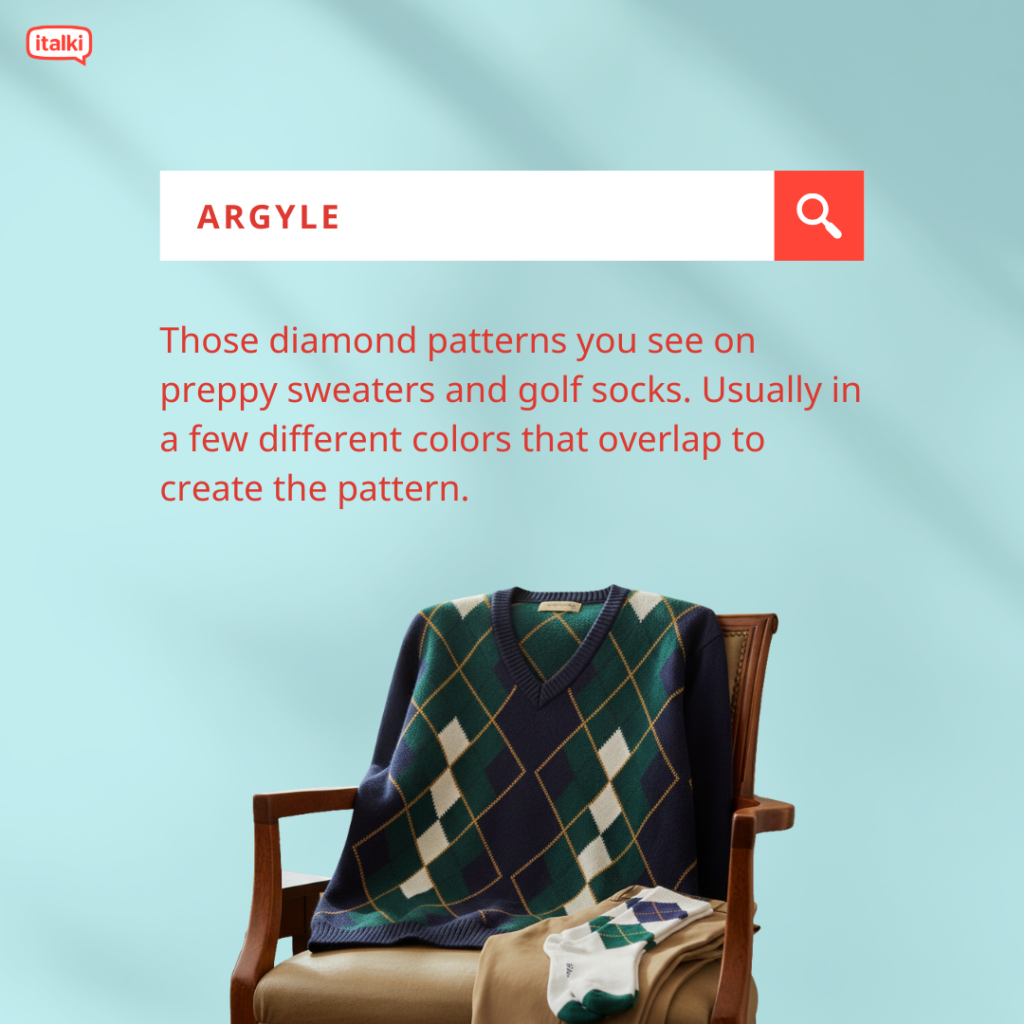
Argyle – Those diamond patterns you see on preppy sweaters and golf socks. Usually in a few different colors that overlap to create the pattern.
Atelier – Fancy French word for a designer’s workshop where they actually make the clothes. This is where the magic happens in haute couture.
Athleisure – When athletic clothes became acceptable everyday wear. Basically wearing your gym outfit to brunch and nobody bats an eye. Leggings with a nice top? That’s athleisure.
B
Bateau Neckline (Boat Neck) – A wide neckline that goes straight across from shoulder to shoulder, following your collarbone. Very Audrey Hepburn, very chic.
Bell Sleeves – Sleeves that start fitted and then flare out dramatically at the wrist like, well, a bell. They swoosh when you move and are super fun.
Bespoke – Completely custom-made just for you. Not altered to fit you, not adjusted, made from scratch based on your measurements. It’s the fanciest level of custom clothing.
Bias Cut – When fabric is cut on the diagonal instead of straight. This makes it drape differently and hug your body in this really flattering way. It was huge in the 1930s.
Bishop Sleeves – Long, puffy sleeves that gather at the wrist. Think romance novel cover vibes.
Blazer – A tailored jacket that’s less formal than a suit jacket. You can throw it over jeans and a tee and suddenly look put-together. Essential wardrobe piece.
Blouson – A top that’s loose and poufy, then cinches at the waist. It creates this billowy effect that’s really comfortable and still looks intentional.
Boat Shoes – Those leather slip-ons with the laces around the top that scream “I summer in New England.” Originally made for sailing, now just preppy casual shoes.
Bodice – The top part of a dress from your shoulders to your waist. When people talk about a “fitted bodice” or “structured bodice,” this is what they mean.
Bohemian (Boho) – That free-spirited, artsy style with flowy fabrics, earthy colors, lots of patterns, and layered jewelry. Think festival fashion and ’70s-inspired looks.
Bomber Jacket – A short jacket with elastic at the waist and cuffs. Originally what pilots wore, now a streetwear staple. Works in leather, satin, nylon, pretty much anything.
Bootcut – Jeans that are fitted through the thigh and slightly flare from the knee down, so they fit over boots. Not as dramatic as flares, just a little wider at the bottom.
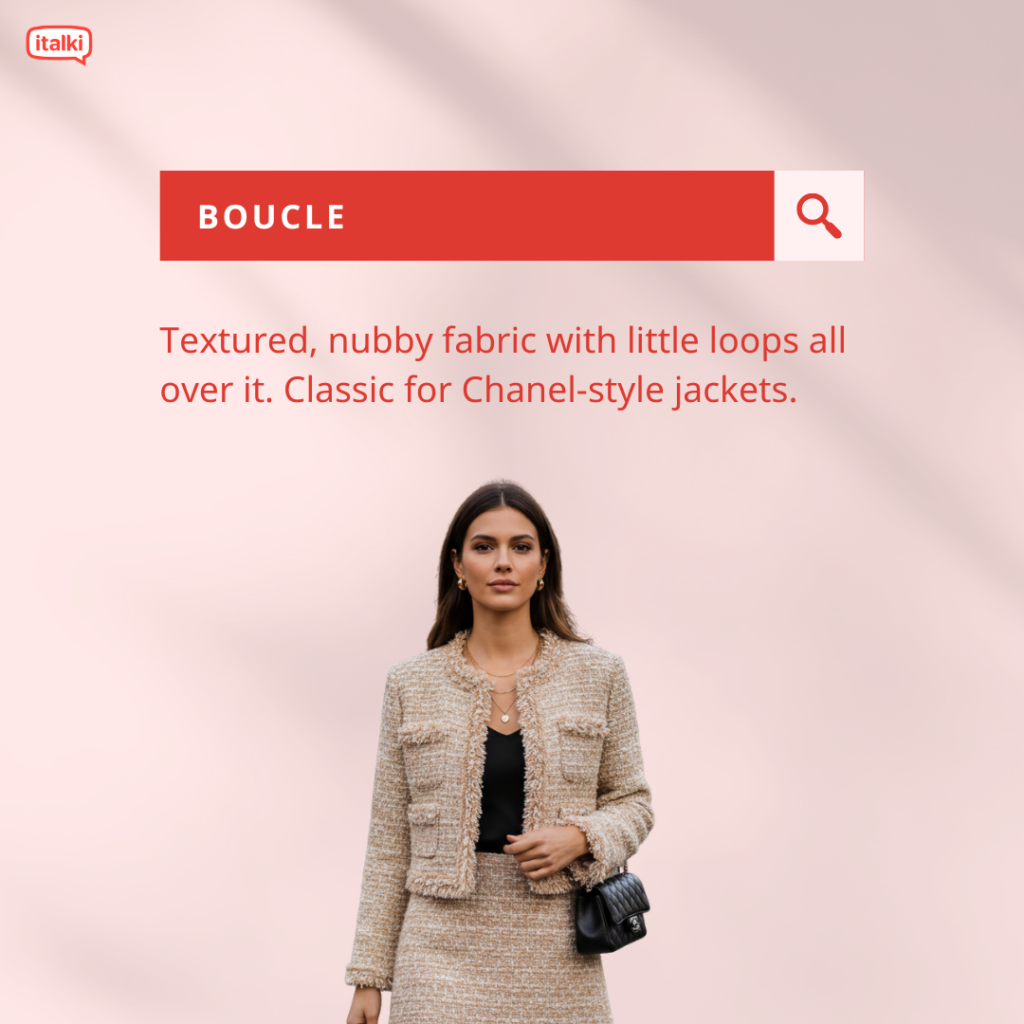
Boucle – That textured, nubby fabric with little loops all over it. Classic for Chanel-style jackets.
Boyfriend (Style) – Anything oversized and relaxed, like you borrowed it from a boyfriend. Boyfriend jeans, boyfriend blazers, boyfriend tees, they’re all intentionally too big.
Brocade – Really fancy fabric with raised patterns woven into it, often with metallic threads. You see it on formal wear and it looks expensive because it usually is.
Bustier – A tight, strapless top that ends at your ribs or waist. Has structure (sometimes boning) to stay up without straps.
C
Capsule Wardrobe – A small collection of clothes (usually 30-40 pieces) that all work together. The idea is everything mixes and matches, so you can make tons of outfits from fewer items.
Cardigan – A sweater that opens in the front. Can be cropped, long, fitted, oversized; there’s a cardigan for every vibe.
Cargo Pants – Pants with those big pockets on the sides. Originally military wear, now fashion (again; they come back every few years).
Carmen Neckline – Off-the-shoulder style that sits low across your shoulders. Super romantic, shows off your collarbones.
Cashmere – Ridiculously soft, expensive fabric made from cashmere goat hair. Once you own a cashmere sweater, regular wool feels scratchy forever.
Chambray – Looks like denim but lighter and softer. Great for shirts when you want that denim vibe without the weight.
Chanel Jacket – That boxy, collarless tweed jacket Coco Chanel made famous. Still iconic decades later.
Chenille – Super soft, fuzzy fabric that feels like petting a caterpillar (which is literally what “chenille” means in French).
Chevron – Zigzag stripes that create those sharp V patterns. Makes things look more graphic and structured.
Chiffon – Sheer, flowy, slightly shimmery fabric. Think romantic blouses and evening gowns that float when you walk.
Chinos – Casual cotton pants that are nicer than jeans but not as dressy as slacks. They come in tons of colors now, not just khaki.
Clutch – A small bag with no straps that you carry in your hand. Evening bag territory.
Colorblock – When you use big blocks of solid colors instead of patterns. Very graphic, very bold.
Corduroy – That fabric with the vertical ridges you can feel with your fingers. Comes in different rib sizes, thin lines (fine-wale) or thick lines (wide-wale).
Couture – See Haute Couture below for the full fancy explanation.
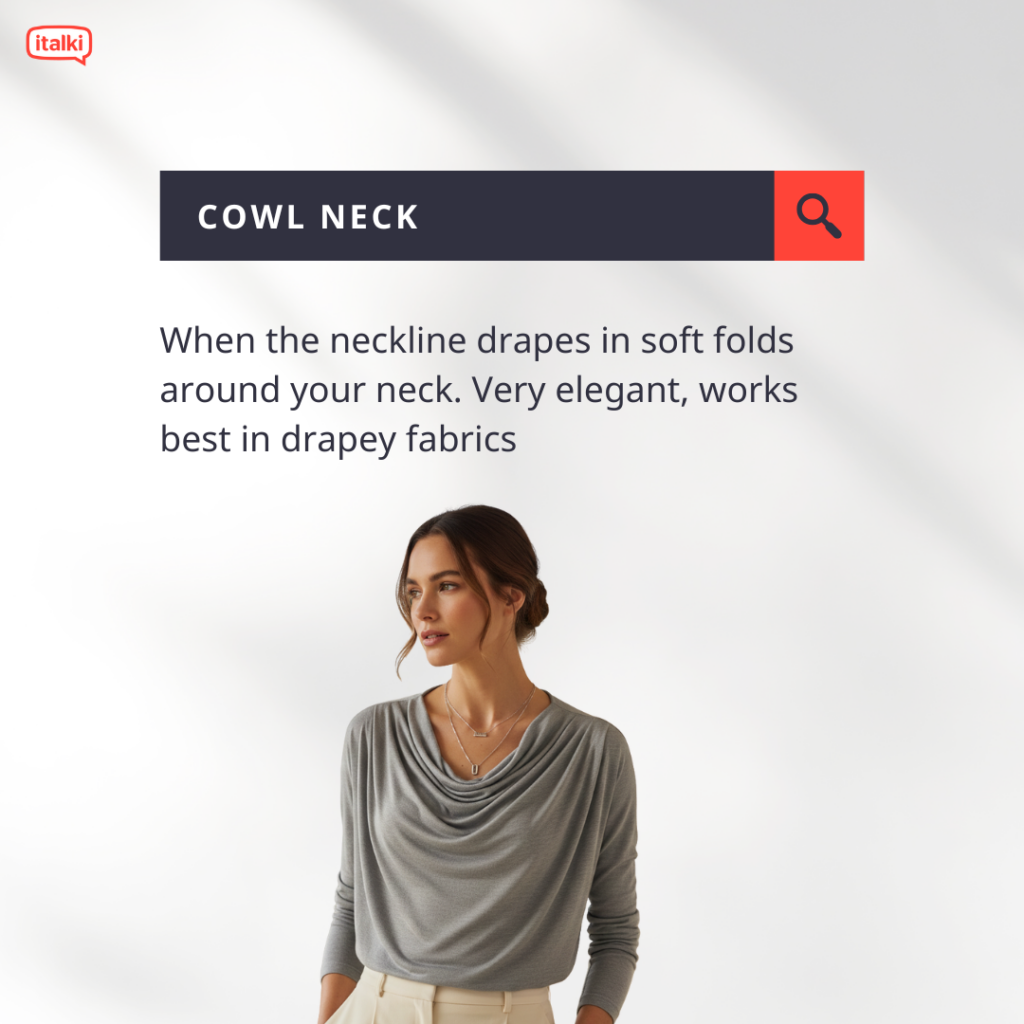
Cowl Neck – When the neckline drapes in soft folds around your neck. Very elegant, works best in drapey fabrics.
Crew Neck – Basic round neckline. Your standard t-shirt or sweatshirt neck.
Crop Top – Any top that shows your midriff. Can end right under your bust or just above your waistband.
Culottes – Wide-leg pants that look like a skirt when you’re standing still. Usually between knee and ankle length.
D
Darts – Those triangular folds sewn into clothes to make them fit your curves better. They’re what make the difference between a boxy shirt and one that actually follows your shape.
Denim – The sturdy cotton fabric your jeans are made from. Classic indigo blue, but now comes in every color and wash imaginable.
Décolletage – Fancy French word for the area of your neck and chest that shows when you wear a low neckline.
Diffusion Line – When a luxury brand makes a more affordable secondary line. Same designer aesthetic, lower prices.
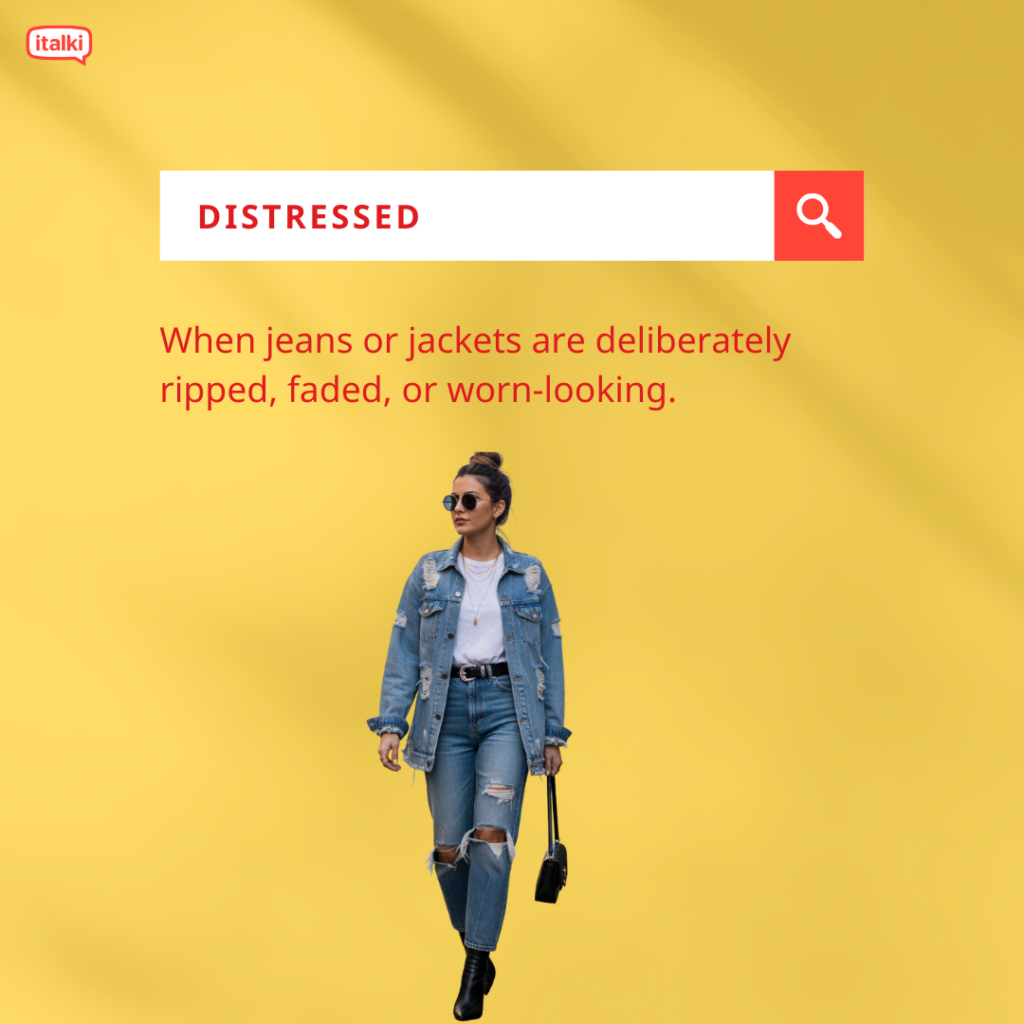
Distressed – When jeans or jackets are deliberately ripped, faded, or worn-looking. Someone got paid to make them look beat up.
Dolman Sleeves – Super wide sleeves attached without a shoulder seam, then fitted at the wrist. Kind of batwing-shaped.
Double-Breasted – Jackets or coats with overlapping front panels and two rows of buttons. More formal looking than single-breasted.
Drape – How fabric hangs and falls. Some fabrics have beautiful drape (silk, jersey), others don’t (canvas, thick cotton).
Duster – A long coat or cardigan that goes down to your calves or ankles. Adds drama to any outfit.
E
Embellishments – All the sparkly, decorative stuff added to clothes: beads, sequins, embroidery, rhinestones. The things that make it fancy.
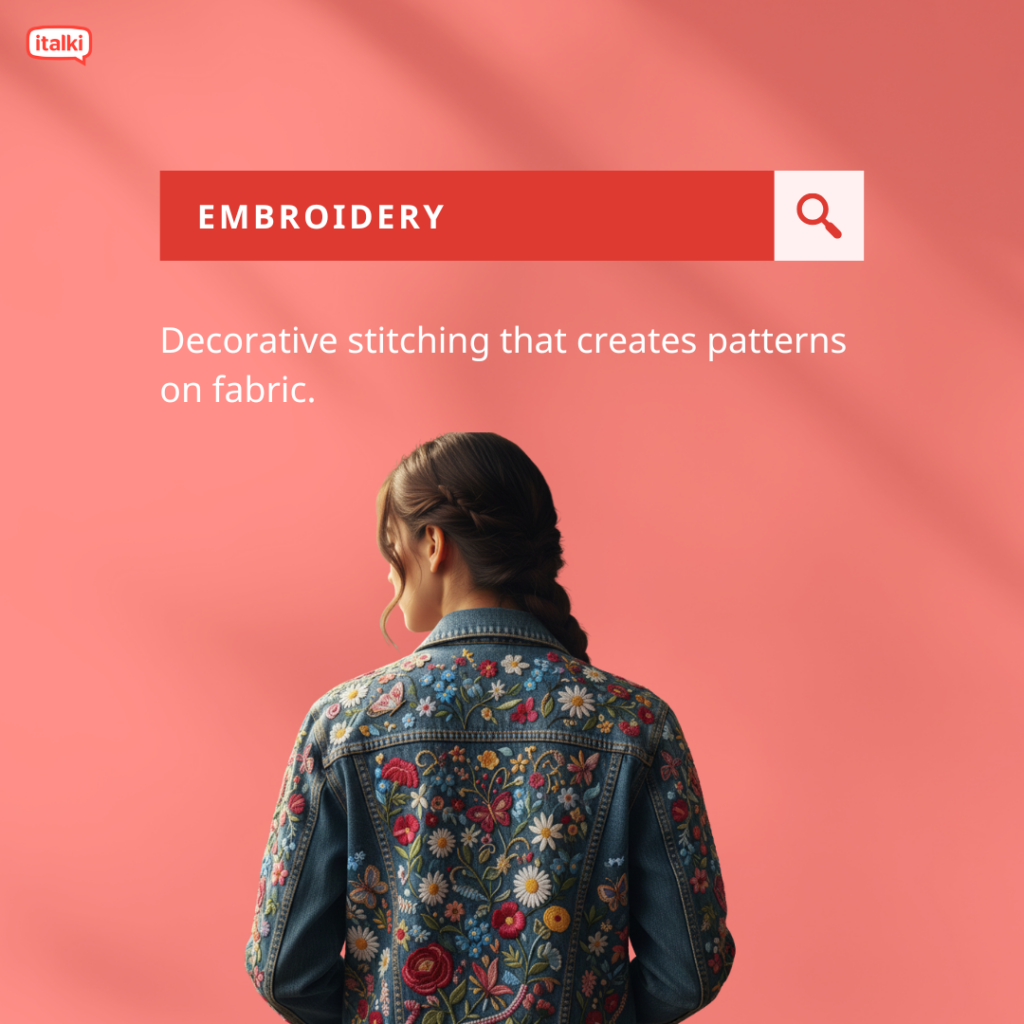
Embroidery – Decorative stitching that creates patterns on fabric. Can be delicate flowers or bold graphic designs.
Empire Waist – When the waistline sits right under your bust instead of at your natural waist. Very Jane Austen.
Espadrilles – Summer shoes with canvas tops and that distinctive woven rope sole. Come in flats or wedges.
Eyelet – Fabric with little holes punched in it, usually with embroidered edges. Super summery and feminine.
F
Fast Fashion – Affordable, trendy clothing produced quickly to keep up with the latest styles. Brands release new collections constantly.
Faux Leather – Fake leather. Also called vegan leather or pleather. Sometimes it looks convincing, sometimes… not so much.
Fedora – A felt hat with a creased crown and medium brim. Instant cool-person accessory.
Fibers – The actual materials fabric is made from: cotton, wool, silk, polyester, etc.
Fit and Flare – Fitted on top, flares out at the waist. The universally flattering dress shape.
Flannel – That soft, brushed fabric you wear when you want to feel cozy. Usually plaid, always comfortable.
Flare – Pants that get wider from the knee down. Think ’70s vibes.
French Terry – The fabric of your favorite sweatshirt: smooth outside, soft loops inside.
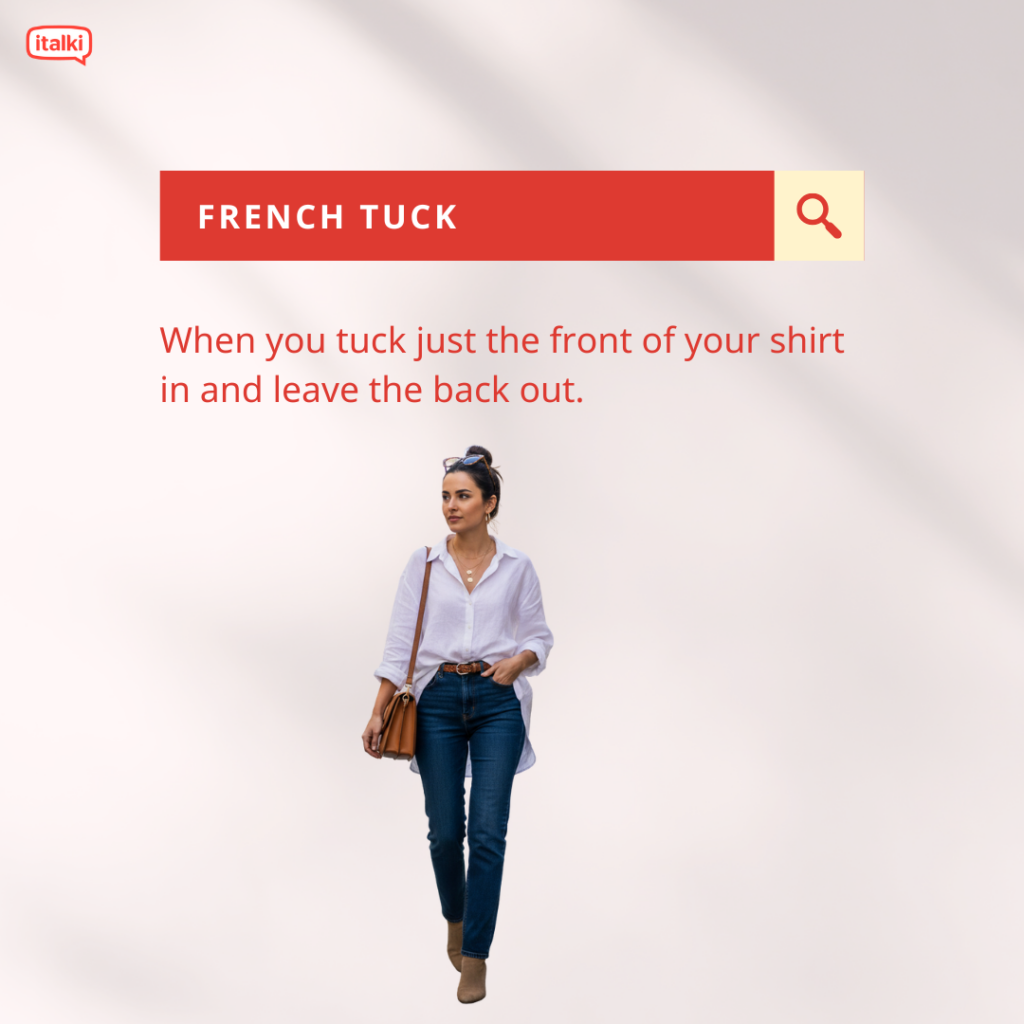
French Tuck – When you tuck just the front of your shirt in and leave the back out. Effortless and polished.
Fringe – Hanging strips of fabric or leather that move when you walk. Very bohemian, very fun.
G
Gabardine – A tightly woven fabric that resists wrinkles and water. Your classic trench coat fabric.
Gathers – When you scrunch fabric together to create soft folds. Makes things more flowy and feminine.
Gingham – That classic checkered pattern with white squares and colored squares. Very picnic vibes.
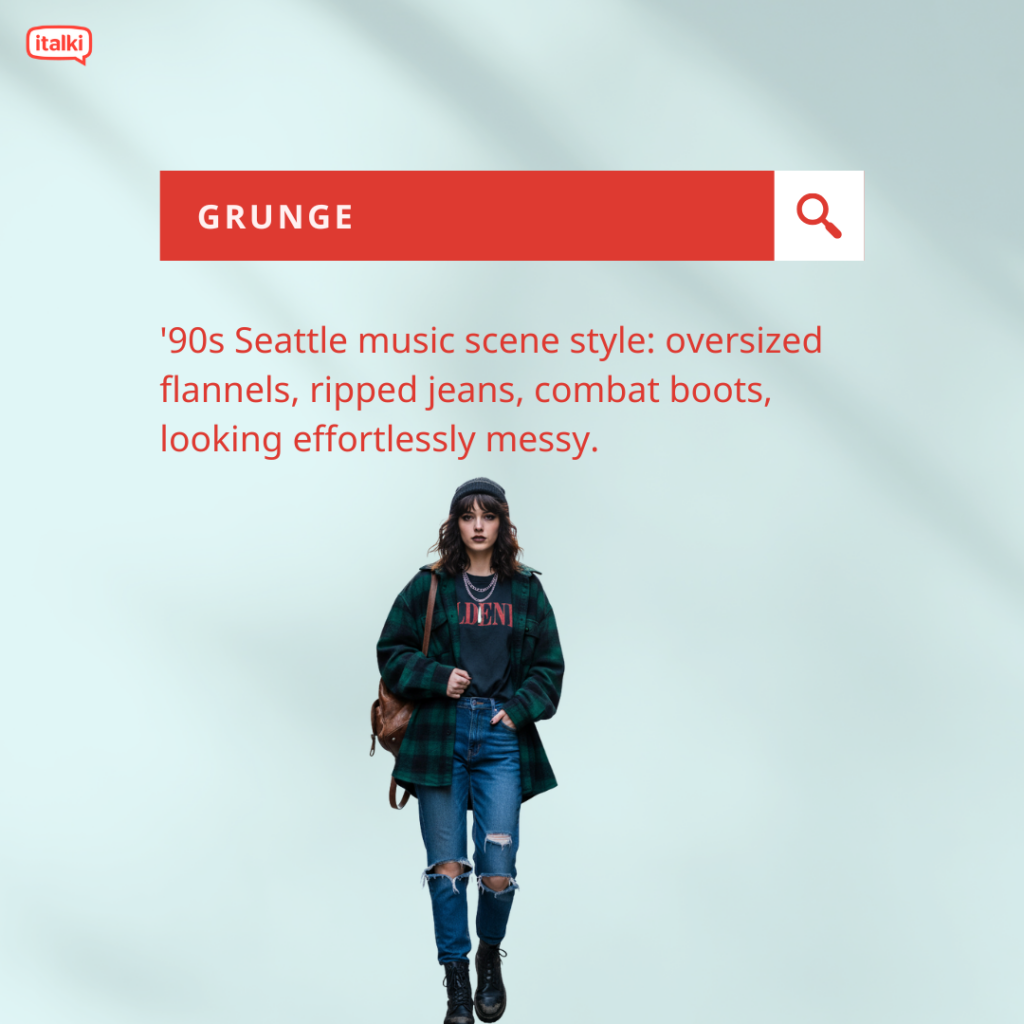
Grunge – ’90s Seattle music scene style: oversized flannels, ripped jeans, combat boots, looking effortlessly messy.
Grosgrain – That stiff ribbon with horizontal ridges you see on hat bands and fancy trim.
H
Halter Neckline – When the straps go around your neck, leaving your shoulders bare. Great for showing off your back.
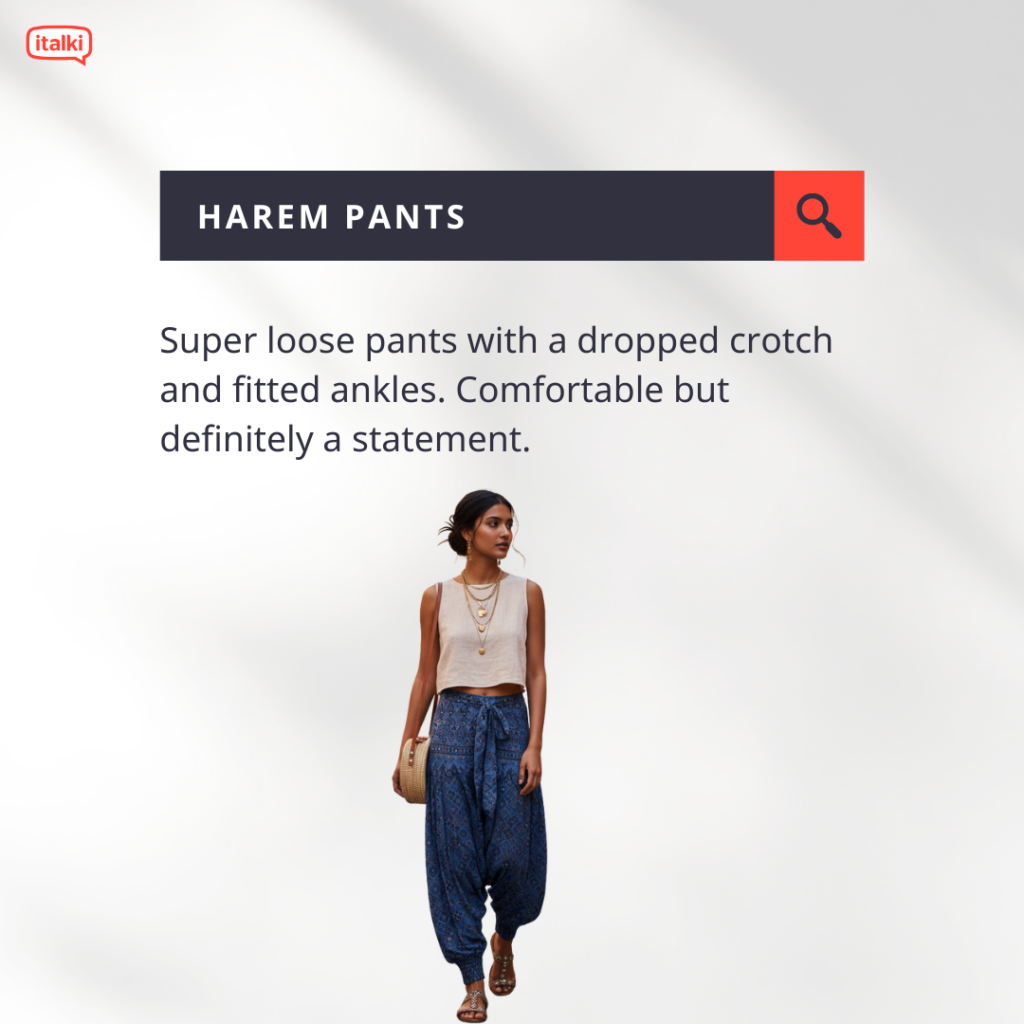
Harem Pants – Super loose pants with a dropped crotch and fitted ankles. Comfortable but definitely a statement.
Harris Tweed – Legit handwoven wool from Scotland. The real deal is labeled and protected by law.
Haute Couture – The fanciest, most exclusive custom fashion. To officially be haute couture, you have to meet strict requirements set by France’s fashion governing body. We’re talking handmade, one-of-a-kind pieces that cost more than a car.
Hemline – The bottom edge of your skirt or dress. Can be straight, curved, asymmetrical, whatever.
Henley – A pullover shirt with a few buttons at the neck. Casual and comfortable.
Herringbone – That zigzag tweed pattern that looks like fish bones. Classic and sophisticated.
High-Low Hem – When the front of your dress or skirt is shorter than the back. Very dramatic entrance, very dramatic exit.
Hoodie – A sweatshirt with a hood. Comfort essential.
Houndstooth – That broken checkered pattern, usually black and white. Looks fancy, very classic.
I
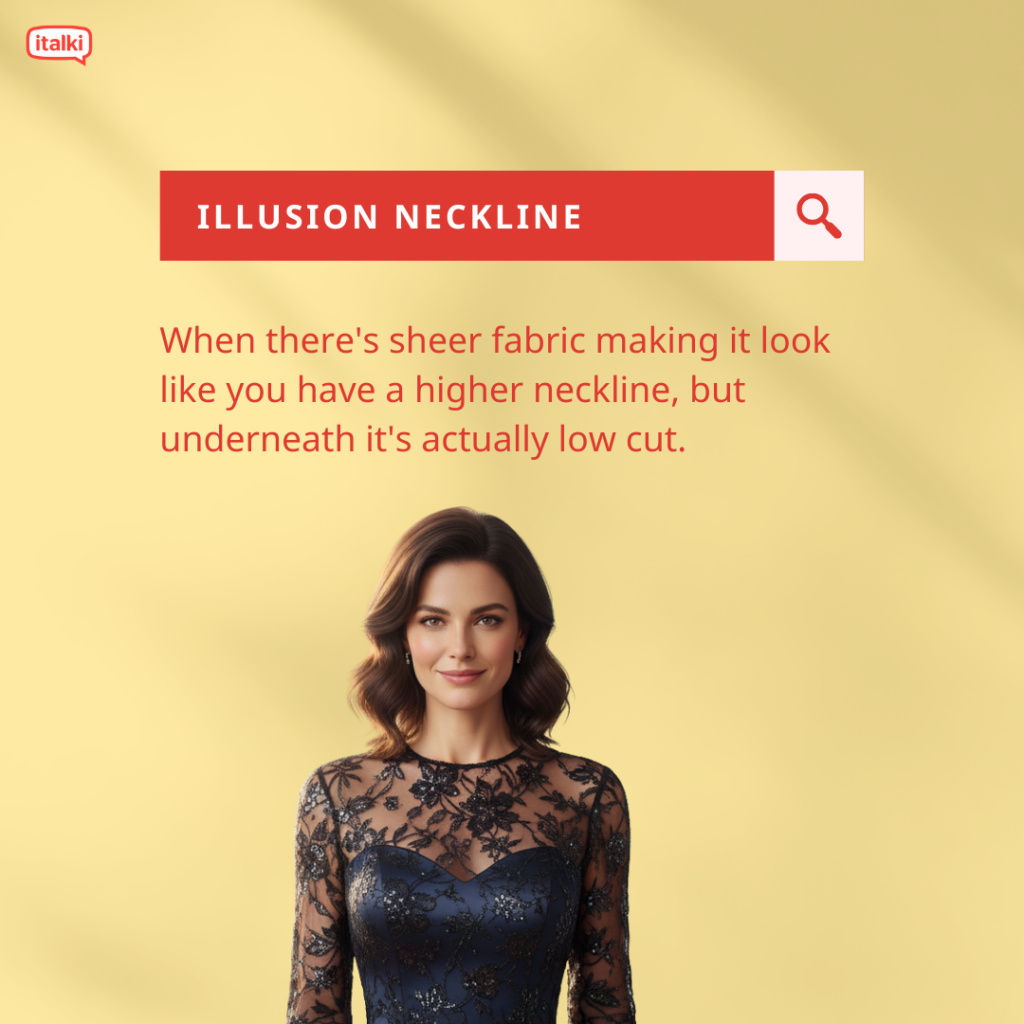
Illusion Neckline – When there’s sheer fabric making it look like you have a higher neckline, but underneath it’s actually low cut. Sexy but classy.
Ikat – A dyeing technique that creates those blurry, feathered patterns. The threads are dyed before weaving.
Interfacing – The hidden layer between your outer fabric and lining that gives structure. You don’t see it but you’d notice if it wasn’t there.
J
Jacquard – Fancy woven fabric with patterns built right into the weave (not printed on top).
Jersey – That soft, stretchy knit fabric your favorite t-shirt is probably made from. Comfortable and drapes nicely.
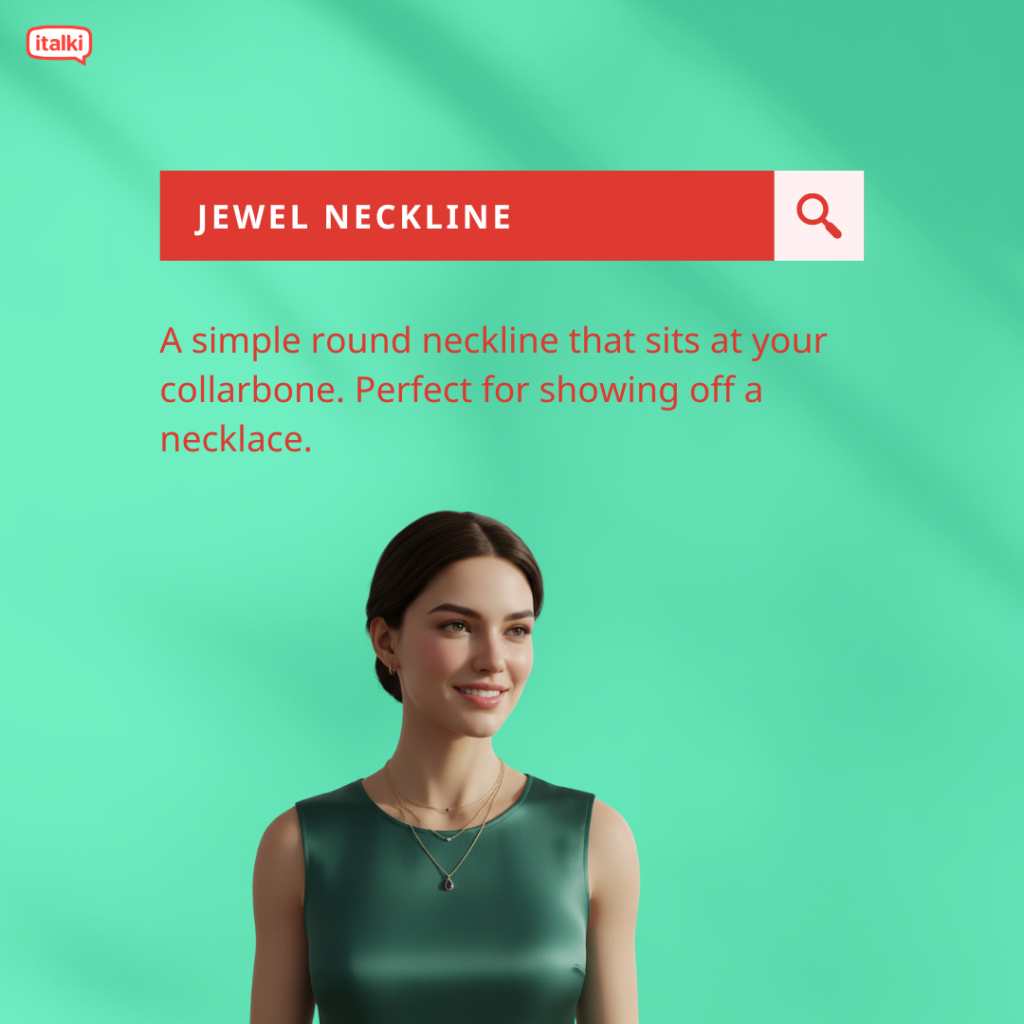
Jewel Neckline – A simple round neckline that sits at your collarbone. Perfect for showing off a necklace.
Jodhpurs – Riding pants that are baggy at the hips and tight from knee to ankle.
Jumpsuit – One-piece outfit with pants. Feels like wearing pajamas but looks way more put together.
K
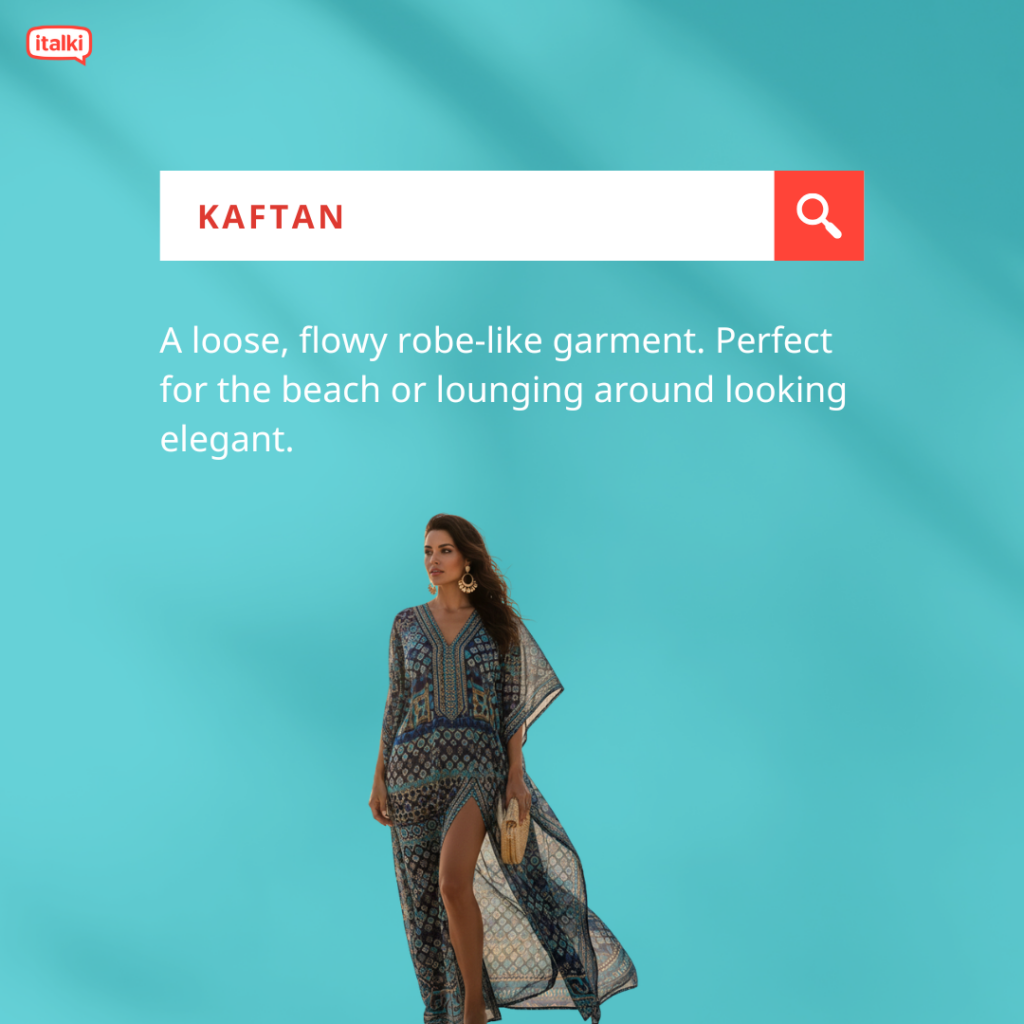
Kaftan – A loose, flowy robe-like garment. Perfect for the beach or lounging around looking elegant.
Keyhole Neckline – A small cutout at the neckline, usually teardrop-shaped. Little detail, big impact.
Khaki – The color (that tan-beige) and also the fabric. Your classic casual pants color.
Kitten Heel – A short, thin heel that’s usually about 1.5 inches. Gives you a little height without the pain.
Knit – Fabric made from interlocking yarn loops instead of weaving. Has natural stretch.
L
Lace – Delicate fabric with decorative open patterns. Romantic and feminine.
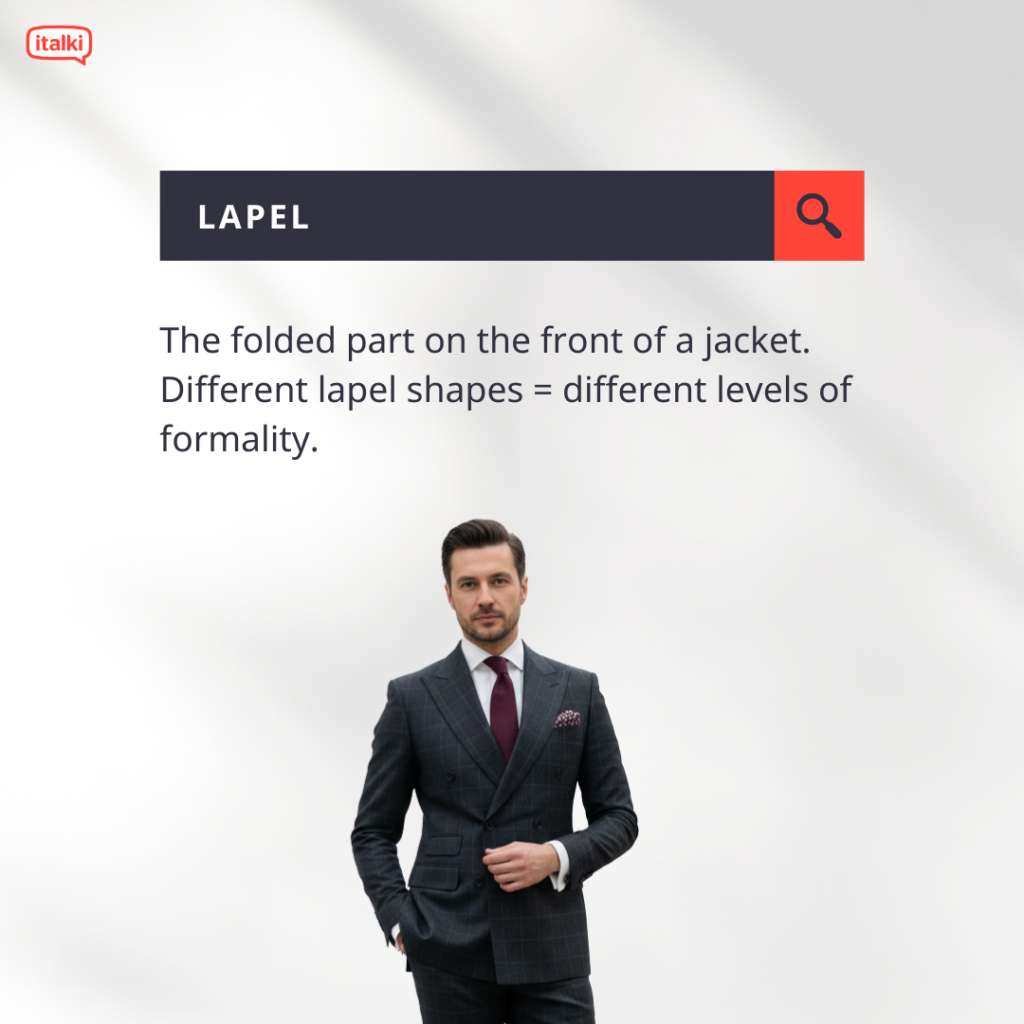
Lapel – The folded part on the front of a jacket. Different lapel shapes = different levels of formality.
Layering – Wearing multiple pieces together: tee under a button-up under a sweater under a jacket. Winter survival technique.
Leather – Animal hide that’s been treated. Classic, durable, gets better with age.
Leggings – Stretchy pants that started as workout wear and became everyday pants. We’ve all lived in them at some point.
Linen – That crisp fabric made from flax that wrinkles if you look at it wrong. But it’s so breathable and perfect for summer that we forgive it.
Loafers – Slip-on shoes. Easy, classic, works with everything from jeans to suits.
M
Maxi – Floor-length. Maxi dresses, maxi skirts—anything that goes all the way down.
Mesh – Fabric with holes in it, like a net. Used in everything from athletic wear to party dresses.
Midi – Mid-length, usually hitting somewhere between your knee and ankle. The most practical length.
Minimalist – Less is more. Clean lines, neutral colors, simple pieces. Very “I’m too cool to try hard.”
Mock Neck – A high neckline that doesn’t fold over. Like a short turtleneck.
Modal – Super soft fabric made from beech tree pulp. Feels luxurious, doesn’t pill or shrink.
Monochrome – Wearing all one color (but different shades). Very chic, very easy to pull off.
Moto Jacket – Leather jacket with the asymmetric zipper and attitude. Instant edge.
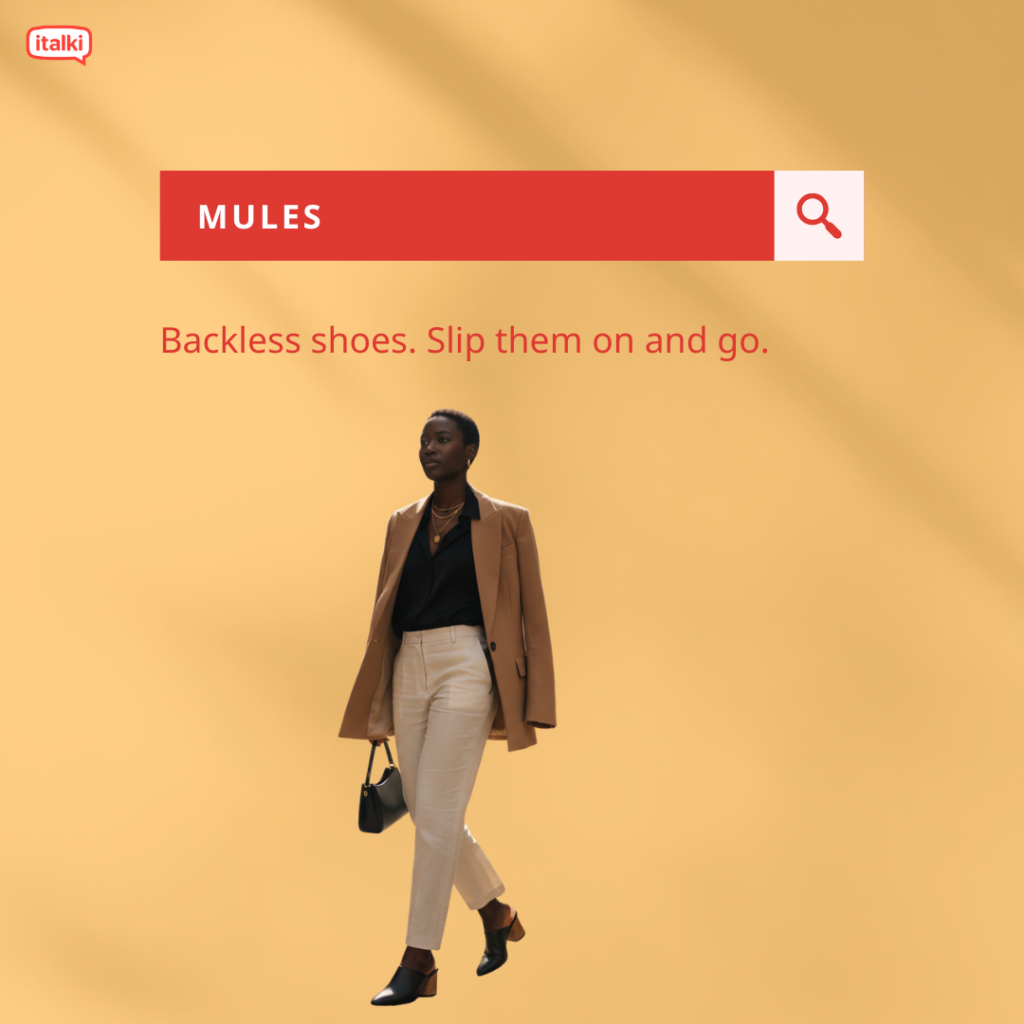
Mules – Backless shoes. Slip them on and go.
Muslin – Cheap cotton fabric designers use to make test versions of clothes before cutting the expensive stuff.
N
Neckline – The shape of the opening around your neck. Changes the whole vibe of an outfit.
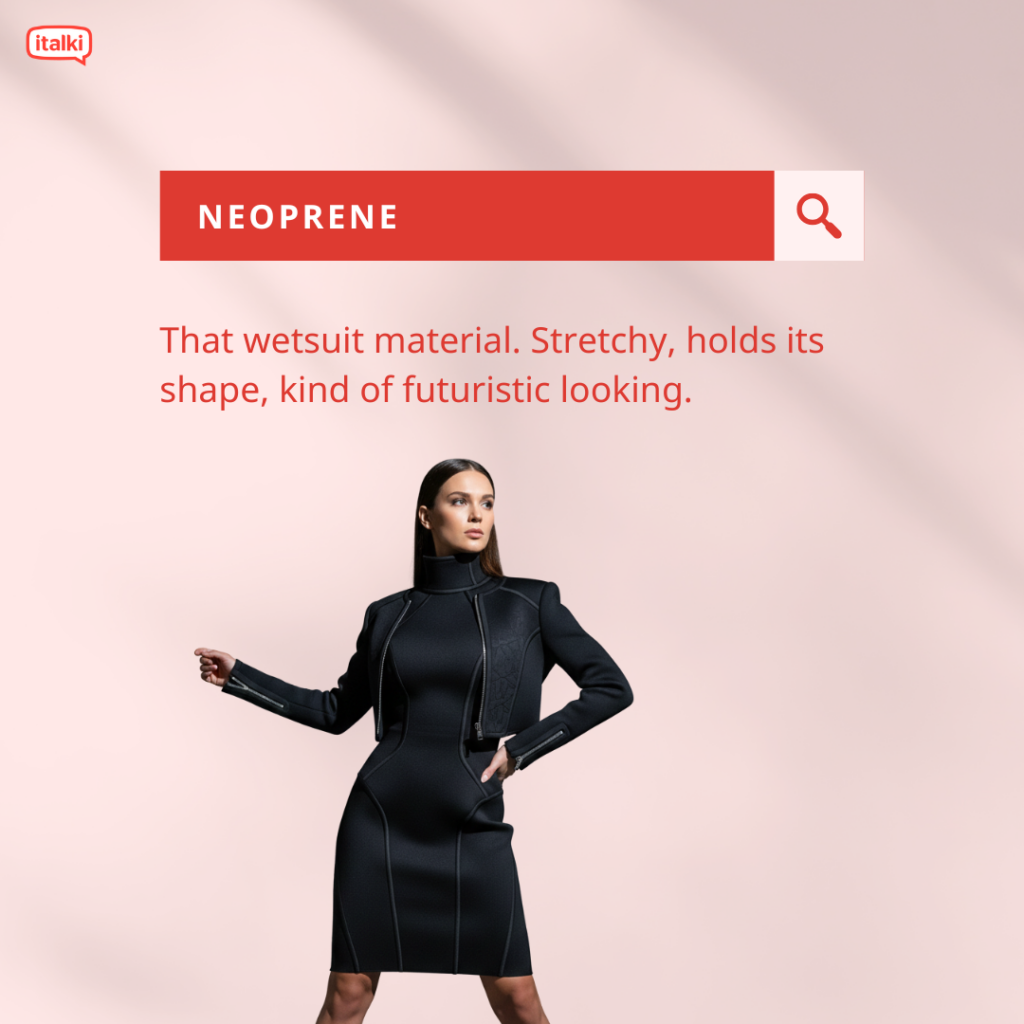
Neoprene – That wetsuit material. Stretchy, holds its shape, kind of futuristic looking.
Neutrals – Black, white, beige, gray, navy. The colors that go with everything.
Nylon – Synthetic fabric that dries fast and doesn’t wrinkle. Your windbreaker is probably nylon.
O
Off-the-Shoulder – Shows off your shoulders while the sleeves sit on your arms. Flirty and romantic.
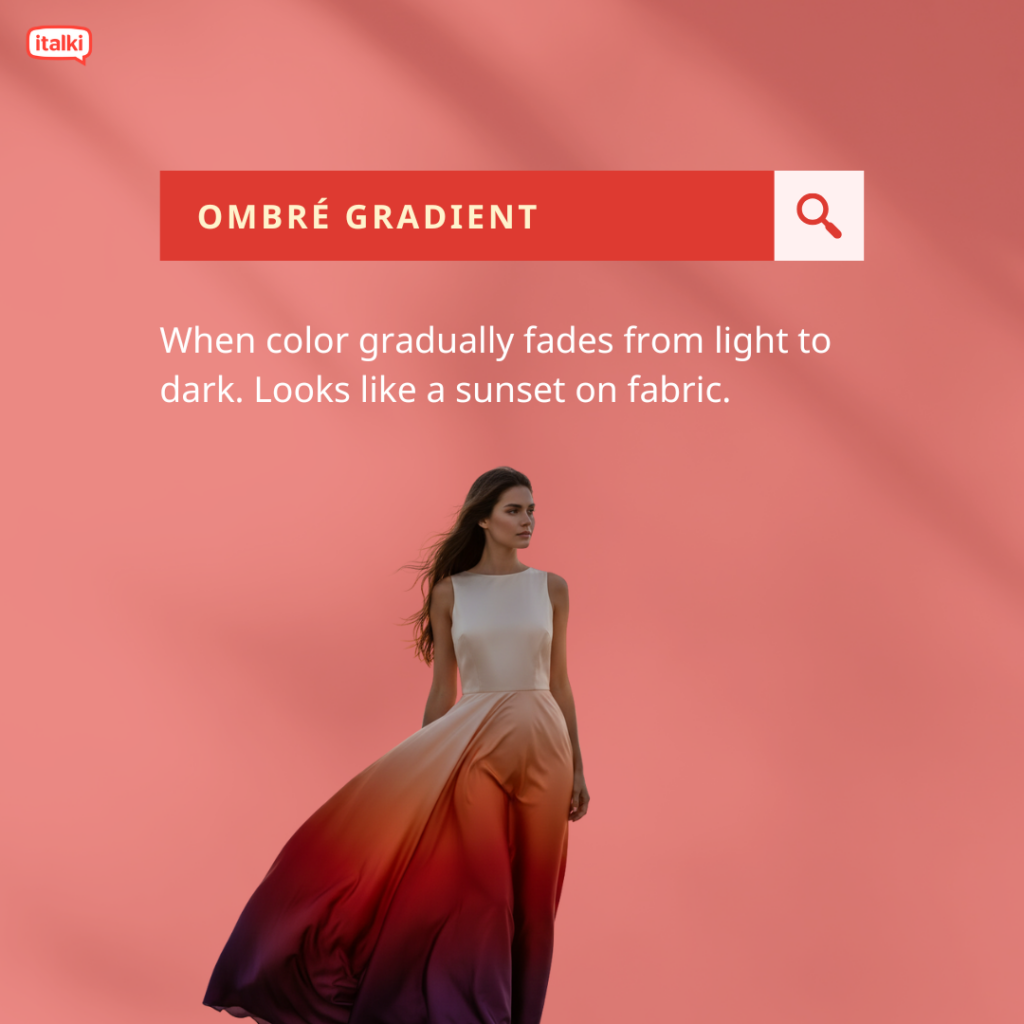
Ombré – When color gradually fades from light to dark. Looks like a sunset on fabric.
One-Shoulder – One strap, one bare shoulder. Asymmetry at its finest.
Organza – Stiff, sheer fabric. Holds its shape beautifully for formal wear.
Oversized – Intentionally too big. The whole point is that it doesn’t fit.
Oxford – Classic button-down shirt, usually in cotton. Office staple.
P
Paisley – Those teardrop-shaped patterns with curly details. Very bohemian, very ’60s and ’70s.
Palazzo Pants – Super wide-leg pants that flow like a skirt. Comfortable and dramatic.
Parka – Serious winter coat with a hood. Built for actual cold weather.
Pashmina – Ultra-soft cashmere shawl. The fancy wrap you bring to weddings.
Patchwork – Different fabric pieces sewn together. Quilts, but make it fashion.
Patent Leather – Shiny, glossy leather. Very retro, very eye-catching.
Pea Coat – Short, double-breasted wool coat. Originally for sailors, now for everyone.
Peplum – A little ruffle or flare at the waist. Creates an hourglass shape.
Peter Pan Collar – Small, rounded flat collar. Very vintage, very sweet.
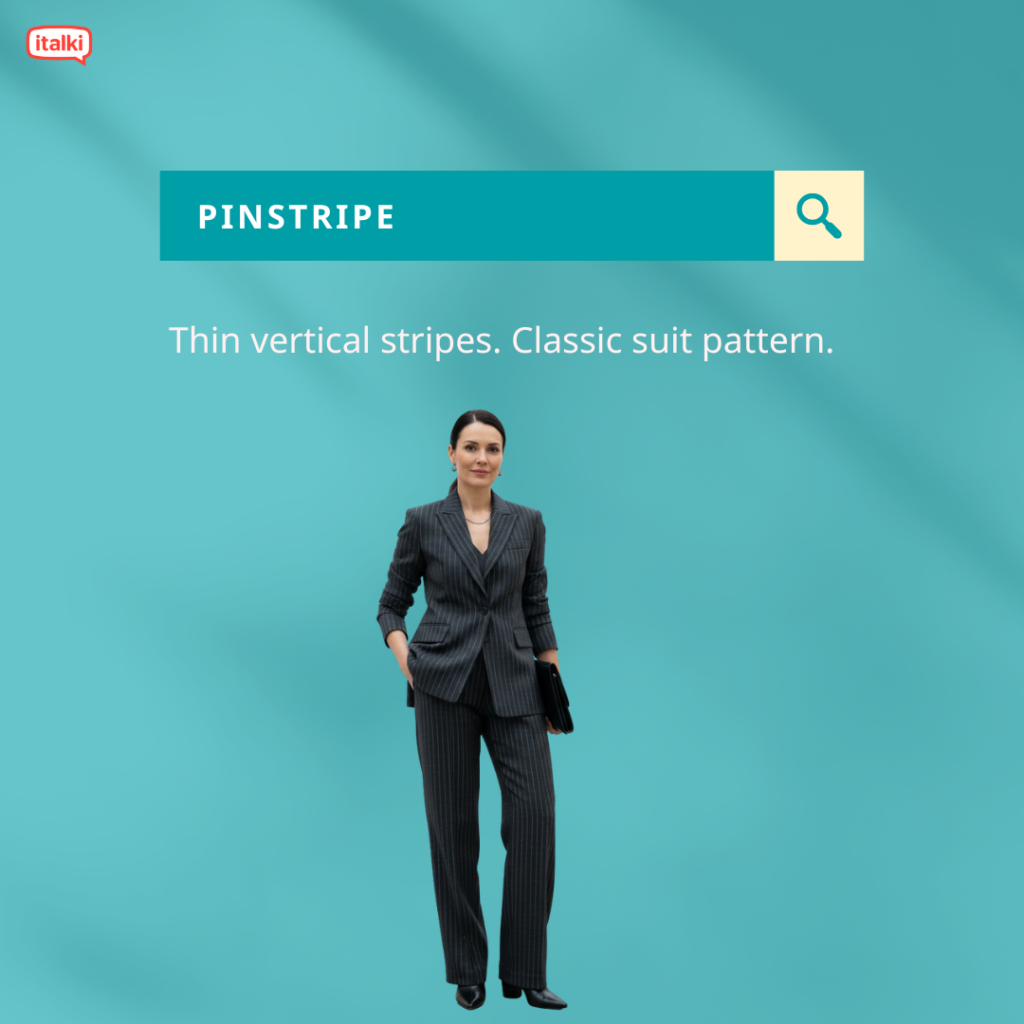
Pinstripe – Thin vertical stripes. Classic suit pattern.
Pleats – Fabric folds that add structure and movement. Pleated skirts are timeless.
Plunge Neckline – Really low V-neck. Not for the faint of heart.
Pockets – The feature everyone wants in their clothes. Especially dresses. Why don’t more dresses have pockets?
Polo – That shirt with a collar and a few buttons at the neck. Preppy staple.
Polyester – Synthetic fabric that doesn’t wrinkle. Your easy-care pieces are probably polyester.
Poncho – Like a blanket with a hole for your head. Cozy and bohemian.
Preppy – East Coast collegiate style: blazers, polos, khakis, loafers, and everything Brooks Brothers.
Prêt-à-Porter – French for “ready-to-wear.” Stuff you can buy off the rack instead of getting custom-made.
Print – Patterns on fabric: florals, stripes, polka dots, animal prints, you name it.
Puffer Jacket – That puffy quilted jacket filled with down or synthetic stuffing. Warm and everywhere every winter.
Q
Quilting – Stitching layers of fabric together to create that padded, textured look.
R
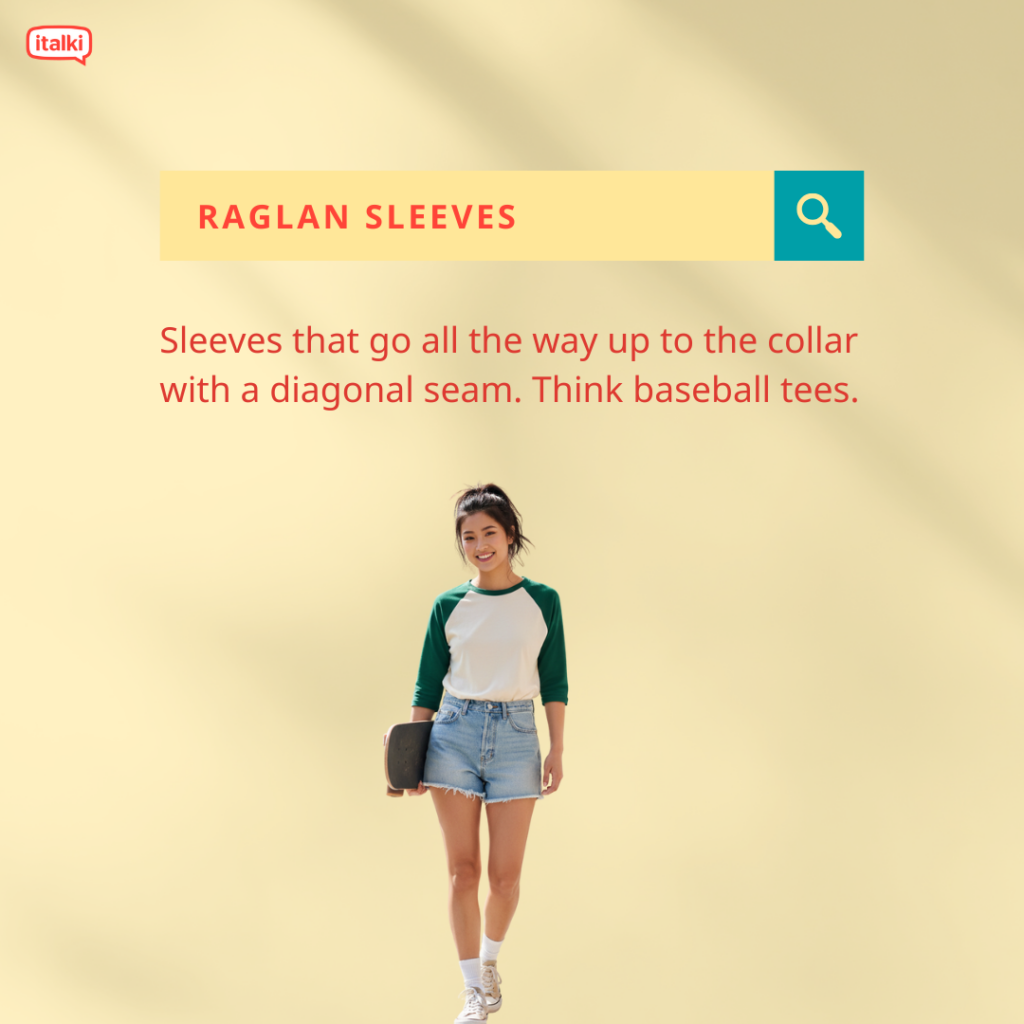
Raglan Sleeves – Sleeves that go all the way up to the collar with a diagonal seam. Think baseball tees.
Rayon – Semi-synthetic fabric that drapes beautifully. Kind of like affordable silk.
Resort Wear – Vacation clothes. Light, breezy, made for tropical destinations.
Retro – Inspired by past decades. Could be ’50s, ’60s, ’70s, ’80s—take your pick.
Ruching – When fabric is gathered to create that rippled effect. Very flattering, hides everything.
Ruffles – Gathered fabric strips that add feminine detail and movement.
Runway – Where models walk during fashion shows. Also called a catwalk.
S
Satin – Shiny, smooth fabric. Looks fancy, feels slippery.
Scalloped Edge – Trim with rounded, wave-like edges. Very feminine.
Scoop Neck – A rounded neckline that dips lower than a crew neck. Classic and flattering.
Separates – Individual pieces you can mix and match. The opposite of a matching set.
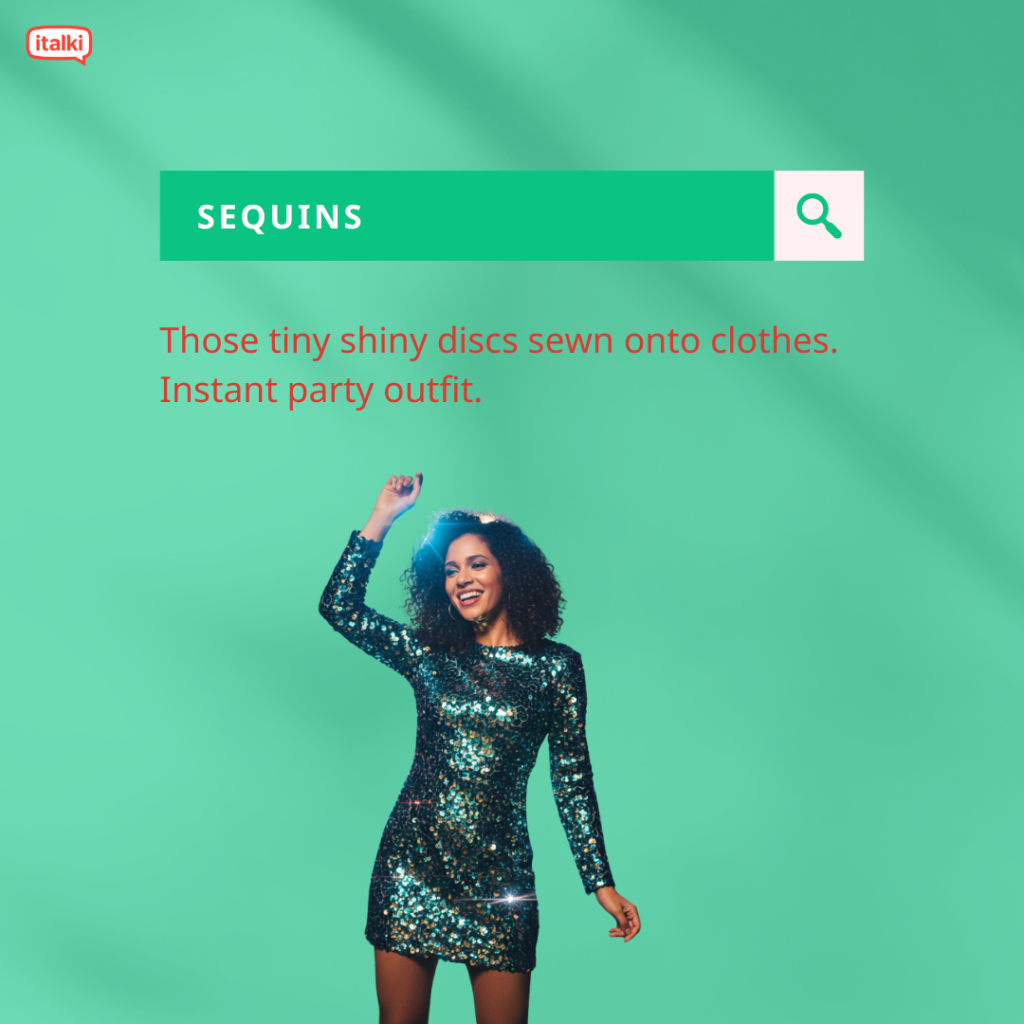
Sequins – Those tiny shiny discs sewn onto clothes. Instant party outfit.
Sheath Dress – Fitted, straight dress that follows your body. Very office-appropriate.
Shift Dress – Loose, straight dress that doesn’t define your waist. Easy and comfortable.
Shirt Dress – Dress that looks like a long button-up shirt. Crisp and casual.
Silhouette – The overall shape of an outfit or garment. Changes everything about how clothes look.
Silk – The luxury fabric. Made by silkworms, feels amazing, costs accordingly.
Skinny – Super tight fitting. Skinny jeans changed denim forever.
Spaghetti Straps – Really thin straps. Delicate and summery.
Spandex (Lycra, Elastane) – The stretchy stuff added to fabric to make it move with you.
Square Neckline – Straight across with sharp corners. Very structured looking.
Statement Piece – That one bold item that makes your whole outfit. Could be anything from a crazy jacket to huge earrings.
Stiletto – Super thin, super high heel. Hard to walk in, looks amazing.
Strapless – No straps, no sleeves. Stays up through sheer force of will (and sometimes boning).
Streetwear – Urban casual style that started with skate and hip-hop culture. Hoodies, sneakers, graphic tees, and logos.
Suede – Soft, velvety leather. Beautiful but high maintenance.
Sweater – Knitted top for warmth. Comes in infinite styles.
Sweetheart Neckline – Shaped like the top of a heart. Super romantic and feminine.
Swimwear – Beach and pool clothes. Bikinis, one-pieces, swim trunks.
T
Tailoring – Getting clothes altered to fit you perfectly. Makes all the difference.
Tank Top – Sleeveless shirt with straps. Summer basic.
Tapered – Gets narrower toward the bottom. Tapered pants are wider at the hip, slimmer at the ankle.
Tartan – Plaid pattern from Scotland. Each clan has their own pattern.
Texture – How fabric feels and looks: smooth, rough, soft, nubby.
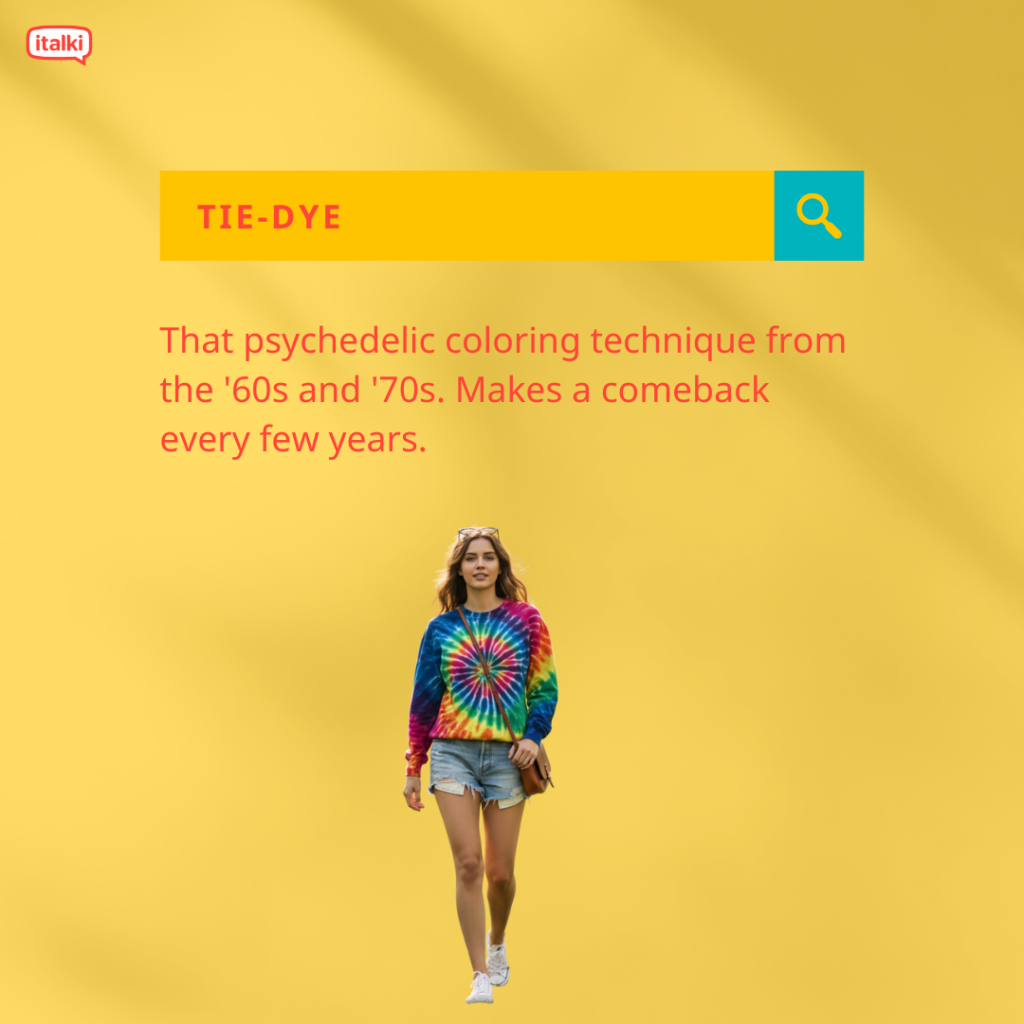
Tie-Dye – That psychedelic coloring technique from the ’60s and ’70s. Makes a comeback every few years.
Toile – Test version of a garment made in cheap fabric before making the real thing.
Trapeze – An A-line that swings away from your body. Very ’60s.
Trench Coat – Classic belted raincoat. Timeless.
Trendy – What’s popular right now. Here today, gone next season.
Tulle – That fluffy netting fabric. Think tutus and wedding veils.
Tunic – Long top that goes past your hips. Great with leggings.
Turtleneck – High collar that folds over and covers your neck. Warm and sleek.
Tweed – Textured wool fabric. Very British countryside.
Twill – Weave pattern that creates diagonal lines in fabric. Denim is a twill.
U
Undergarments – What you wear under your clothes. Bras, underwear, shapewear, slips.
Unisex – Made for anyone, regardless of gender.
Upcycling – Turning old clothes into something new instead of throwing them away.
V
V-Neck – Neckline shaped like a V. Flatters everyone.
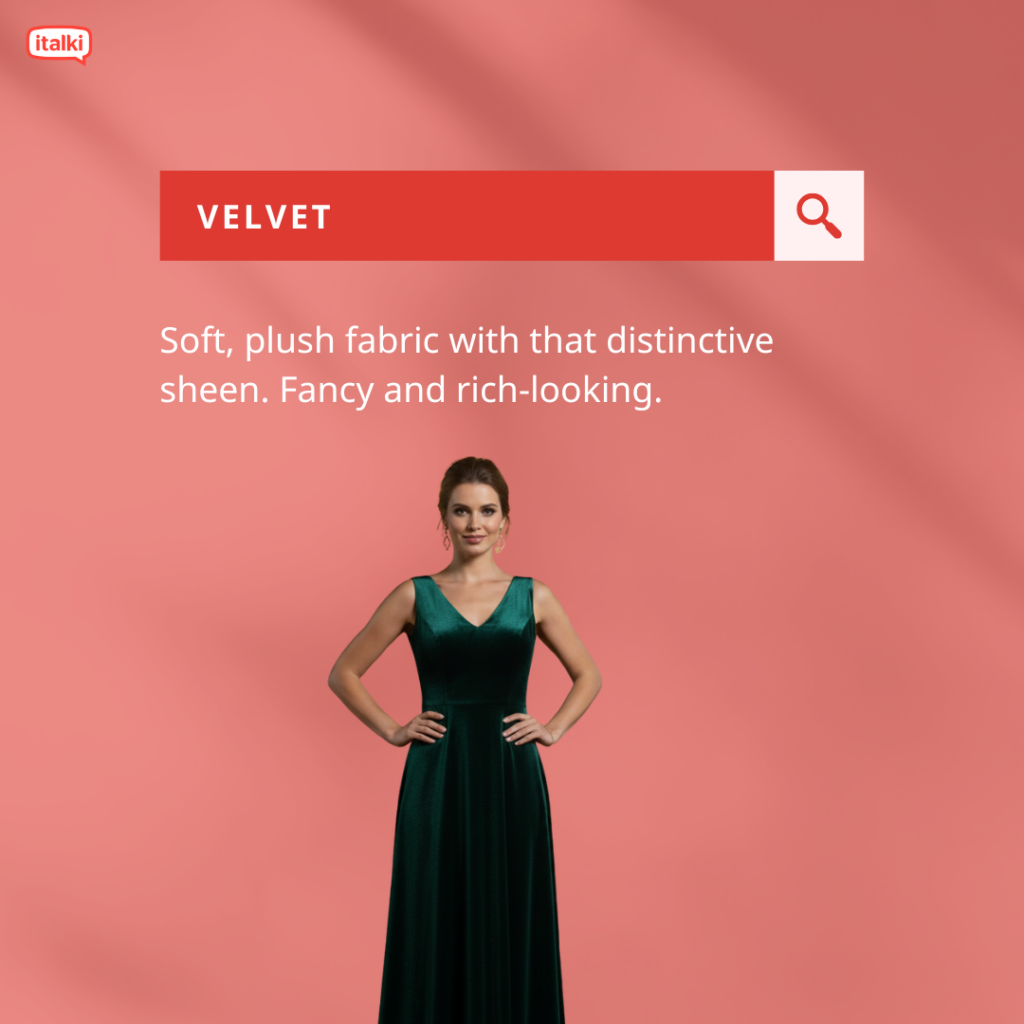
Velvet – Soft, plush fabric with that distinctive sheen. Fancy and rich-looking.
Vest – Sleeveless top layer. Can be dressy (suit vest) or casual (puffer vest).
Vintage – Actually old clothes from past decades. Real vintage is at least 20 years old.
Viscose – A type of rayon. Drapes nicely, affordable.
Visor – Hat with just a brim, no top. Keeps sun out of your eyes.
W
Waistline – Where a garment sits on your torso. Can be high, natural, or low.
Wedge – Shoe with a solid heel that goes from back to front. More stable than regular heels.
Welt Pocket – Pocket with a finished opening. Looks tailored and clean.
Wide-Leg – Pants that are loose and flowy from hip to hem. Very elegant.
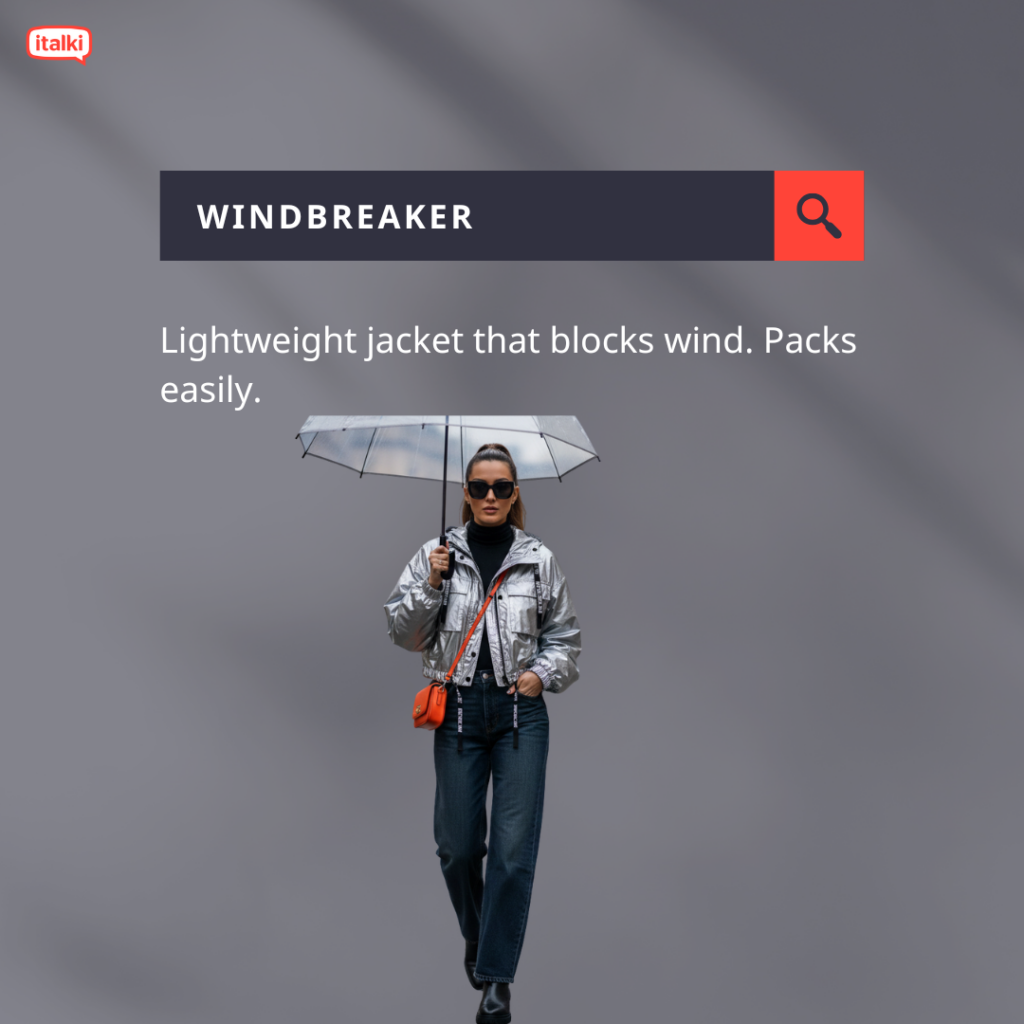
Windbreaker – Lightweight jacket that blocks wind. Packs easily.
Wool – Fabric from sheep. Warm, breathable, comes in many weights.
Wrap – Style where fabric wraps around and ties. Flattering and adjustable.
X
X-Back – Back with straps that cross in an X. Adds visual interest.
Y
Yoke – That fitted panel at the shoulders or hips where the rest of the fabric hangs from.
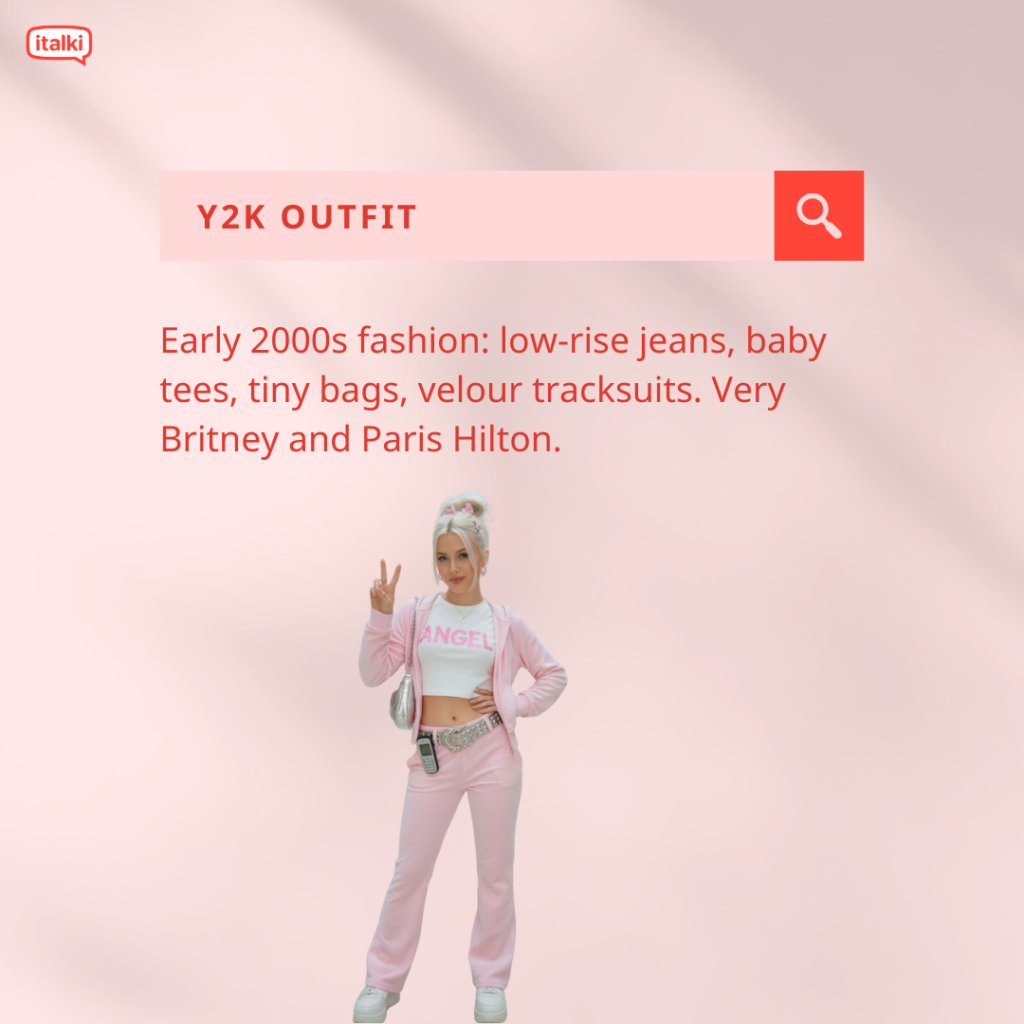
Y2K – Early 2000s fashion: low-rise jeans, baby tees, tiny bags, velour tracksuits. Very Britney and Paris Hilton.
Z
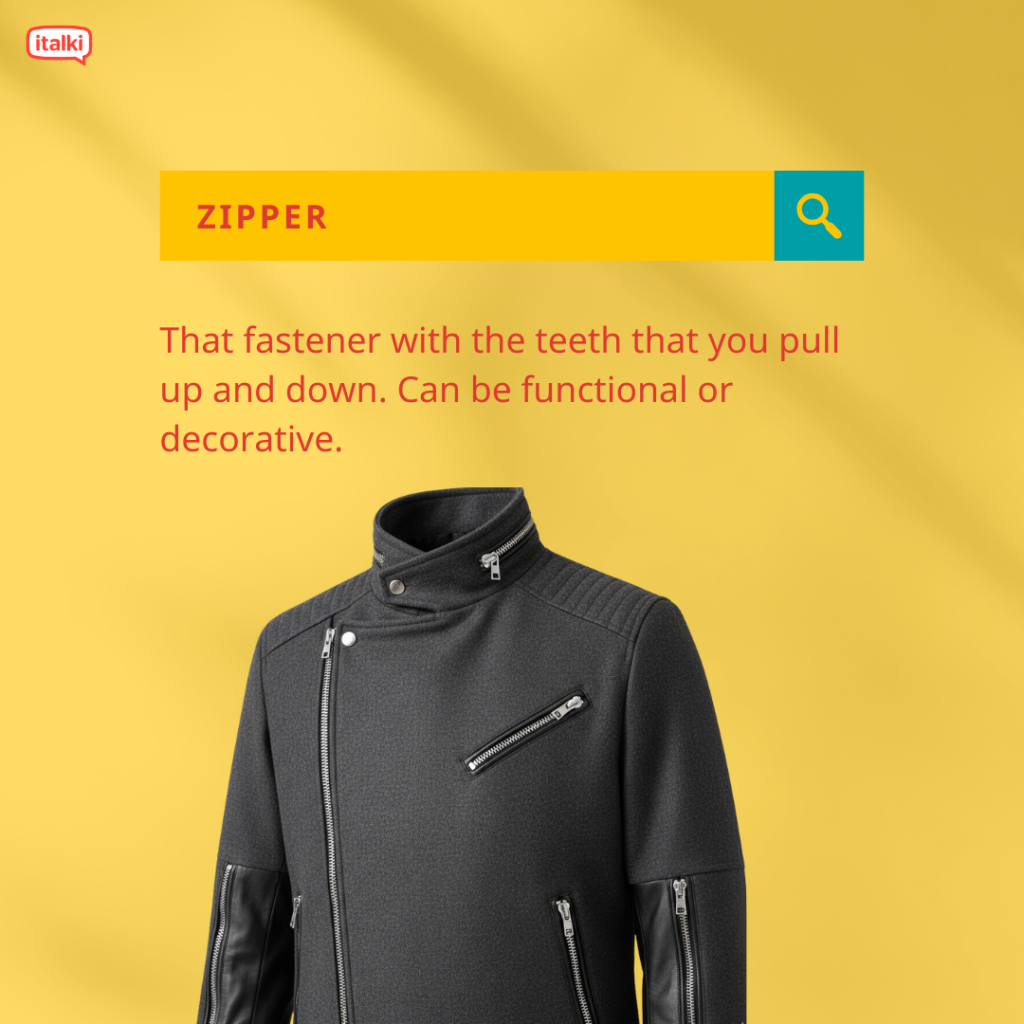
Zipper – That fastener with the teeth that you pull up and down. Can be functional or decorative.
Fashion Week vocabulary you should know
Watching Fashion Week and feeling lost? Here’s what everyone’s actually talking about.
The four major fashion weeks
New York Fashion Week (NYFW) – Held in February and September. Known for ready-to-wear, commercial fashion, and American sportswear. This is where you see trends that’ll actually hit stores. Brands like Ralph Lauren, Marc Jacobs, and Tom Ford.
London Fashion Week (LFW) – Held in February and September. The experimental, edgy one. Where emerging designers make their mark with avant-garde designs. British rebellion meets high fashion. Brands like Burberry, Alexander McQueen, and Vivienne Westwood.
Milan Fashion Week (MFW) – Held in February and September. All about luxury, glamour, and Italian craftsmanship. Impeccable tailoring and opulent fabrics. Brands like Versace, Prada, Gucci, Dolce & Gabbana, and Armani.
Paris Fashion Week (PFW) – Held in March and October. The grand finale of Fashion Month and the most prestigious. Fashion as art. If you’re showing in Paris, you’ve arrived. Brands like Chanel, Dior, Louis Vuitton, and Saint Laurent.
Fashion week terms
| Term | What It Means |
|---|---|
| Collection | All the outfits a designer shows for a season (Spring/Summer or Fall/Winter). They’re supposed to work together and tell a story. |
| Front Row (FROW) | The best seats at a fashion show. Celebrities, top editors, and VIPs only. If you’re in the front row, you’ve made it. |
| Showstopper | The one look from a collection that everyone talks about. The piece designed to break the internet. |
| Finale Look | The last outfit that closes the show. Usually the most important or dramatic piece in the collection. |
| Runway (Catwalk) | The platform models walk on during shows. |
| Look Book | Professional photos of every outfit in a collection. What buyers and press reference after the show. |
| Buyers | The retail people who decide which pieces their stores will actually sell. They determine if a design goes into production. |
| Press Preview | When fashion journalists get to see the collection before everyone else. Gives them time to write their reviews. |
| Backstage | Where all the chaos happens before models walk. Hair, makeup, last-minute outfit adjustments, controlled panic. |
| Casting | How designers pick which models will walk in their show. Super competitive. |
| Fashion Calendar | The official schedule of all the shows during Fashion Week. Buyers and press use it to plan which shows to attend. |
| Show Notes | The designer’s written explanation of what inspired the collection. Sometimes it makes sense, sometimes it’s… abstract. |
| Presentation | Alternative to a runway show where models stand or move around a space instead of walking a traditional runway. More intimate. |
| See Now, Buy Now | When you can actually buy what you see on the runway immediately, instead of waiting six months. Still pretty new. |

Find Your Perfect Teacher
At italki, you can find your English tutor from all qualified and experienced teachers. Now experience the excellent language learning journey!
Book a trial lesson
Haute Couture Week vocabulary
Haute Couture Week happens twice a year in Paris (January and July), where certified fashion houses show their most exclusive, handmade collections. It’s the highest level of fashion; invitation-only, insanely expensive, and absolutely spectacular.
| Term | What It Means |
|---|---|
| Haute Couture | Literally “high sewing” in French. Completely custom, handmade garments by certified fashion houses. Must meet strict requirements from France’s fashion governing body. Thousands of hours of handwork per piece. |
| Atelier | The workshop where couture is actually made. Big fashion houses have multiple ateliers for different techniques. |
| Petites Mains | “Little hands” in French. The incredibly skilled artisans who do all the handwork on couture pieces. They train for years to master these techniques. |
| Toile | A test version made in cheap muslin before they cut into the expensive fabric. Multiple fittings happen with the toile. |
| Made-to-Measure | Custom clothes made using an existing pattern adjusted to fit you. More personalized than off-the-rack, less involved than bespoke. |
| Bespoke | Fully custom from scratch. The pattern is made specifically for your body. |
| Première (First Fitting) | Your first appointment trying on the toile version. They note what needs adjusting. |
| Deuxième (Second Fitting) | Follow-up fitting to check the changes. This keeps happening until it’s perfect. |
| Embellishment | All the hand-applied decorative stuff: beading, embroidery, feathers. Can take hundreds of hours. |
| Client | In couture, you’re not a customer, you’re a client. It’s a relationship, not a transaction. |
| Chambre Syndicale de la Haute Couture | The French organization that decides who can officially use the “haute couture” label. |
| Prix sur Demande | Fashion code for “if you have to ask, you can’t afford it.” |
Gen Z fashion terms you should know
| Term | What It Means |
|---|---|
| Baddie | Confident, glam, Instagram-ready. Form-fitting clothes, full beat makeup, sleek hair, long nails. Very polished and sexy. Kim K and Kylie Jenner vibes. |
| Vanilla Girl | Soft, minimalist, neutral tones. Beige, cream, and white everything. Cozy sweaters, clean makeup, effortless hair. Hailey Bieber coded. “I’m naturally this put together” energy. |
| Cottagecore | Romantic, countryside vibes. Flowy dresses, floral prints, pretending you live in a cottage and bake bread. |
| Dark Academia | Moody student aesthetic. Tweed, plaid, libraries, looking intellectually troubled in earth tones. |
| Clean Girl Aesthetic | Minimal, polished, effortless-looking. Slicked-back hair, gold hoops, neutral clothes, dewy skin. |
| Coastal Grandmother | Relaxed, elegant beach style. Linen everything, straw hats, sophisticated comfort. Nancy Meyers movie vibes. |
| Balletcore | Ballet-inspired: wrap tops, leg warmers, soft pink, ribbons. Graceful and romantic. |
| Barbiecore | Hot pink everything. Became huge after the 2023 Barbie movie. |
| Dopamine Dressing | Wearing bright, happy colors to boost your mood. Fashion as therapy. |
| Quiet Luxury | Expensive-looking basics with no logos. Quality over flash. Very “if you know, you know.” |
| Old Money Aesthetic | Looking like you’ve had money for generations. Preppy, classic, understated. |
| Gorpcore | Outdoor gear worn as fashion. Hiking boots, fleece vests, technical fabrics in the city. |
| Kidcore | Embracing childlike joy. Bright colors, playful prints, nostalgic and fun. |
| Y2K | Early 2000s comeback: low-rise jeans, baby tees, tiny bags, velour tracksuits. Paris Hilton energy. |
| Ate | Slang for absolutely killed it. “She ate that outfit” = she looked incredible. |
| Slay | Looking amazing, executing fashion perfectly. |
| Serve | Delivering an outstanding fashion moment. |
| Lewk | Intentional misspelling of “look.” A really striking outfit deserves to be called a lewk. |
| Fit (or ‘Fit Check) | Your outfit. “Drop your fit” = show me what you’re wearing. |
| Drip | Great style, fashionable outfit, overall aesthetic game. |
| Core | Suffix you can add to anything to make it an aesthetic. Royalcore, normcore, whatever-core. |
How to use your new fashion vocabulary
Alright, you’ve got all these terms. Now what?
Follow fashion content in other languages. Watch Fashion Week coverage in French or Italian, read Vogue Paris, follow designers on Instagram. Seeing these words used in context helps them stick.
Practice with native speakers. If you’re learning a language, practice with natives from Paris, Milan, or New York. Practice describing outfits, talking about trends, using all this vocabulary naturally. It’s way more fun than memorizing from a list.
Describe your outfits. Instead of “I’m wearing a dress,” try “I’m wearing a midi A-line dress with a square neckline and puff sleeves in floral cotton.” Use the specific words.
Make mood boards and label everything. Build Pinterest boards or physical collages and practice naming every element. Visual + vocabulary = actually remembering it.
Watch fashion documentaries. “The September Issue,” “Dior and I,” “The First Monday in May”—they all use real industry vocabulary throughout.
Don’t try to memorize everything at once. That’s miserable and doesn’t work. Pick maybe 10 new terms a week to focus on and actually use them. The words become natural when you practice.
Save this guide for when you’re watching Fashion Week, shopping online, reading fashion magazines, or just trying to describe something you saw on Instagram. Share it with friends who are into fashion or learning English.
Ready to use these terms in real life? Practice in real conversation with a native English tutor online. Describe outfits, talk runway shows, use industry vocabulary naturally. That’s how fashion vocabulary becomes second nature.
On italki, you’ll learn with expert English teachers trusted by over 5 million learners worldwide, so your fashion vocabulary becomes second nature. Book a trial lesson today.
Want to learn a language at italki?
Here are the best resources for you!