Key takeaways:
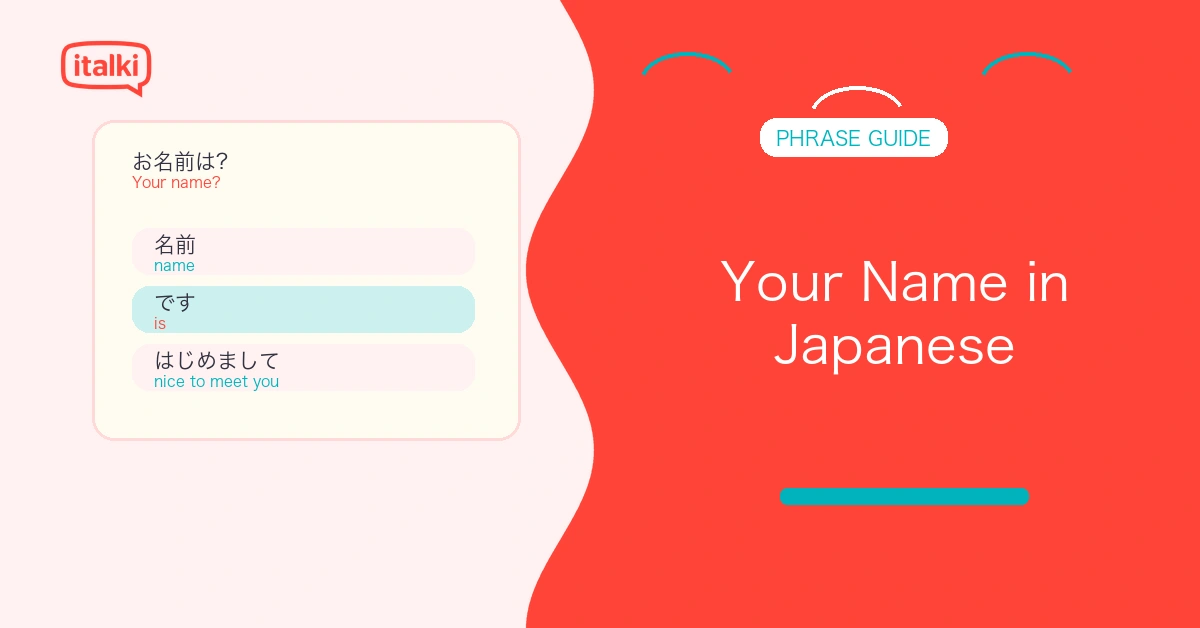
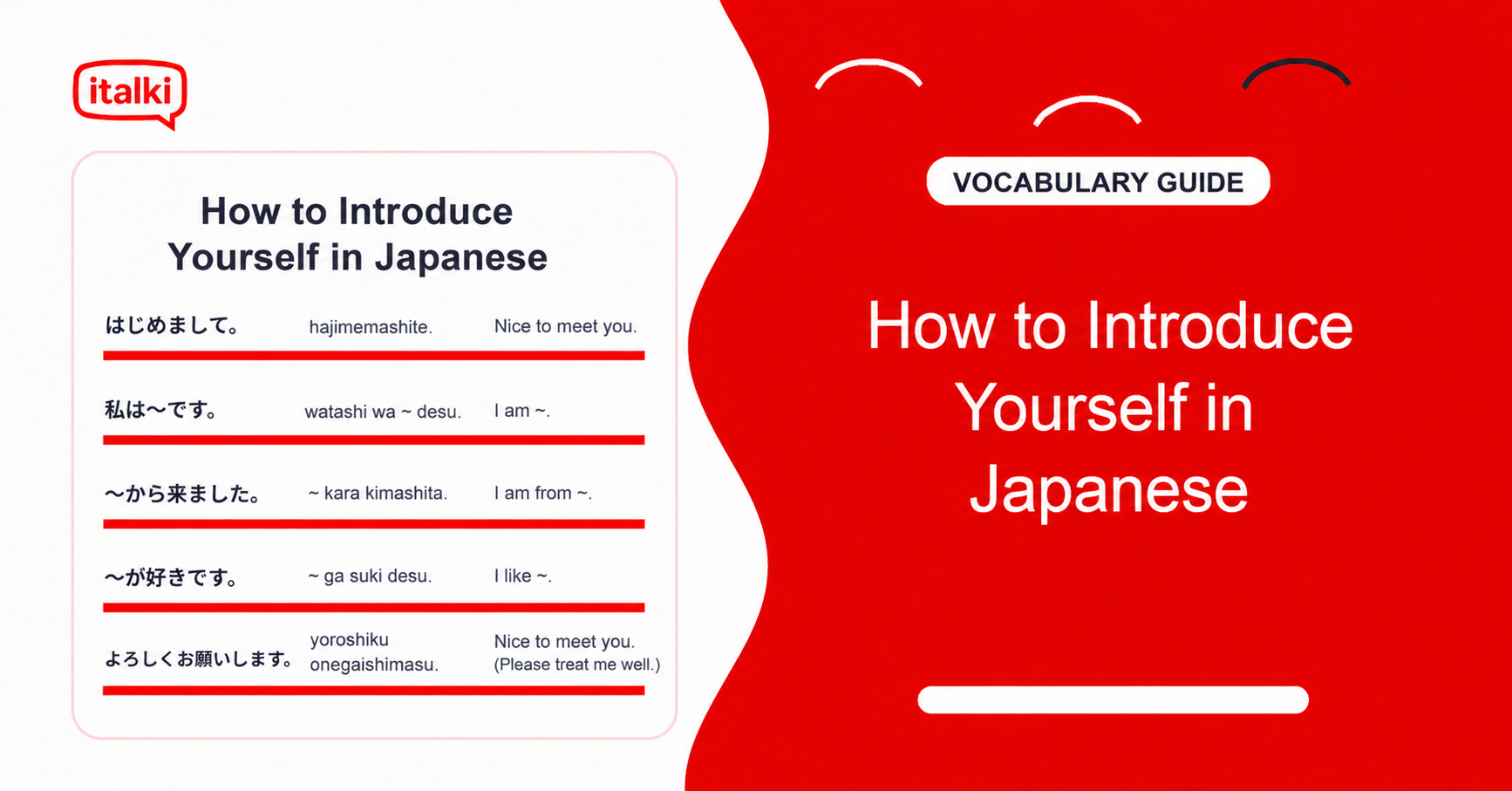
- A basic Japanese self introduction, 自己紹介 (jikoshoukai), starts with はじめまして (hajimemashite, nice to meet you) and ends with よろしくお願いします (yoroshiku onegai shimasu, please treat me well).
- The introduction changes by setting: a classroom version includes hobbies, a workplace version uses humble verb forms, and a travel version stays short and practical.
- Delivery matters too: say your name clearly, keep it short, and choose the right version for the setting.
- Practicing a 自己紹介 out loud with a Japanese tutor helps you sound natural instead of translated, especially when choosing the right politeness level.
To introduce yourself in Japanese, build a short 自己紹介 (jikoshoukai, self introduction): はじめまして, name, origin, occupation or studies, one personal detail, and よろしくお願いします. The part learners often miss is delivery: making those lines sound like something you would actually say in a class, a trip, a workplace, or an online lesson.
If your introduction sounds stiff, a Japanese language instructor can help you trim it, fix pronunciation, and choose the version that fits the situation.

Find Your Perfect Teacher
Practice introduce yourself in japanese with a Japanese tutor who can correct pronunciation, phrasing, listening speed, and natural replies in real time.

What is the basic script to introduce yourself in Japanese?
The safest beginner script follows five lines: はじめまして, name, origin, one detail, and よろしくお願いします. This pattern works at a homestay door, in a first language class, or on a video call.
| Japanese | Pronunciation | Meaning |
|---|---|---|
| はじめまして。 | hajimemashite | Nice to meet you. |
| 〇〇です。 | 〇〇 desu | (name). |
| アメリカから来ました。 | Amerika kara kimashita | From America. |
| 日本語を勉強しています。 | nihongo o benkyou shite imasu | Studying Japanese. |
| よろしくお願いします。 | yoroshiku onegai shimasu | Please treat me well. |
A complete beginner introduction sounds like this:
はじめまして。エマです。アメリカから来ました。日本語を勉強しています。よろしくお願いします。
Hajimemashite. Ema desu. Amerika kara kimashita. Nihongo o benkyou shite imasu. Yoroshiku onegai shimasu.
Nice to meet you. Emma here. From America. Studying Japanese. Please treat me well.
The phrase よろしくお願いします has no single English equivalent. In a self introduction, it signals something between “Please be kind to me” and “I look forward to working with you.” Skipping it at the end of a first meeting sounds incomplete, the way ending a phone call without “bye” would feel in English.
For pronunciation, keep each phrase smooth. Japanese rhythm is more even than English, so エマです (Ema desu) should flow steadily rather than sounding like two heavy English beats. Pause briefly after your name so the listener catches it, especially if it is not common in Japan. More on opening greetings and tone appears in Japanese greetings.
Which phrases cover name, country, job, and hobbies?
Learning these as complete sentence chunks, rather than individual vocabulary words, produces smoother delivery.
Name
- 田中です (Tanaka desu, Tanaka)
- サラです (Sara desu, Sarah)
- ジョンと申します (Jon to moushimasu, John, stated humbly)
For business or formal settings, 〇〇と申します (〇〇 to moushimasu) sounds more polished. Use it when you want a respectful first impression, such as a meeting, interview, or formal event.
Country or city
- カナダから来ました (Kanada kara kimashita, from Canada)
- ロンドンから来ました (Rondon kara kimashita, from London)
- メキシコ出身です (Mekishiko shusshin desu, originally from Mexico)
出身です (shusshin desu, originally from) fits when talking about hometowns, especially if currently living somewhere else.
Job or role
- 学生です (gakusei desu, a student)
- 会社員です (kaishain desu, a company employee)
- エンジニアです (enjinia desu, an engineer)
- ABC会社の営業部で働いています (ABC kaisha no eigyou bu de hataraite imasu, working in the sales department at ABC Company)
Workplace introductions in Japan often put the company name before the personal name, which can feel reversed for English speakers. More on that pattern and meeting openers appears in Japanese for work.
Reason for studying Japanese
This line makes an introduction warmer and gives the listener something to respond to.
- 日本語を勉強しています (nihongo o benkyou shite imasu, studying Japanese)
- 日本の映画が好きです (Nihon no eiga ga suki desu, I like Japanese movies)
- 旅行のために日本語を勉強しています (ryokou no tame ni nihongo o benkyou shite imasu, studying Japanese for travel)
One hobby
A hobby line is expected in classrooms and language exchanges, and welcome in casual first meetings.
- 趣味は料理です (shumi wa ryouri desu, cooking is the hobby)
- 音楽が好きです (ongaku ga suki desu, like music)
- 週末によく映画を見ます (shuumatsu ni yoku eiga o mimasu, often watch movies on weekends)
Keep the hobby line to one sentence. A self introduction is not a biography.
Find Your Perfect Teacher
Practice introduce yourself in japanese with a Japanese tutor who can correct pronunciation, phrasing, listening speed, and natural replies in real time.
How formal should a Japanese introduction be?
Use polite Japanese for first meetings unless the setting is clearly casual. Dropping into casual speech too early sounds abrupt, even if the grammar is correct.
| Setting | Name phrase | Closing phrase | Tone |
|---|---|---|---|
| Language class or homestay | エマです (Ema desu) | よろしくお願いします | Polite, friendly |
| Business meeting or formal event | エマと申します (Ema to moushimasu) | どうぞよろしくお願いいたします | Formal, humble |
| Casual meetup with peers | エマです (Ema desu) | よろしく (yoroshiku) | Relaxed |
Avoid opening with やあ (yaa, hey) or どうも (doumo, casual hi) when meeting a teacher, host family, client, or older person. These greetings work better after a relationship exists.
When joining a team, class, or club, add 今日から (kyou kara, from today) to signal being new:
今日からこのクラスに参加します。よろしくお願いします。
Kyou kara kono kurasu ni sanka shimasu. Yoroshiku onegai shimasu.
Joining this class from today. Please treat me well.
Japanese politeness also connects to how others are addressed. When to use さん (san), 先生 (sensei, teacher), and other suffixes is covered in Japanese honorifics.
The hard part is choosing the right version quickly. A online Japanese tutor can role-play a casual meetup, a first lesson, and a workplace introduction in one session so you learn when エマです is enough and when エマと申します sounds better.
How should you deliver a Japanese self introduction?
Japanese introductions are easier when you focus on delivery: clear name, short details, polite close, and a version that fits the setting.
Say your name clearly
Pause briefly after your name, especially if it is unfamiliar in Japanese. エマです should sound smooth and clear, not rushed.
Use family name plus さん for others
Refer to the other person by family name plus さん (san) unless invited to use a first name: 田中さん (Tanaka san), 山本さん (Yamamoto san). Do not add さん to a personal name when referring to oneself. Saying エマさんです about oneself sounds wrong because さん is a respect marker directed outward, toward someone else.
Keep it compact
A first 自己紹介 typically lasts 15 to 30 seconds. Long personal stories feel heavy in a first encounter, especially in group settings where everyone introduces themselves in turn.
Match the setting
Use エマです for class, travel, and casual first meetings. Use エマと申します in formal work settings. If you are unsure, start polite and simple.
What do natural self introductions sound like for travel, class, work, and online lessons?
A natural 自己紹介 changes with the situation. The scripts below are ready to use. Swap in personal details and practice until the rhythm feels comfortable.
Travel
はじめまして。ソフィアです。スペインから来ました。日本を旅行しています。よろしくお願いします。
Nice to meet you. Sofia. From Spain. Traveling in Japan. Please treat me well.
Travel introductions stay short because the next step is usually a practical question: directions, check-in details, or a restaurant recommendation. Having travel phrases ready alongside the self introduction keeps the conversation going, and a starting set of those phrases appears in learn basic Japanese for travel.
Classroom
はじめまして。ダニエルです。ブラジル出身です。大学で日本語を勉強しています。趣味はサッカーです。よろしくお願いします。
Nice to meet you. Daniel. From Brazil. Studying Japanese at university. Hobby is soccer. Please treat me well.
Work
はじめまして。ABC会社のミラーと申します。営業部で働いております。本日はどうぞよろしくお願いいたします。
Nice to meet you. Miller from ABC Company. Working in the sales department. Thank you for your time today.
働いております (hataraite orimasu) is the formal version of 働いています (hataraite imasu). よろしくお願いいたします (yoroshiku onegai itashimasu) is more formal than よろしくお願いします. Use these in business introductions; avoid them in casual travel or class introductions unless you want to sound very formal.
Online lesson
はじめまして。アレックスです。日本語はまだ初心者です。会話を練習したいです。よろしくお願いします。
Nice to meet you. Alex. Still a beginner in Japanese. Want to practice conversation. Please treat me well.
This version gives the teacher useful context right away. 初心者 (shoshinsha) means beginner, and 会話 (kaiwa) means conversation, so the teacher knows where to start. Bring this script to a trial session with a private Japanese tutor and ask them to make it sound like you, not like a textbook.
Find Your Perfect Teacher
Practice introduce yourself in japanese with a Japanese tutor who can correct pronunciation, phrasing, listening speed, and natural replies in real time.
What mistakes make a Japanese self introduction sound awkward?
The most common mistakes are adding さん to a personal name, using the long form 私の名前は when 〇〇です is smoother, going too casual at a first meeting, and skipping よろしくお願いします entirely.
| Awkward version | Better version | Why |
|---|---|---|
| 私はエマさんです。 | エマです。 | さん is not used for oneself. |
| 私の名前はエマです。 | エマです。 | Shorter and more natural in spoken Japanese. |
| よろしく。 (to a teacher) | よろしくお願いします。 | The full phrase is expected at first meetings with people above a social level. |
| 私は二十五歳です。 | Add age only if asked. | Age is rarely part of a standard 自己紹介. |
私の名前は (watashi no namae wa, literally “as for the name of me”) is grammatically fine, but 〇〇です sounds smoother in real introductions. Japanese speakers frequently drop 私 (watashi) when the context makes it obvious, and a self introduction is the most obvious context there is.
Another mistake is overloading the introduction with every detail a learner knows how to say. Pick the details that fit the room: a classroom wants hobbies, a client meeting wants a role, and a guesthouse check-in wants almost nothing beyond a name.
How to practice introducing yourself in Japanese
Practice the 自己紹介 in three passes: script it, say it aloud slowly, then role-play it in different settings.
Step 1: Write a four-sentence version. はじめまして。〇〇です。〇〇から来ました。よろしくお願いします。
Step 2: Read it aloud five times. Focus on even rhythm. Japanese syllables get roughly equal time, so avoid punching stressed syllables the way English does.
Step 3: Record once. Listen for rushed endings, swallowed syllables, and whether よろしくお願いします sounds complete or mumbled.
Step 4: Build a second version. After a classroom script feels easy, write a short travel version and a formal work version. Changing one or two lines forces the phrases to become flexible rather than memorized as a single block.
Step 5: Add one personal sentence. This is what makes a 自己紹介 feel human instead of rehearsed: 趣味は読書です (shumi wa dokusho desu, hobby is reading), 猫が好きです (neko ga suki desu, like cats), or 日本の映画が好きです (Nihon no eiga ga suki desu, like Japanese movies).
Solo practice helps with memory, but it cannot tell you whether your introduction fits the room. A role-play session with a Japanese teacher can. Bring three versions and ask which fits a classroom, which fits a business dinner, and which sounds right for meeting a friend’s parents.
Ready to introduce yourself in Japanese with confidence?
A good 自己紹介 is short, polite, and matched to the setting. Start with はじめまして, add a name with 〇〇です, say an origin with 〇〇から来ました, include one relevant personal line, and close with よろしくお願いします. Then adjust the formality for travel, class, work, or a first online lesson.
The fastest way to know whether a self introduction sounds natural or translated is to say it to a real listener and get corrected. Bring one version of your 自己紹介 to a Japanese tutor and leave with a cleaner introduction you can use in your next class, trip, meeting, or online lesson.
Find Your Perfect Teacher
Practice introduce yourself in japanese with a Japanese tutor who can correct pronunciation, phrasing, listening speed, and natural replies in real time.
FAQ
How do you introduce yourself in Japanese as a beginner?
Say はじめまして。〇〇です。〇〇から来ました。よろしくお願いします。 That means “Nice to meet you. (Name). From (place). Please treat me well.” Four sentences are enough for most first meetings.
What does よろしくお願いします mean in a self introduction?
It roughly translates to “Please treat me well” or “I look forward to this relationship.” There is no exact English match, but it signals politeness and goodwill at the close of a first meeting.
Should 私の名前は be used in Japanese introductions?
It is grammatically correct but sounds stiff in spoken introductions. 〇〇です is smoother and more common. For formal settings, 〇〇と申します is the better upgrade.
What matters most when introducing yourself in Japanese?
Speak clearly, keep the introduction short, choose the right formality level, and close with よろしくお願いします.
How long should a Japanese self introduction be?
Aim for 15 to 30 seconds. Give a name, background, one fitting detail, and よろしくお願いします. Longer introductions are only expected in specific settings like a new-employee ceremony.
Want to learn a language at italki?
Here are the best resources for you!