Key takeaways
- The JLPT N5 requires knowledge of 80 kanji: the most basic characters used in everyday Japanese.
- Each kanji has multiple readings: on’yomi (Chinese-derived) and kun’yomi (native Japanese).
- Organizing kanji by category, numbers, time, nature, body, people, makes them faster to remember than a random list.
- You need to recognize these kanji in context, not just memorize isolated characters.
- Japanese tutors can help you practice reading these kanji in real sentences and listening for their correct pronunciation.
You have been studying Japanese for a few months. You can read hiragana and katakana fluently, but every time you see kanji in a real sentence, you still feel stuck. That gap is exactly what this list addresses.
The 80 JLPT N5 kanji are the characters that appear most frequently at beginner level: in signs, forms, menus, instructions, and simple texts. Learning them unlocks a layer of Japanese that no amount of phonetic reading can substitute for.
italki operates across 150+ languages with more than 30,000 tutors, giving you access to Japanese tutors who guide you through these characters in real contexts. This guide covers all 80 JLPT N5 kanji organized by topic category, with their common readings and English meanings.

Find Your Perfect Teacher
Build real speaking confidence with personalized lessons from a teacher who matches your goals, schedule, and learning style.
Book a trial lesson
Numbers and counting
| Kanji | Romaji (reading) | English |
|---|---|---|
| 一 | ichi / hito- | one |
| 二 | ni / futa- | two |
| 三 | san / mi- | three |
| 四 | shi / yon | four |
| 五 | go / itsu- | five |
| 六 | roku / mu- | six |
| 七 | shichi / nana | seven |
| 八 | hachi / ya- | eight |
| 九 | ku / kyuu / kokono- | nine |
| 十 | juu / to- | ten |
| 百 | hyaku | hundred |
| 千 | sen | thousand |
| 万 | man | ten thousand |
| 円 | en | yen / circle |
Start your Japanese lesson online and master these foundational kanji.
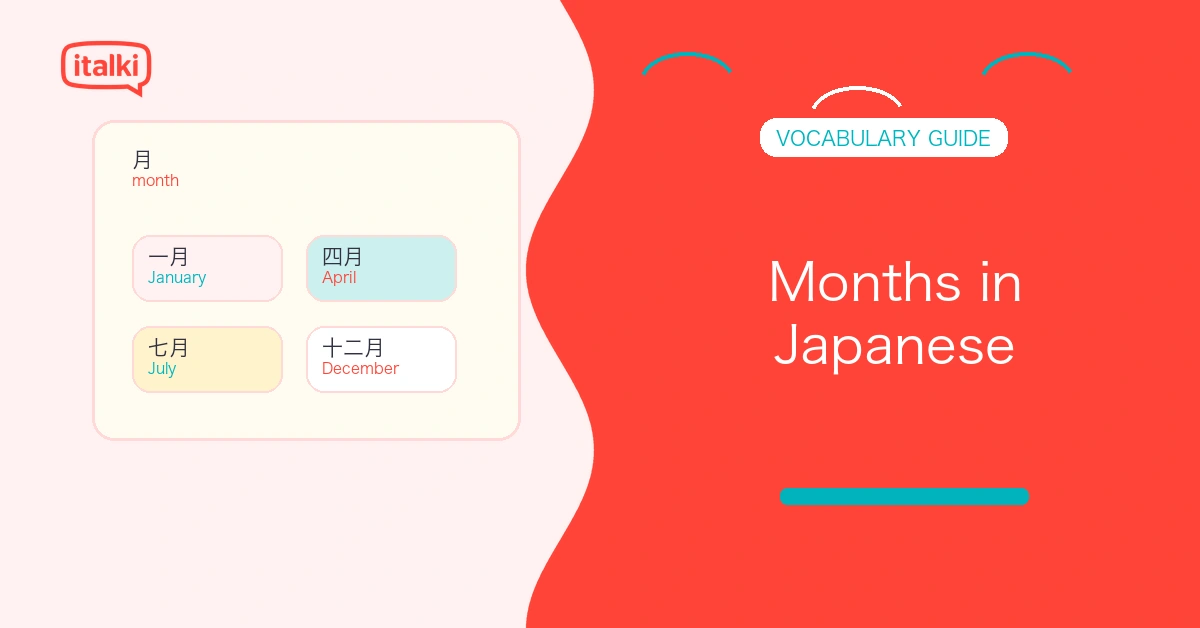
Days, months, and time
| Kanji | Romaji (reading) | English |
|---|---|---|
| 日 | nichi / jitsu / hi / ka | sun / day |
| 月 | getsu / tsuki | moon / month |
| 年 | nen / toshi | year |
| 時 | ji / toki | time / hour |
| 分 | fun / pun / bu / waka- | minute / to understand |
| 今 | ima / kon / kin | now |
| 週 | shuu | week |
Time and calendar kanji appear constantly in Japanese media. Practice these with a Japanese language tutor using real-world examples like schedules and announcements.
Nature and environment
| Kanji | Romaji (reading) | English |
|---|---|---|
| 山 | san / yama | mountain |
| 川 | sen / kawa | river |
| 田 | den / ta | rice field |
| 木 | moku / ki | tree / wood |
| 火 | ka / hi | fire |
| 水 | sui / mizu | water |
| 土 | do / tsuchi | earth / soil |
| 金 | kin / kane | gold / money |
| 空 | kuu / sora | sky |
| 雨 | u / ame | rain |
| 花 | ka / hana | flower |
| 天 | ten | sky / heaven |
| 気 | ki / ke | spirit / feeling / weather |
These nature kanji are the building blocks for thousands of compound words. Build your vocabulary foundation with a Japanese teacher who organizes practice around these core characters.
Find Your Perfect Teacher
Build real speaking confidence with personalized lessons from a teacher who matches your goals, schedule, and learning style.
Book a trial lesson
Directions and position
| Kanji | Romaji (reading) | English |
|---|---|---|
| 上 | jou / ue / kami | above / up |
| 下 | ka / shita / shimo | below / down |
| 中 | chuu / naka | middle / inside |
| 左 | sa / hidari | left |
| 右 | u / yuu / migi | right |
| 外 | gai / soto | outside |
| 前 | zen / mae | front / before |
| 後 | kou / go / ato / nochi | behind / after |
| 東 | higashi / tou | east |
| 西 | nishi / sei / sai | west |
| 南 | minami / nan | south |
| 北 | kita / hoku | north |
Direction kanji form the foundation for navigation, instructions, and spatial descriptions. Book online Japanese lessons and work through these by reading real maps and directions.
People and relationships
| Kanji | Romaji (reading) | English |
|---|---|---|
| 人 | jin / nin / hito | person |
| 男 | dan / nan / otoko | man |
| 女 | jo / nyo / onna | woman |
| 子 | shi / ko | child |
| 父 | chichi / fu | father |
| 母 | haha / bo | mother |
| 先 | sen / saki | ahead / previous / teacher (in 先生) |
| 生 | sei / shou / i- | life / birth / raw |
| 友 | yuu / tomo | friend |
| 名 | mei / myou / na | name |
These human and relationship kanji appear in everyday conversation. Practice producing sentences with these characters with the best online Japanese tutors.
Find Your Perfect Teacher
Build real speaking confidence with personalized lessons from a teacher who matches your goals, schedule, and learning style.
Book a trial lesson
Size, quantity, and quality
| Kanji | Romaji (reading) | English |
|---|---|---|
| 大 | dai / tai / oo- | big |
| 小 | shou / ko- / o- / chiisai | small |
| 長 | chou / naga- | long |
| 高 | kou / taka- | high / expensive |
| 安 | an / yasu- | cheap / safe |
| 新 | shin / atarashi- | new |
| 古 | ko / furu- | old |
| 多 | ta / ooi | many |
| 少 | shou / suku- / wazuka | few / little |
| 白 | haku / shiro / shiroi | white |
| 赤 | seki / aka | red |
| 青 | sei / ao | blue / green |
Descriptive kanji form the backbone of how Japanese speakers paint pictures with language. Get feedback on your kanji reading and comprehension from a Japanese tutor on italki using texts at your level.
Common verbs and actions
| Kanji | Romaji (reading) | English |
|---|---|---|
| 見 | ken / mi- | see / look |
| 聞 | bun / mon / ki- | hear / listen |
| 食 | shoku / ta- / ku- | eat |
| 飲 | in / no- | drink |
| 読 | doku / toku / yo- | read |
| 書 | sho / ka- | write |
| 話 | wa / hana- / hanashi | speak / story |
| 行 | kou / gyou / i- / yu- | go |
| 来 | rai / ku- / ki- | come |
| 出 | shutsu / de- / da- | exit / go out |
| 入 | nyuu / i- / hai- | enter |
| 帰 | ki / kae- | return |
| 買 | bai / ka- | buy |
| 休 | kyuu / yasu- | rest |
| 立 | ritsu / ta- | stand |
Verb kanji are the most active part of your vocabulary. Practice these in conversation with a private Japanese tutor.
Find Your Perfect Teacher
Build real speaking confidence with personalized lessons from a teacher who matches your goals, schedule, and learning style.
Book a trial lesson
School, learning, and objects
| Kanji | Romaji (reading) | English |
|---|---|---|
| 学 | gaku / mana- | study / learning |
| 校 | kou | school |
| 語 | go | language |
| 国 | koku / kuni | country |
| 本 | hon / moto | book / origin |
| 車 | sha / kuruma | car |
| 電 | den | electricity |
| 目 | moku / me | eye |
| 手 | shu / te | hand |
| 口 | kou / kuchi | mouth |
| 耳 | ji / mimi | ear |
| 足 | soku / ashi | foot / leg |
These school and object kanji complete your N5 foundation. Work with a Japanese language tutor to see how these characters appear in real textbooks and media.
How to study N5 kanji effectively
Learn kanji in compound words. Most kanji appear as part of compound words. Learning 電 (den: electricity) alongside 電車 (densha: train) and 電話 (denwa: telephone) gives you three words for the price of one.
Use spaced repetition. Apps like Anki with an N5 kanji deck spread reviews over time so you review harder characters more often and easy ones less. This is far more efficient than reviewing a static list.
Write them out. Recognition is not the same as recall. Writing each kanji several times, following the correct stroke order, builds muscle memory and deepens retention.
Read them in real sentences. After learning a kanji, look for it in actual Japanese text. NHK Web Easy provides simplified news articles so you see how characters function in context.
Recognition in a list is the easy part. Reading these kanji at natural speed in a real text, or hearing their readings in audio, is the skill the JLPT tests.
With over 15 years of experience connecting learners to qualified teachers, italki has helped students in 190+ countries achieve their language learning goals. Book a trial lesson on italki today.
##
Find Your Perfect Teacher
Build real speaking confidence with personalized lessons from a teacher who matches your goals, schedule, and learning style.
Book a trial lesson
FAQ
How many kanji are required for JLPT N5?
The JLPT N5 requires knowledge of approximately 80 kanji. These are the most fundamental characters used in everyday Japanese, covering numbers, time, directions, basic actions, and common objects. The full JLPT (up to N1) requires around 2,000 kanji.
Do I need to write kanji for the JLPT N5?
No. The JLPT N5 is a reading and listening test, so you are never asked to produce (write) kanji. You need to recognize them in context and understand their meaning. That said, writing kanji by hand is still a useful study technique because it builds stronger memory of their form and stroke structure.
What is the difference between on’yomi and kun’yomi readings?
Most kanji have two types of readings. On’yomi comes from how the character was pronounced in Chinese when it entered Japanese. Kun’yomi is the original Japanese word for the concept the kanji represents. For example, 山 has the on’yomi “san” (as in 富士山, Mount Fuji) and the kun’yomi “yama” (as in “that mountain”).
Want to learn a language at italki?
Here are the best resources for you!