Key takeaways
- Weather is one of the most common topics of conversation in Japan, similar to British English culture, and knowing basic weather phrases opens up natural small talk with native speakers
- The main structure for weather descriptions is 天気 (tenki: weather) + は + adjective/expression: 今日は天気がいいですね (kyō wa tenki ga ii desu ne: The weather is nice today, isn’t it)
- Japan has four distinct seasons plus the rainy season (梅雨, tsuyu) and typhoon season (台風シーズン, taifū shīzun), giving learners rich vocabulary for weather-related conversation year-round
- Weather expressions in Japanese often use specific words with no direct English equivalent, such as 蒸し暑い (mushiatsui: hot and humid / muggy) and むしむし (mushimushi: oppressively humid), which are essential for describing Japanese summers
Weather conversations open naturally to deeper exchanges in Japanese. Mentioning the weather acknowledges shared experience with the people around you and shows you are present in the environment. It is one of the most useful and genuinely used categories of vocabulary for learners at all levels.
italki connects learners with Japanese teachers who can help you move beyond vocabulary lists into the natural flow of weather conversation in Japanese.
This guide covers basic weather vocabulary, describing the weather, asking about forecasts, seasonal weather expressions, Japan-specific weather phenomena, and conversational phrases for everyday weather talk.

Find your perfect teacher
Build real speaking confidence with personalized lessons from a teacher who matches your goals, schedule, and learning style.
Book a trial lesson
Basic weather vocabulary
| Japanese | Romaji | English |
|---|---|---|
| 天気 | tenki | weather |
| 気候 | kikō | climate |
| 晴れ | hare | sunny / clear skies |
| 曇り | kumori | cloudy / overcast |
| 雨 | ame | rain |
| 雪 | yuki | snow |
| 風 | kaze | wind |
| 霧 | kiri | fog / mist |
| 雷 | kaminari | thunder |
| 雷雨 | raiu | thunderstorm |
| 嵐 | arashi | storm |
| 台風 | taifū | typhoon |
| 梅雨 | tsuyu | rainy season |
| 霰 | arare | sleet / hail (small) |
| 霜 | shimo | frost |
| 虹 | niji | rainbow |
| 吹雪 | fubuki | blizzard / snowstorm |
| にわか雨 | niwaka ame | sudden shower / passing rain |
Describing the weather: core structures
The most natural structures for describing weather in Japanese:
Structure 1: 今日は [weather] です / ですね
- 今日は晴れです。(Kyō wa hare desu.): It is sunny today.
- 今日は曇りですね。(Kyō wa kumori desu ne.): It is cloudy today, isn’t it.
- 今日は雨です。(Kyō wa ame desu.): It is raining today.
Structure 2: 天気が [adjective] + です / ですね
- 今日は天気がいいですね。(Kyō wa tenki ga ii desu ne.): The weather is nice today, isn’t it.
- 天気が悪くなりそうですね。(Tenki ga waruku nari sō desu ne.): The weather looks like it is going to turn bad.
Structure 3: [Weather phenomenon] が [verb]
- 雨が降っています。(Ame ga futte imasu.): It is raining.
- 雪が降っています。(Yuki ga futte imasu.): It is snowing.
- 風が吹いています。(Kaze ga fuite imasu.): The wind is blowing.
- 雷が鳴っています。(Kaminari ga natte imasu.): Thunder is rumbling.
Key verb: 降る (furu: to fall/precipitate) is the verb for rain, snow, hail, and any precipitation falling from the sky.
| Tense | Japanese | Romaji | English |
|---|---|---|---|
| Present (in progress) | 雨が降っています | ame ga futte imasu | It is raining |
| Future / will rain | 雨が降るでしょう | ame ga furu deshō | It will probably rain |
| Past | 雨が降りました | ame ga furimashita | It rained |
| Likely to rain | 雨が降りそうです | ame ga furi sō desu | It looks like it will rain |
Find your perfect teacher
Build real speaking confidence with personalized lessons from a teacher who matches your goals, schedule, and learning style.
Book a trial lesson
Asking about the weather
| Japanese | Romaji | English |
|---|---|---|
| 今日の天気はどうですか? | Kyō no tenki wa dō desu ka? | How is the weather today? |
| 明日の天気は? | Ashita no tenki wa? | What will the weather be like tomorrow? |
| 天気予報は何ですか? | Tenki yohō wa nan desu ka? | What is the weather forecast? |
| 今日、雨が降りますか? | Kyō, ame ga furimasu ka? | Will it rain today? |
| 傘が必要ですか? | Kasa ga hitsuyō desu ka? | Do I need an umbrella? |
| 何度ですか? | Nando desu ka? | What is the temperature? |
| 今日は何度くらいですか? | Kyō wa nando kurai desu ka? | About what temperature is it today? |
| 週末の天気はどうですか? | Shūmatsu no tenki wa dō desu ka? | How is the weather this weekend? |
The sentence-ending particle ね (ne) is very commonly added to weather comments, as it invites agreement and turns a statement into shared observation: 今日は寒いですね (it is cold today, isn’t it). This is natural small talk in Japanese and shows you are engaged with the shared environment.
Temperature vocabulary
| Japanese | Romaji | English | Notes |
|---|---|---|---|
| 暑い | atsui | hot | For weather and outdoor temperature |
| 熱い | atsui | hot (to touch) | For objects (food, drink); same pronunciation as 暑い |
| 寒い | samui | cold | For weather and the feeling of being cold |
| 冷たい | tsumetai | cold (to touch) | For objects: cold drink, cold wind on skin |
| 涼しい | suzushii | cool / refreshing | Pleasantly cool; typical for early autumn |
| 暖かい | atatakai | warm | Pleasant warmth; typical for spring |
| 蒸し暑い | mushiatsui | hot and humid / muggy | Essential for Japanese summer |
| ひんやり | hinyari | chilly / pleasantly cool | Gentle coolness; often with a refreshing nuance |
| 肌寒い | hisamui | chilly / slightly cold | The just-starting-to-feel-cold of early autumn or evening |
Important distinction: 暑い vs 熱い and 寒い vs 冷たい
- 暑い (atsui: hot weather / feeling hot from the environment)
- 熱い (atsui: hot to the touch or hot food/drink)
- 寒い (samui: cold weather / feeling cold from the environment)
- 冷たい (tsumetai: cold to the touch, cold object, or cold wind felt on skin)
Using 熱い for the weather (saying 天気が熱い) is an error; 暑い is correct for outdoor heat.
Find your perfect teacher
Build real speaking confidence with personalized lessons from a teacher who matches your goals, schedule, and learning style.
Book a trial lesson
Seasonal weather in Japan
| Season | Japanese | Romaji | Typical weather |
|---|---|---|---|
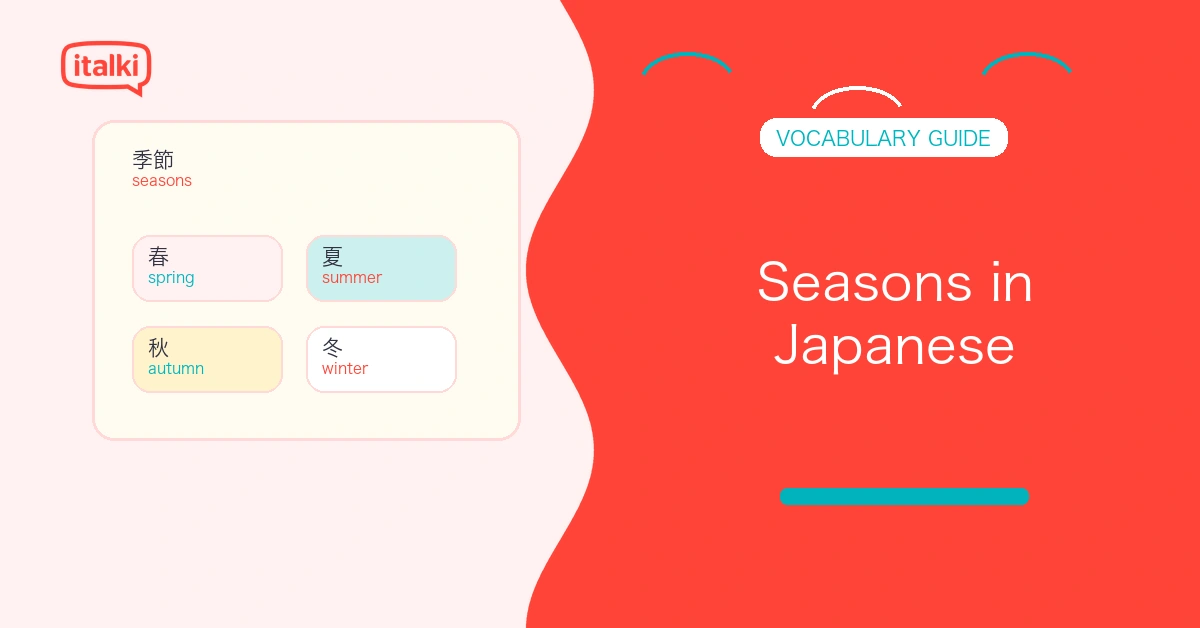
| Spring | 春 | haru | Mild; cherry blossom season; occasional cold spells |
| Summer | 夏 | natsu | Hot and humid; typhoon season (August-September) |
| Autumn | 秋 | aki | Clear skies; cooling temperatures; colorful leaves |
| Winter | 冬 | fuyu | Cold; snow in northern regions and mountains; dry in much of Honshu |
| Rainy season | 梅雨 | tsuyu | Late June to mid-July in most of Japan; persistent rain |
Seasonal weather phrases:
| Japanese | Romaji | English |
|---|---|---|
| 桜が咲いていますよ | Sakura ga saite imasu yo | The cherry blossoms are blooming |
| もう夏ですね | Mō natsu desu ne | It is already summer, isn’t it |
| 秋らしくなってきましたね | Aki rashiku natte kimashita ne | It has started to feel like autumn, hasn’t it |
| 今年の冬は厳しいですね | Kotoshi no fuyu wa kibishii desu ne | This year’s winter is harsh, isn’t it |
| 花粉症の季節ですね | Kafunshō no kisetsu desu ne | It is hay fever season, isn’t it |
| もうすぐ梅雨ですね | Mō sugu tsuyu desu ne | The rainy season is coming soon, isn’t it |
Seasons in Japanese connect naturally with weather phrases because the four seasons shape everyday small talk in Japan.
Japan-specific weather phenomena
Japan has several weather phenomena that have their own vocabulary and cultural significance:
| Japanese | Romaji | English | Notes |
|---|---|---|---|
| 梅雨 | tsuyu | Rainy season | Late June to mid-July; continuous overcast and rain; named for plum ripening season |
| 台風 | taifū | Typhoon | Tropical cyclones affecting Japan, mainly August-September |
| 花粉症 | kafunshō | Hay fever / pollen allergy | Affects millions in spring (cedar pollen); a major national conversation topic |
| 黄砂 | kōsa | Yellow sand / dust | Yellow dust blown from China and Mongolia; common in spring |
| 春一番 | haru ichiban | First spring wind | The first strong southerly wind of the year, signaling the end of winter |
| 天気雨 | tenki ame | Sun shower | Rain falling while the sun is shining (literally weather rain) |
| 夕立 | yūdachi | Summer evening shower | Sudden, heavy rain in the late afternoon, typical in summer |
| 木枯らし | kogarashi | Cold winter wind | Piercing cold wind in late autumn and winter; has a poetic, literary nuance |
| 吹雪 | fubuki | Blizzard | Heavy snow with strong wind |
Note on 梅雨 (tsuyu): The rainy season is a significant weather event in Japan with its own social vocabulary. 梅雨入り (tsuyu iri: start of the rainy season) and 梅雨明け (tsuyu ake: end of the rainy season) are both announced by the Japan Meteorological Agency and are widely discussed in the media and daily conversation.
Find your perfect teacher
Build real speaking confidence with personalized lessons from a teacher who matches your goals, schedule, and learning style.
Book a trial lesson
Weather forecast vocabulary
| Japanese | Romaji | English |
|---|---|---|
| 天気予報 | tenki yohō | weather forecast |
| 晴れのち曇り | hare nochi kumori | sunny then cloudy |
| 曇りのち雨 | kumori nochi ame | cloudy then rainy |
| 降水確率 | kōsui kakuritsu | probability of precipitation |
| 最高気温 | saikō kion | maximum temperature |
| 最低気温 | saitei kion | minimum temperature |
| 気温 | kion | air temperature |
| 湿度 | shitsudo | humidity |
| 風速 | fūsoku | wind speed |
| 強風注意報 | kyōfū chūihō | strong wind advisory |
| 大雨警報 | ōame keihō | heavy rain warning |
| 台風警報 | taifū keihō | typhoon warning |
| 避難勧告 | hinan kankoku | evacuation advisory |
Reading Japanese weather forecasts: Japanese weather forecasts frequently use のち (nochi: later / then) and 時々 (tokidoki: sometimes / occasionally) to describe changing conditions:
- 晴れ時々曇り (hare tokidoki kumori: sunny with occasional clouds)
- 曇りのち晴れ (kumori nochi hare: cloudy becoming sunny)
Weather-related conversational phrases
These phrases go beyond basic descriptions into natural conversation:
| Japanese | Romaji | English | Notes |
|---|---|---|---|
| いい天気ですね | ii tenki desu ne | Nice weather, isn’t it | Standard small talk opener |
| 最近暑いですね | saikin atsui desu ne | It has been hot lately, hasn’t it | Opens weather small talk |
| 雨が続きますね | ame ga tsuzukimasu ne | The rain keeps going, doesn’t it | During a rainy spell |
| 傘持ってきた? | kasa motte kita? | Did you bring an umbrella? (casual) | Natural casual question |
| 今日は天気が崩れそうですね | kyō wa tenki ga kuzure sō desu ne | The weather looks like it might turn bad today | Slightly advanced phrase |
| こんな天気が続くと嫌ですね | konna tenki ga tsuzuku to iya desu ne | It would be unpleasant if this weather kept up | Expressing mild complaint |
| 外は何度くらいですか? | soto wa nando kurai desu ka | About what temperature is it outside? | |
| 秋晴れで気持ちいいですね | akibare de kimochi ii desu ne | The clear autumn sky is pleasant, isn’t it | 秋晴れ (akibare) means clear autumn sky |
| 花粉がひどいですね | kafun ga hidoi desu ne | The pollen is terrible, isn’t it | Spring conversation topic |
A Japanese tutor can practice these conversational phrases with you in simulated small talk situations so they feel natural when you use them with Japanese colleagues or neighbors.
Find your perfect teacher
Build real speaking confidence with personalized lessons from a teacher who matches your goals, schedule, and learning style.
Book a trial lesson
Weather and daily life vocabulary
| Japanese | Romaji | English |
|---|---|---|
| 傘 | kasa | umbrella |
| 折り畳み傘 | oritatami gasa | folding umbrella |
| コート | kōto | coat |
| マフラー | mafurā | scarf |
| 手袋 | tebukuro | gloves |
| 長靴 | nagagutsu | rain boots |
| 日傘 | higasa | parasol / sun umbrella |
| サングラス | sangurasu | sunglasses |
| 扇風機 | senpūki | electric fan |
| エアコン | eakon | air conditioning |
| 暖房 | danbō | heating |
| 冷房 | reibō | air conditioning (specifically for cooling) |
| 除湿機 | joshitsuki | dehumidifier |
Note: In Japan, 扇子 (sensu: folding fan) and うちわ (uchiwa: flat fan) are still commonly used in summer. Carrying and using a fan in summer is completely normal and practical.
Practice Japanese conversation with a tutor
Weather vocabulary works best when it is practiced in real conversational turns, where you are forming and responding to comments naturally rather than reading from a list. The sentence-final particles (ね, よ, よね) that make weather comments sound natural in Japanese are especially difficult to learn from a page; they need to be heard and used in context. italki has 30,000+ expert tutors trusted by over 10 million learners worldwide, including Japanese tutors who can guide you through natural conversation practice and help you build the small talk skills that open doors to deeper communication with native speakers. Book a trial lesson and start speaking Japanese that sounds natural from the first exchange.
Find your perfect teacher
Build real speaking confidence with personalized lessons from a teacher who matches your goals, schedule, and learning style.
Book a trial lesson
FAQ
Why is weather such a common topic of conversation in Japan?
Weather conversation serves as a social function in Japan similar to how it does in Britain or the Netherlands: it is a shared, neutral topic that allows for social connection without requiring personal information or potentially sensitive subjects. In Japan, the distinct seasons, the dramatic summer humidity, the rainy season, and typhoons all provide genuinely eventful weather that people share experiences around. Commenting on the weather also uses the sentence-final particle ね (ne), which invites agreement and shared feeling, reinforcing the social bond between speakers.
What is the difference between 寒い (samui) and 冷たい (tsumetai)?
Both mean cold, but they apply to different types of cold. 寒い (samui) describes ambient coldness: cold weather, a cold room, or the sensation of feeling cold from the environment. 冷たい (tsumetai) describes the physical sensation of touching something cold or the temperature of an object: a cold drink, cold water, a cold breeze on your skin. Saying 今日は冷たいです (using tsumetai for today’s weather) would sound unusual; the correct form is 今日は寒いです. Conversely, you would not use 寒い to describe a cold drink; 冷たい飲み物 is correct.
What should I know about typhoon language in Japanese?
Typhoons (台風, taifū) directly affect Japan every year, usually between August and October. The Japan Meteorological Agency uses specific warning levels (注意報 chūihō: advisory; 警報 keihō: warning; 特別警報 tokubetsu keihō: special warning for extreme events). Knowing 台風接近中 (taifū sessen-chū: typhoon approaching) and 避難してください (hinan shite kudasai: please evacuate) are practically important. In daily conversation during typhoon season, 台風が来るらしいよ (taifū ga kuru rashii yo: a typhoon seems to be coming) is a very natural conversational warning between colleagues or neighbors.
Want to learn a language at italki?
Here are the best resources for you!