Key takeaways
- A Spanish resume (currículum vitae or CV) differs in format and cultural expectations from English resumes
- Language proficiency levels must be clearly stated using CEFR standards (A1-C2)
- Spanish speaking employers expect professional photos, detailed education sections, and personal information
- Accurate translation of job titles and technical skills is critical for applicant tracking systems
Writing a Spanish resume requires more than direct translation from English. Whether you’re applying for positions in Spain, Latin America, or with Spanish speaking companies globally, understanding the Spanish CV format and cultural expectations gives you a competitive edge.
Job seekers targeting Spanish speaking regions face unique challenges. Standard American or British resume conventions don’t always translate well. Spanish employers expect specific formatting, personal details, and presentation styles that differ significantly from English speaking nations.
The good news? With the right approach to your resume in Spanish, you can position yourself as a culturally aware candidate who understands local business practices. For a complete guide to the entire process, including cover letters and interview preparation, see our comprehensive guide on job applications in Spanish.
If you need help refining your Spanish language skills before applying, consider working with Spanish business tutor who can help you master professional vocabulary and cultural nuances.
This guide covers five essential tips for creating a Spanish resume that impresses hiring managers and beats applicant tracking systems.
What is a resume in Spanish?
A resume in Spanish is called “currículum vitae” or simply “CV” in most Spanish speaking countries. In some Latin American regions, you might also hear “hoja de vida” (literally “life sheet”), particularly in Colombia and parts of Central America.
The term “resume” itself translates to “currículum” or “CV” in Spanish, and these documents serve the same purpose as English resumes: showcasing your professional experience, education, and relevant skills to prospective employers.
However, a Spanish CV differs significantly from American or British resumes in both format and content expectations.
Key differences from English resumes
| Element | U.S. Resume | Spanish CV |
|---|---|---|
| Length | 1 page preferred | Two pages standard |
| Photo | Never included | Professional photo expected |
| Personal details | Minimal | Age, marital status included |
| Education | Brief | Detailed academic background |
| Order | Reverse chronological order | Same, with more detail |
Unlike typical American resumes, a Spanish CV traditionally runs two pages or more and includes elements considered unusual in the U.S., such as a professional photo, date of birth, and marital status.
The Spanish resume format also differs by region. Spain follows European conventions, while Latin American countries may blend American and European styles depending on local business culture.
Understanding these differences helps you create a resume in Spanish that meets employer expectations rather than standing out for the wrong reasons.
5 tips to write a Spanish resume that gets results
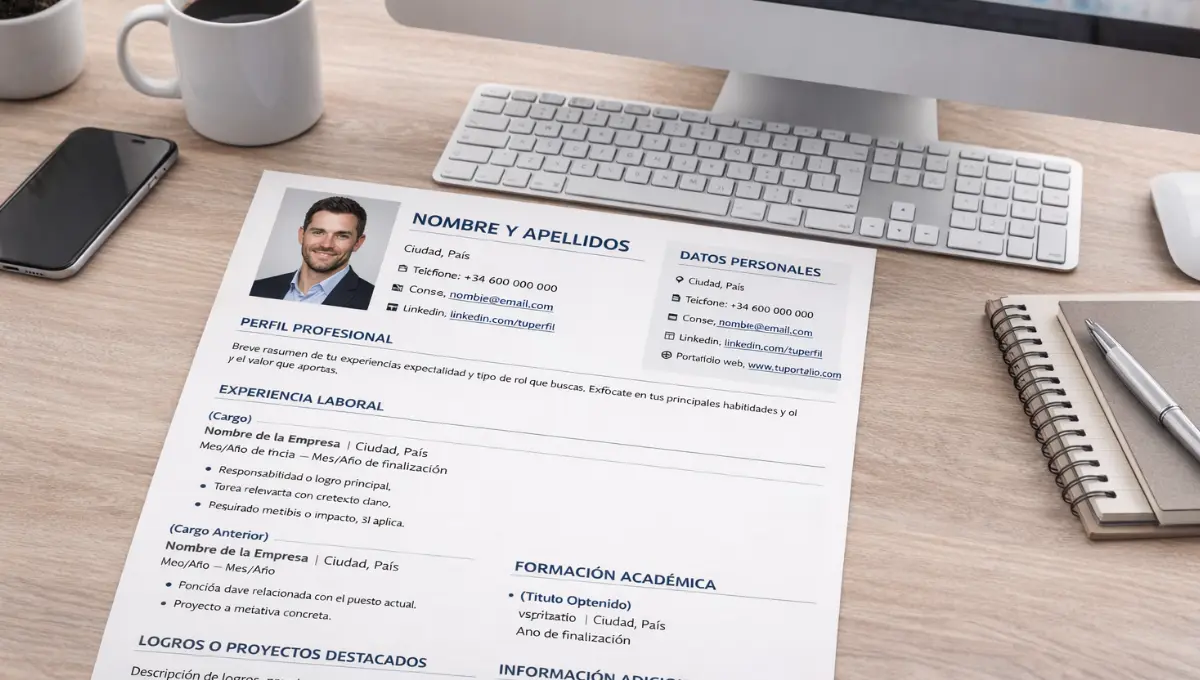
1. Follow the correct Spanish resume format
Spanish employers expect a structured CV format that differs from American standards.
Essential sections in order:
- Contact details (datos personales): Name, address, phone, email
- Professional photo (foto): High-quality headshot in business attire
- Career objective (objetivo profesional): Brief statement of career goals
- Education (formación académica): List in reverse chronological order with detailed relevant coursework
- Professional experience (experiencia profesional): Detailed work history with job duties
- Skills section (competencias): Language skills, technical skills, soft skills
- Additional sections: Volunteer work (voluntariado), certifications, references
Protip: Save your final Spanish resume in PDF format to preserve formatting across different systems and devices. Many applicant tracking systems in Spanish speaking areas process PDFs more reliably than Word documents.
2. Clearly state your language proficiency
Language skills are critical for roles in Spanish speaking markets. Spanish proficiency must be documented using recognized standards.
How to list languages correctly:
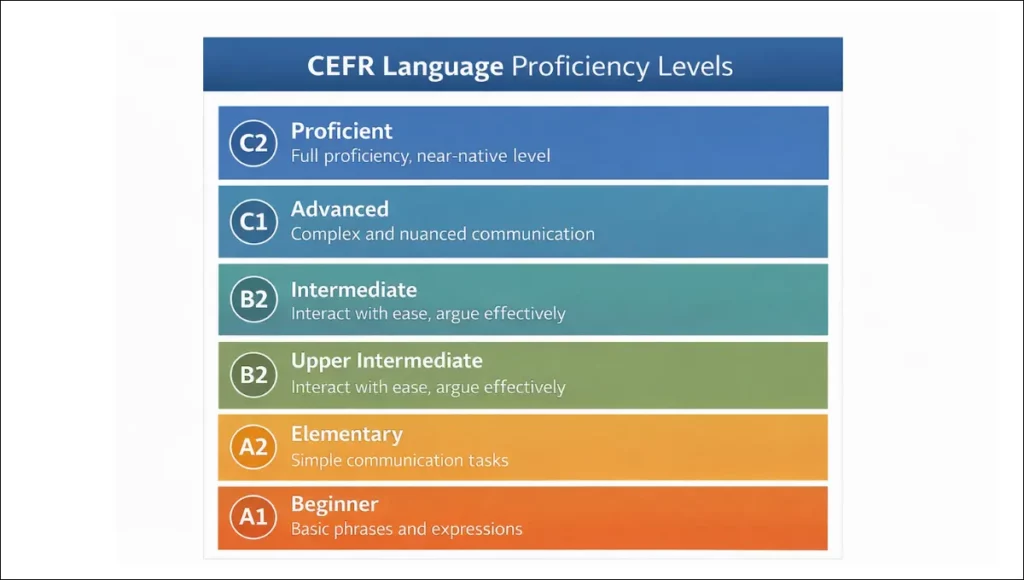
Use CEFR (Common European Framework of Reference) levels:
- A1-A2: Basic user
- B1-B2: Independent user
- C1-C2: Proficient user (native or near-native)
Example for skills section:
- Idiomas (Languages):
- Español: Nativo / Native Spanish speaker
- Inglés: C1 (Advanced proficiency)
- Francés: B2 (Independent)
If you’re still developing your Spanish fluency, working with a Spanish tutor helps you reach the proficiency level required for your target positions. Many learners also explore French tutors to add multilingual skills that enhance their profiles.
Don’t exaggerate. Hiring managers in Spanish speaking countries will test your language proficiency during interviews. Honest assessment builds trust.
How to list Spanish fluency on resume
Listing Spanish fluency on your resume requires precision and honesty about your actual proficiency level.
Best practices for showing Spanish ability:
Use standardized terms:
- Fluent / Fluido (C2 level)
- Advanced proficiency / Avanzado (C1 level)
- Professional working proficiency / Competencia profesional (B2 level)
- Intermediate / Intermedio (B1 level)
- Basic / Básico (A1-A2 level)
Include context where relevant:
- “Native Spanish speaker” (Hablante nativo de español)
- “Bilingual in English and Spanish” (Bilingüe inglés-español)
- “Spanish (professional working proficiency, 5+ years experience in Latin American markets)”
Demonstrate your Spanish language skills:
- Mention if you’ve worked in a Spanish speaking country
- Note any translation services experience
- List specific projects completed in Spanish
- Reference certifications like DELE or SIELE
Protip: Place your language skills prominently in your skills section and mention them again in your resume summary if they’re central to the job requirements. For roles requiring Spanish, this can be the big difference between getting an interview or being passed over.
3. Tailor your resume to each job description
Generic resumes fail in competitive Spanish speaking markets. Every job post requires customization.
How to match the job description:
- Extract key job requirements and mirror relevant terminology
- Highlight relevant skills that align with listed qualifications
- Adjust your resume summary to address the specific role
- Use Spanish words from the job description to pass applicant tracking systems
Example customization:
If the job post emphasizes “enhancing team efficiency” and “customer satisfaction,” your professional experience bullets should reflect:
- “Mejoré la eficiencia del equipo en un 25% implementando nuevos procesos”
- “Aumenté la satisfacción del cliente del 85% al 92% en seis meses”
Protip: Don’t just translate job titles directly. Research equivalent titles in the target Spanish speaking country using local job boards. A “Sales Manager” in the U.S. might be “Director Comercial” in Spain or “Gerente de Ventas” in Latin America.

4. Respect cultural expectations and cultural nuances
Spanish speaking regions have distinct business cultures that affect resume expectations.
Cultural considerations by region:
Spain:
- Formal tone throughout
- Detailed education section with specific grades
- Professional photo mandatory
- Personal information (age, marital status) standard
Latin America:
- Varies by country but generally more conservative
- Strong emphasis on family background and personal values
- Professional development courses highly valued
- References from respected figures carry weight
Avoid cultural mistakes:
- Don’t use informal language or casual expressions
- Skip humor or creative formatting
- Maintain professional tone in cover letter and CV
- Research the specific company name and industry norms
Protip: If you’re unfamiliar with cultural knowledge in your target market, career coaches or native speakers can review your Spanish CV for appropriate tone and content.
5. Ensure accurate translation and linguistic nuances
Poor translation destroys credibility instantly. Spanish employers spot awkward phrasing immediately.
Translation best practices:
Use professional translation services for critical documents
- Resume translation requires industry-specific vocabulary
- Technical skills and job duties need precise terminology
- Linguistic nuances vary between Spain and Latin American markets
Common translation mistakes to avoid:
- Literal word-for-word translation of action verbs
- Incorrect job title equivalents
- Missing or wrong articles (el/la)
- Verb tense errors in describing professional experience
Better approach: Work with a native Spanish speaker who understands professional contexts. italki’s business Spanish tutors can review your resume for accuracy, help you master professional Spanish vocabulary, and ensure your CV sounds natural to native readers.
Protip: Have someone run a resume check in the target country’s Spanish variant (Spain Spanish vs. Mexican Spanish vs. Argentine Spanish). Regional differences in business terminology matter.
Further reading: Learn to write email in Spanish like a professional

Find Your Perfect Teacher
At italki, you can find your Spanish tutor from all qualified and experienced teachers. Now experience the excellent language learning journey!
Book a trial lesson
Land your dream job with a polished Spanish resume
Creating a perfect resume in Spanish requires understanding format conventions, cultural nuances, and language proficiency standards that vary across Spanish speaking countries. The five tips above give you a framework to build a functional resume that resonates with hiring managers in Spain, Latin America, and other Spanish speaking areas.
The big difference between candidates who get interviews and those who don’t often comes down to cultural knowledge and accurate Spanish language presentation. Your CV is your first impression with prospective employers, so investing time in getting it right pays off.
Ready to improve your Spanish fluency for professional success? Learn Spanish faster with personal guidance from native Spanish tutors online, trusted by over 5 million learners worldwide.
Book a trial lesson today to master the Spanish language skills that open doors to international career opportunities.
Frequently Asked Questions
How to write Spanish on a resume?
To write “Spanish” on your resume in the language skills section, list it with your proficiency level using CEFR standards: “Spanish: C1 (Advanced)” or “Español: Nativo” if you’re a native speaker. Include context if relevant: “Spanish (native fluency, 10+ years translating technical documents)” or “Spanish: B2 (professional working proficiency).”
What is a resume called in Spain?
In Spain, a resume is called “currículum vitae” or simply “currículum” (often shortened to “CV”). Spanish employers universally recognize this term, and it’s the standard way to refer to your professional background document when applying for positions in Spain.
How do you say resume in Spanish
The word “resume” in Spanish is “currículum” or “currículum vitae” (often abbreviated as “CV”). In some Latin American countries, particularly Colombia, you may also hear “hoja de vida.” All these terms refer to the same document: a professional summary of your work history, education, and skills.
Are months ever capitalized in spanish on a resume
No. Months are never capitalized in Spanish unless they start a sentence. When listing dates on your Spanish resume, write “enero 2020 – marzo 2023” (not “Enero 2020 – Marzo 2023”). This is a common mistake that signals unfamiliarity with Spanish grammar rules to hiring managers.
How to say you’re fluent in spanish on resume
State Spanish fluency clearly using recognized terms: “Spanish: Fluent (C2)” or “Español: Fluido (C2).” For stronger impact, add context: “Fluent in Spanish (native-level proficiency, raised bilingual)” or “Spanish: C2 (conducted business negotiations in Spain and Latin America for 5+ years).” Be prepared to demonstrate this fluency in interviews.
Want to learn a language at italki?
Here are the best resources for you!