Key takeaways:
- You don’t need to speak fluently to get around Japan, but knowing basic phrases makes a huge difference
- Most beginner learners can reach a functional travel level with consistent daily practice over a few months
- Apps build vocabulary and teach hiragana and katakana, but they won’t prepare you for real conversations
- Practicing with a native speaker is the fastest way to build speaking confidence before your trip
- Focusing on travel-specific words and phrases gets you further than trying to learn everything at once
If you’re planning a trip to Japan and wondering about the best way to learn Japanese for travel, the good news is that you don’t need years of study. You need a solid plan, the right tools, and some real speaking practice before you board your flight.
Japan is an amazing destination, but it’s one where knowing even a little of the Japanese language goes a long way. Train systems, local restaurants, and smaller cities outside Tokyo are tricky to get around without at least some basics. And beyond the practical side, Japanese people genuinely appreciate when visitors make the effort.
This guide is for travelers who know little to no Japanese but want to pick up enough before their trip to get around with confidence. By the end, you’ll know exactly what to focus on, how long it takes, and how to make the most of the time you have before your trip.
Not sure where to begin? Book a trial lesson with a Japanese tutor and get a plan built around your trip.

Find Your Perfect Teacher
Your Japanese doesn’t have to sound like a textbook. Get personalized lessons from native tutors who’ll help you speak naturally, not just correctly.
Book a trial lesson
Should you learn Japanese before traveling to Japan?
Yes, and even a little goes a long way. Many signs in major cities like Tokyo and Osaka include English, but Japan is not an English-first country. Once you step outside the busy tourist spots, your ability to communicate in Japanese becomes genuinely useful.
Knowing how to greet someone, order food, ask for directions, or buy a train ticket will make visiting Japan much smoother. It also opens doors socially. Japanese people are generally very warm toward travelers who try, even imperfectly. If you want a head start on the specific phrases you’ll actually use on the ground, learn basic japanese for travel covers exactly that.
You don’t need to aim for full fluency. Learning Japanese for travel is its own manageable goal, and with the right approach to language learning, it’s very doable in a few months.
Find Japanese tutors online and start building the skills you’ll actually use in Japan.
Recommended reading: Complete guide to Japanese culture : understanding Japanese customs and social norms before your trip helps you use the language the right way, not just the technically correct way.
How long does it take to learn Japanese for travel?
With consistent daily practice, most beginner learners can get to a functional travel level in Japanese within a few months.
That might sound surprising given that the Foreign Service Institute ranks Japanese as one of the hardest languages for English speakers to learn, but that’s for reaching professional fluency. Foreign Service Institute
Japanese for travel is a much smaller goal, and sticking to the words and phrases you’ll actually use on your trip makes progress far more manageable.
Here’s a rough idea of what’s realistic:
| Timeframe | What you can realistically learn |
| 2 weeks | Hiragana, katakana, and basic greetings |
| 1 month | Essential phrases for food, transport, and shopping |
| 2 months | Simple sentences, numbers, and asking for help |
| 3 months | Getting through most travel situations with confidence |
If you want a closer look at what to prioritize, this guide on how to learn Japanese fast covers what works for adult learners with limited study time.
Want to make the most of those first few months? Work with a Japanese teacher and spend your study time on the things that actually come up in Japan.
If you’re an English learner, you can also connect with Japanese tutors for English speakers to make your lessons easier to follow.
5 best ways to learn Japanese for travel
Build a strong foundation in the basics first, then layer on from there. These are the methods that work for travelers on a tight timeline.
1. Learn hiragana and katakana first
Before anything else, learn the two core Japanese writing systems. Hiragana and katakana together cover around 100 characters each, and you can get through both in 1 to 2 weeks. Once you can read them, menus, station signs, and product labels start clicking into place. It also makes every other part of learning Japanese easier, because you stop relying on romanized text and start reading the language the way it actually looks.
Hiragana and katakana characters represent phonetic sounds, which means once you know them, you can sound out almost anything written in those scripts. That’s genuinely handy when you’re standing in front of a menu or trying to read a train platform sign.
Japanese learning apps use a spaced repetition system to help you lock in hiragana and katakana and keep them in your head long term. Writing each character out by hand helps too, so keep a notebook handy and run through a few new ones each day.
2. Build your Japanese vocabulary around travel situations
Generic language courses teach a lot of words you’ll never use on a two-week trip to Japan. Japanese for travel vocabulary is more focused than that. Put your energy into useful words and phrases around transport, food, shopping, accommodation, and emergencies.
Learning high-frequency Japanese words in those areas will get you much further than a broad beginner course. Flash cards, physical or on your phone, are one of the best tools for this.
Japanese learning apps let you build custom flash card decks with example sentences, audio recordings from native Japanese speakers, and images to help things stick. Running through flash cards for 10 to 15 minutes a day builds up a solid Japanese vocabulary base faster than most people expect.
The JLPT N5 vocabulary list is a good starting point, covering the core Japanese words used in everyday conversation, many of which overlap directly with what you’ll need for travel.
3. Pick up some basic Japanese grammar
Japanese grammar works differently from English, and it feels strange at first. Sentences follow a subject-object-verb order rather than subject-verb-object. So instead of “I eat sushi,” the Japanese version is closer to “I sushi eat.” It sounds odd initially, but you get used to it quickly with a bit of practice.
For a trip, you don’t need to go deep into studying Japanese grammar. Getting comfortable with a handful of basic grammar patterns, how to put simple sentences together, how to ask questions, and how to use polite verb forms will cover most situations you’ll run into.
A good place to start is the roundup of best Japanese learning websites, which covers beginner-friendly tools for every part of the learning process, including grammar.
That said, working through grammar with a Japanese language tutor is a lot more straightforward than trying to figure it out alone. A tutor can walk you through the key patterns, give feedback on your sentences as you practice, and clear up confusion in real time rather than leaving you to second-guess yourself.
4. Practice speaking with a native speaker
This is where real confidence comes from. A lot of people who rely on apps alone get to Japan and freeze the moment a local speaks to them. That happens because apps train you to recognize the language, not produce it on the spot. Speaking Japanese is a skill on its own, and it needs real conversation practice to develop.
Working with a native Japanese speaker, through a Japanese private tutor or a language exchange partner, gets you actually using the language under a bit of pressure. That’s the situation you’ll be in when visiting Japan. Even a couple of sessions of conversation practice each week makes a noticeable difference to how you cope when it matters.
italki connects you with over 30,000 professional teachers and community tutors. With 10 million+ learners on the platform, you’ll find a Japanese tutor who fits your schedule and budget. Lessons are one-on-one, so your tutor can focus entirely on the Japanese phrases and speaking exercises that match your itinerary. You can learn Japanese on your own efficiently up to a point, but speaking regularly with a native speaker is what takes your Japanese from memorized phrases to real conversation.
The sooner you start speaking, the more comfortable you’ll feel when it counts.
Find Your Perfect Teacher
Your Japanese doesn’t have to sound like a textbook. Get personalized lessons from native tutors who’ll help you speak naturally, not just correctly.
Book a trial lesson
5. Make listening a daily habit
Listening is one of the most skipped parts of travel language learning, and one of the most important. Speaking Japanese is only half of it. You also need to understand what native Japanese speakers say back to you.
The speed and flow of natural spoken Japanese feels very different from the slow, clear audio in beginner courses. Listening regularly before your trip helps close that gap so you’re not caught off guard when someone answers you in full Japanese.
There are plenty of free listening resources worth building into your routine. Podcasts made for Japanese learners are a good starting point, with short episodes on practical topics and everyday phrases.
Structured audio courses give you level-sorted recordings with transcripts you can follow along with. And if you enjoy it, learn japanese with anime is a surprisingly effective way to get used to the natural pace and casual word choice of real spoken Japanese.
Even 10 to 15 minutes of listening a day adds up. Note down the words and phrases that keep coming up, look them up, and drop them into your flash card deck to review later.
Self-study gets you started, but Japanese tutoring is what brings it all together. Book a trial lesson and start putting everything you’ve learned into real conversation.
How italki can help you learn Japanese faster before your trip
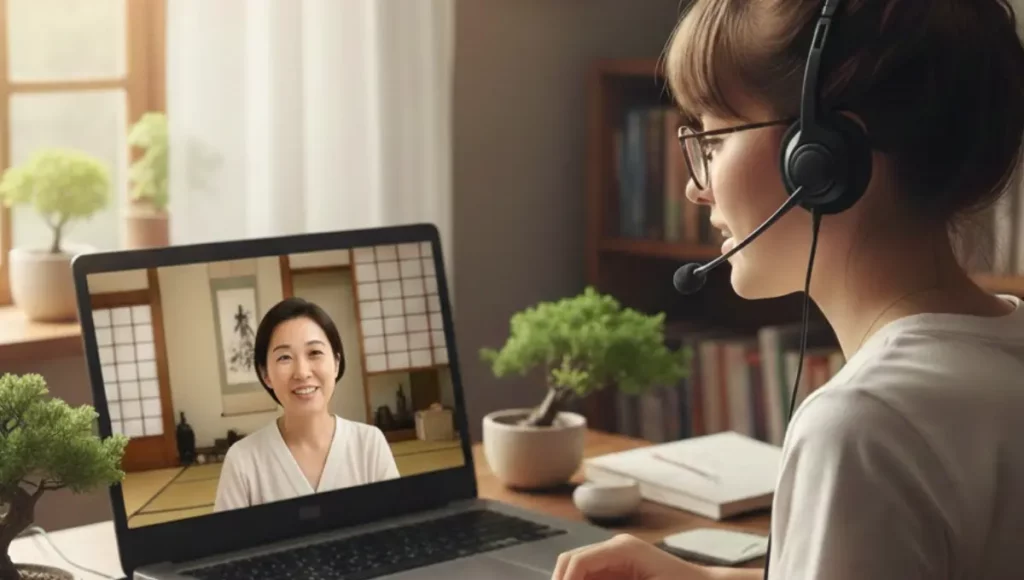
Most travelers don’t realize how much of a difference real conversation practice makes until they’re standing at a train station in Kyoto trying to ask for help and nothing comes out.
italki makes it easy to find a Japanese instructor who fits around your schedule. Sessions are one-on-one, so you get real feedback instead of following a fixed plan. You can tell your tutor exactly where you’re going in Japan, which situations you want to prepare for, and where you’re getting stuck. They’ll focus on the specific words, sentences, and Japanese phrases you’ll need on the ground.
The platform has been running for over 15 years and is used by learners in more than 190 countries. You’ll find professional teachers with structured lessons and community tutors for more relaxed conversation practice, with options for every budget and schedule. Most learners find that even 2 to 3 sessions a week in the months leading up to their trip makes a real difference to how confident they feel when they land.
Talking through real situations with a native speaker also sharpens your pronunciation in ways apps simply can’t replicate. A native Japanese speaker catches exactly where you’re going wrong and corrects it on the spot, so you’re far less likely to be misunderstood when you’re out talking to Japanese people in Japan.
If you want to go deeper on building a study routine that works, this comprehensive guide to learning Japanese is a good place to start. And when you’re ready to put it into practice, expert guidance is just a lesson away.
Learn Japanese faster with personal guidance from expert Japanese tutors trusted by over 5 million learners worldwide. Book a trial lesson today and start speaking Japanese with confidence before your trip.
Find Your Perfect Teacher
Your Japanese doesn’t have to sound like a textbook. Get personalized lessons from native tutors who’ll help you speak naturally, not just correctly.
Book a trial lesson
FAQ
Can I get by in Japan without speaking Japanese?
You can manage in the main tourist areas, but it’s harder than most people expect. Once you move away from central Tokyo and Osaka, English becomes much harder to find. Knowing basic phrases for getting around, ordering food, and handling emergencies will make your trip far less stressful. Even a small amount of Japanese makes a big difference with locals.
Do I need to learn kanji for traveling?
Not really. Kanji is one of the more involved Japanese writing systems, with thousands of kanji characters used in everyday written Japanese. For travel, getting familiar with a few dozen common kanji characters, like those for exit, entrance, restroom, and station, is more than enough. Get hiragana and katakana solid first, then pick up kanji gradually as you go.
How long does it take to learn basic Japanese for travel?
Most dedicated beginner learners get to a functional travel level in a few months with daily practice. The fastest path is to learn hiragana and katakana first, then build travel vocabulary with flash cards, then practice real conversations with a native speaker. Even 20 to 30 minutes a day adds up faster than you’d think.
Want to learn a language at italki?
Here are the best resources for you!