Key takeaways:
- One-on-one online lessons with a native speaker get you practice speaking faster than anything else
- Daily immersion through listening, reading, and writing helps you understand Japanese the natural way
- Learn high-frequency vocabulary and basic grammar first to build a strong foundation quick
How to learn Japanese fast comes down to one simple idea: stop wasting time on things that doesn’t work and focus on what gets you speaking. That means having real conversations from day one, getting quick feedback when you mess up, and soaking in Japanese every single day.
The fastest learners don’t grind harder. They avoid the common trap of spending so much time filling out workbook pages without ever using the language. Instead, they talk with native speakers, pick up new vocabulary from real conversations, and build a strong foundation through smart, focused study.
This step by step guide will show you the three approaches that consistently get the best results for adults learning a new language. Getting ready for a move to Japan, leveling up your career, or chasing a personal dream? These strategies help you make real progress in months, not years.
Ready to start speaking? Browse Japanese tutors who can build lessons around your specific goals and teach you theJapanese you’ll actually use in real conversations.

Find Your Perfect Teacher
Your Japanese doesn’t have to sound like a textbook. Get personalized lessons from native tutors who help you speak naturally, not just correctly.
Book a trial lesson
Which is the quickest way to learn Japanese?
The quickest way to learn Japanese combines three important aspects: one-on-one lessons for practice speaking, daily immersion for natural pattern recognition, and smart focus on high-frequency vocabulary. Each one works on its own, but together they’re the best way to learn Japanese fast.
1. One-on-one online Japanese lessons (The fastest method for speaking)
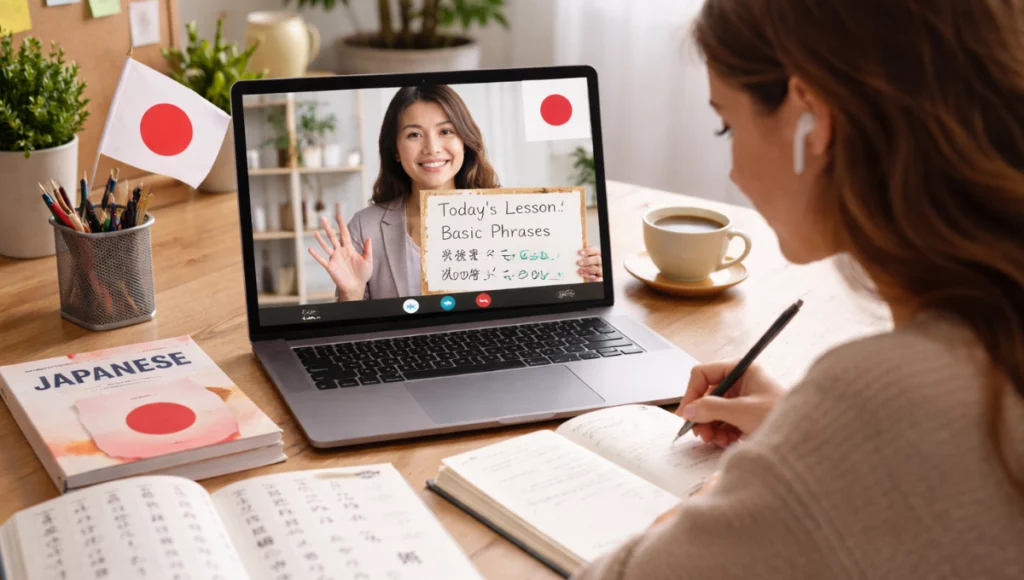
Private online Japanese lessons are hands down the single fastest way to learn Japanese and speak it well.
Here’s why they work so well.
- You get instant feedback the moment you make a mistake, not days later when you’ve already practiced it the wrong way over and over.
- Your teacher personalizes everything to match where you’re at and what you need, building a solid foundation, without jumping from one generic textbook to the next.
- You practice speaking from day one, which builds confidence and trains your mouth and ears much faster than reading alone ever could.
- And because someone’s actually expecting you to show up, you stay consistent, no drifting off or losing momentum.
Online lessons beat sitting in a traditional class because you fit in 3-4 sessions per week without leaving the comfort of your home. You get direct access to a native speaker no matter where you live, and you can find teachers who focus on exactly what you need, whether it’s Japanese for work , learning Japanese culture, JLPT prep, casual conversation, or learning basic Japanese for travel.
With 2-3 lessons per week plus daily practice, most people get to conversational in 3-4 months. That means ordering food, handling basic work chats, and getting around day-to-day stuff in Japan.
italki makes the process simple. You can browse teachers by specialty, watch intro videos, read student reviews, and try trial lessons to find someone who clicks. Booking is flexible, so lessons fit your schedule, not the other way around.
Find your perfect teacher by checking out Japanese tutors for beginners who offer trial lessons in your timezone.
Find Your Perfect Teacher
Your Japanese doesn’t have to sound like a textbook. Get personalized lessons from native tutors who help you speak naturally, not just correctly.
Book a trial lesson
2. Daily immersion (Fastest way to absorb Japanese)
Daily immersion means surrounding yourself with the Japanese language all day, both in the background and when you’re really focused, so your brain starts picking up patterns without you even trying.
This is how Japanese people learn their native language, and you use the same process to teach yourself Japanese faster.
Passive immersion (while doing other things):
- Switch your phone and computer language to Japanese
- Listen to Japanese podcasts on your commute (you’ll hear new words and sounds over and over)
- Play Japanese music or radio while you work
- Watch Japanese shows, anime, or drama on Netflix or YouTube with subtitles
Active immersion (needs your full attention):
- Record voice memos in Japanese about your day
- Keep a simple journal where you write new sentences (even just 3-4 lines)
- Chat with language exchange partners for free
- Shadow native speakers (copy what they say right after they say it to nail pronunciation)
- Read Japanese learning resources that matches your level, starting simple
Looking for more ways to immerse yourself? Here are some of the best Japanese learning websites to add to your daily mix.
Why combine lessons and immersion?
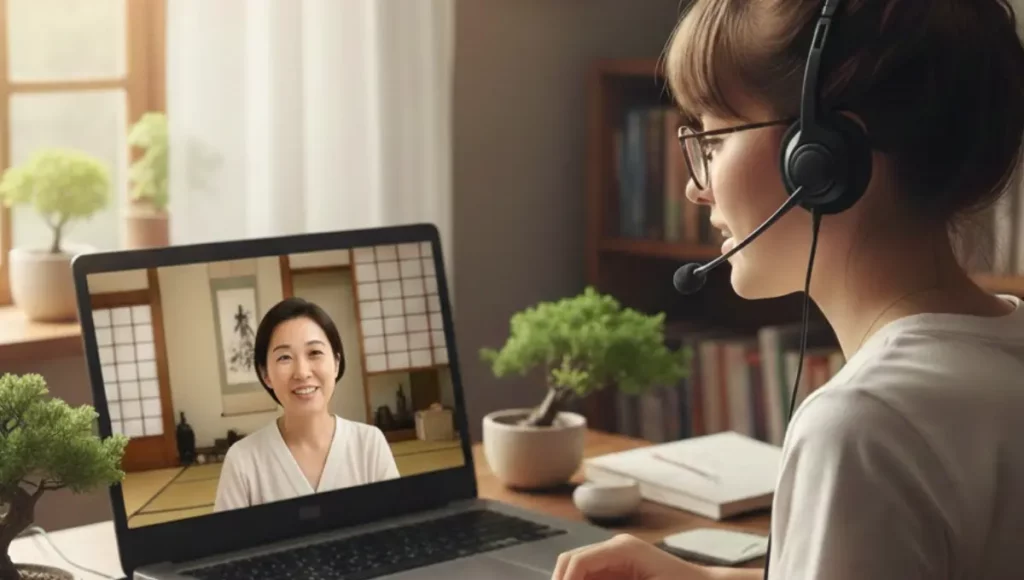
Language learning gets fast when you mix structure with lots of input. Lessons give you corrections and a strong foundation. Immersion gives you natural exposure and helps new vocabulary stick. Together, they’re the fastest setup you get.
Your Japanese teacher fixes the mistakes you’re picking up from immersion, and immersion drills in what you learn in lessons. This makes sense because your brain your brain is getting hit from multiple angles for maximum retention.
3. Focus on high-frequency vocabulary first (The 80/20 shortcut)
The 80/20 rule says that 80% of your results come from 20% of your effort. When studying Japanese, this means about 1,000 common words cover roughly 80% of everyday conversation.
Learning these core words first gets you talking way sooner than trying to memorize vocabulary in alphabetical order or whatever’s in the next chapter. This smart approach is one of the most important aspects of language learning that separates fast learners from people who struggle.
High-frequency Japanese vocabulary include:
- Everyday verbs (eat, go, see, buy, do, want)
- Common adjectives (good, bad, big, small, expensive, cheap)
- Time words (today, tomorrow, now, later, always, sometimes)
- Question words (what, where, when, who, why, how)
- Basic nouns (person, thing, place, time, day, year)
- Must-know particles (は, が, を, に, で, と)
What this looks like in practice:
- Start with survival phrases and common sentence patterns
- Learn new vocabulary in real situations, not lists
- Focus on words you’ll use in your life
- Add niche vocabulary only after you’ve got the basics down
- Use your own system that clicks for you, flashcards, apps, or writing stuff out
Your Japanese tutor spots which high-frequency words you’re missing and builds lessons around filling those gaps. They also break down the meaning behind words that don’t translate well and help you prepare for real talks.
This targeted way of doing things saves you weeks compared to plowing through generic vocab lists in one textbook after another.
Ready to speak Japanese faster?
Learn Japanese online with expert Japanese tutors trusted by over 5 million learners worldwide. Book a trial lesson with a Japanese language tutor and see how personalized, one-to-one guidance can turn learning Japanese from overwhelming into achievable.
You can also choose Japanese tutors for English speakers if you prefer lessons guided in English.
Find Your Perfect Teacher
Your Japanese doesn’t have to sound like a textbook. Get personalized lessons from native tutors who help you speak naturally, not just correctly.
Book a trial lesson
FAQ
What is the fastest method to learn Japanese?
The fastest method to learn Japanese mixes one-on-one online lessons (2-3 times a week) with daily immersion. Lessons give you structure, quick fixes when you mess up and practice speaking, while immersion helps your brain catch patterns naturally through listening and reading. This approach gets most people to conversational in 3-4 months.
Can I learn Japanese in 3 months?
You can reach basic conversational Japanese in 3 months if you commit: 2–3 lessons per week with a tutor, plus 1–2 hours of daily practice and immersion. This schedule helps you handle everyday situations, have simple conversations, and use common phrases. Full fluency takes longer, but three months of focused effort gives you real, usable Japanese.
Is it possible to learn Japanese by yourself?
Yes, but it’s way slower than learning with a native speaker. Self-study works okay for basic grammar, vocabulary, and reading, but speaking and listening get way better way faster when you’re having real conversations and getting instant feedback on mistakes.
Want to learn a language at italki?
Here are the best resources for you!