Key takeaways:
- Anime gives you real Japanese listening practice with natural speech patterns, slang, and cultural context you won’t find in courses
- You need to actively engage through shadowing, tracking vocabulary, and rewatching with Japanese subtitles to improve
- Anime works best when you pair it with real conversations and speaking practice with native speakers
Want to learn Japanese with anime? Thousands of language learners around the world have figured out that their favorite anime shows make surprisingly good learning tools when you use them right.
Anime gives you something courses can’t: real Japanese spoken by native speakers in everyday situations. You’ll hear natural pronunciation, pick up cultural details, and stay interested because you already enjoy what you watch.
But understanding anime isn’t the same as speaking. That’s why many learners combine watching with conversation practice, and on italki, over 10 million learners have studied languages with native-speaking teachers, with Japanese among the most popular choices.
This guide will show you exactly how to turn your anime watching time into real study sessions. You’ll learn which techniques work, what anime can and can’t teach you, and how to combine shows with other resources to learn Japanese faster.
Ready to level up your Japanese while enjoying your favorite anime? Find a Japanese tutor who can help you use what you learn from shows in actual conversations.

Find Your Perfect Teacher
Your Japanese doesn’t have to sound like a textbook. Get personalized lessons from native tutors who help you speak naturally, not just correctly.
Book a trial lesson
Can you really learn Japanese from anime?
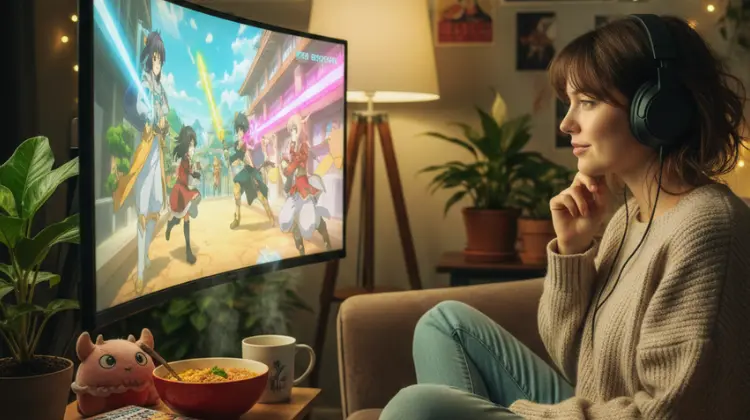
Choosing the right show matters; the best anime for learning Japanese depends on level, speech style, and how easily you can review useful lines.
Yes, you can learn Japanese from anime, but not by sitting back and watching. Most people who successfully learn through anime watch the same episode multiple times, paying attention to different things each time.
Plenty of Japanese learners have used anime to get better at listening comprehension, grow their vocabulary, and nail their pronunciation. But anime works best as one part of your learning mix, not your only way to study Japanese. You’ll still need grammar practice, writing work, and especially speaking with real people.
Think of anime as your personal immersion setup. Just like living in Japan would put you around Japanese all day, watching anime regularly surrounds you with the language. The difference is you control the playback, rewind tricky scenes, and choose content that fits your level.
The trick is being active with anime, not watching for fun. Anime gives you listening practice, but you’ll need other methods too. Learning Japanese online with a tutor, grammar study, writing practice, and regular conversation round out what anime can’t teach. Together, these create a complete learning system.
New to Japanese learning? Start with our guide on how to learn Japanese fast to build a strong foundation before diving into anime study.
Learn Japanese through anime: Step-by-step process
Step 1: Choose appropriate anime for your level
Start with slice-of-life shows that focus on everyday conversations. Series like “Shirokuma Cafe,” “Barakamon,” or “Nichijou” use more normal Japanese than fantasy or historical anime. Beginner Japanese learners should skip anime with heavy slang, old-fashioned language, or complicated tech talk.
Pick content that matches where you’re at right now. If you’re just starting out studying Japanese, shows made for younger audiences use simpler grammar and easier words. As you get better, slowly work up to tougher content. Some advanced learners even watch Japanese TV dramas or movies to branch out from anime.
Step 2: Watch with Japanese subtitles
English subtitles let you follow the story but don’t improve your Japanese skills. Switch to Japanese subtitles once you know hiragana and katakana. This links what you hear to what you see written and helps you spot kanji in real situations.
You can grab a subtitle file for most anime episodes online. Load the video file into any media player that handles subtitles, and you can pause on any single word you want to look at closer. Many Japanese learners keep folders with subtitle files for their favorite shows.
Can’t read Japanese yet? Start with English subtitles to get the stories, then rewatch episodes with Japanese ones. That second watch becomes your real study time. Learning hiragana and katakana is your first big step before you can use Japanese subtitles well.
Step 3: Use active listening techniques
Pause all the time to copy what anime characters say. This technique, called shadowing, teaches your mouth to make Japanese sounds and improves your pronunciation. Try to match how they sound, not only what they’re saying.
Write down new words with timestamps. Make a simple spreadsheet with the word, its meaning, and which episode you found it in. This helps you learn Japanese vocabulary in an organized way instead of remembering random words you might forget later. Go over these common words regularly using spaced repetition.
Notice how anime characters sound when talking in different situations. Japanese people change how they speak based on who they’re talking to, and you’ll catch these patterns if you stay focused during conversations. Understanding basic grammar patterns helps you spot these differences faster.
Step 4: Break down difficult sentences
When you hear something cool or confusing, pause and figure it out. Look up words you don’t know, find the grammar pattern, understand verb conjugation, and work out why the sentence is built that way. This turns passive watching into real language learning.
Use online dictionaries like to search for phrases and their meaning. Many anime watchers also use flashcard decks made for anime vocabulary. Getting what each word does in a sentence helps you see how the Japanese language puts ideas together differently than English or French.
Don’t focus only on single words. Watch how anime characters build full sentences and show feelings. How someone says something matters as much as what they say.
Step 5: Practice what you learn in real conversations
The vocabulary and phrases you pick up from anime need to be tested in actual conversations. Book lessons with a Japanese language instructor to practice using anime expressions the right way and get feedback on your pronunciation.
Native speakers tell you which phrases work in real life and which ones sound way too character-specific. This reality check matters a lot for sounding natural in Japanese. Your teacher explains when anime characters use language that would seem weird in the real world.
Speaking practice locks in everything you’ve learned from listening. Check out our guide on how to speak Japanese for more tips on getting comfortable in conversation.
Find Your Perfect Teacher
Your Japanese doesn’t have to sound like a textbook. Get personalized lessons from native tutors who help you speak naturally, not just correctly.
Book a trial lesson
What anime can and cannot teach you
What anime can teach you:
- Listening skills. Hearing native-speed Japanese all the time trains your ear to catch individual words and understand different accents across various episodes
- Natural pronunciation and rhythm. You’ll hear how Japanese people talk, including emotional touches that courses miss
- Common vocabulary and expressions. Everyday phrases like greetings, reactions, and conversational fillers show up constantly when you watch anime
- Cultural context. Anime shows Japanese culture, social rules, body language, and values in action, giving you a window into life in Japan
- Casual language. Slang, shortcuts, and relaxed speech patterns that make you sound more natural
- Grammar patterns in real use. See how grammar rules work in actual sentences instead of made-up examples
What anime cannot teach you:
- Formal or business Japanese. Most anime use casual talk, which doesn’t work for professional settings or speaking to strangers. If you need professional language skills, check out our guide on Japanese for work
- Reading and writing skills. Watching anime doesn’t teach you how to write kanji or build sentences on your own
- Proper keigo (polite language). Politeness levels in Japanese are tricky, and anime often exaggerates or skips them for drama
- Work or school vocabulary. Specialized terms for jobs or academics need their own resources
- Speaking confidence. Just listening doesn’t replace forming your own sentences and talking with others
- Grammar rules clearly. You’ll see patterns but won’t get why they work without some direct study
Tools & resources to learn Japanese with anime effectively

Practice with native online tutors
Working with a real teacher turns your anime watching from entertainment into progress. The best online Japanese tutors help you understand character-specific speech patterns, explain cultural references you missed, and practice using anime vocabulary the right way.
With over 30,000 teachers across 150+ languages on italki, you’ll find tutors who match your learning style and goals. Many specialize in helping students practice conversational Japanese and understand the cultural context behind what they hear in shows.
Start learning with a private Japanese tutor today and get personalized feedback on your anime-inspired Japanese.
Find Your Perfect Teacher
Your Japanese doesn’t have to sound like a textbook. Get personalized lessons from native tutors who help you speak naturally, not just correctly.
Book a trial lesson
Language learning apps
- Anki: Make custom flashcard decks with anime screenshots and audio clips for spaced repetition practice of new vocabulary
- Migaku: Browser extension that adds hover-over translations and makes study cards from anime, helping you learn faster
- Bunpro: Grammar learning tool that breaks down the patterns you see in anime and other Japanese media
- Shirabe Jisho: Dictionary app that lets you look up words and kanji quickly while watching, so you never lose the meaning
Anime-specific resources
- Animelon: Streaming site where you watch thousands of episodes with synced Japanese subtitles and word-by-word translations
- Japanese Subtitles for Language Learning (JSLL): Chrome extension that makes subtitle features better on streaming sites
- Anime subtitle files: Download .srt files to load into video players for better control over subtitle display and to understand anime more deeply
- YouTube channels: Find Japanese learning channels that break down famous anime scenes and explain the language used
Reference materials
- Japanese dictionaries: Jisho and Weblio for looking up unfamiliar Japanese words
- Grammar guides: Tae Kim’s Guide to Japanese Grammar or Imabi for understanding sentence structures and verb conjugation
- Japanese learning websites: Comprehensive platforms that combine multiple learning tools
- Reading manga: Manga in written form helps connect spoken dialogue to written Japanese, backing up what you learn from watching anime
The best approach for Japanese learning mixes several resources. Watch anime with Japanese subtitles, look up new words right away, add them to your flashcards app for review, then practice using them in conversation with your tutor. This multi-layered approach works way better than any single method and keeps things fun over a long period.
For a complete breakdown of learning tools, check our guide on the best Japanese learning resources.
Learning Japanese with anime works when you’re smart about it. Active watching techniques, picking the right content, and regular practice with native speakers create a strong mix for getting better at the language.
Anime gives you real Japanese input wrapped in something you enjoy. But remember that shows are your starting point, not where you finish. The phrases and vocabulary you soak up need to come out through speaking and writing. Focus on building real understanding, not collecting words.
Learn Japanese faster with personal guidance from expert Japanese tutors trusted by over 10 million learners worldwide. Book a trial lesson and start turning your anime watching into real language skills.
Find Your Perfect Teacher
Your Japanese doesn’t have to sound like a textbook. Get personalized lessons from native tutors who help you speak naturally, not just correctly.
Book a trial lesson
FAQs
Is it possible to learn Japanese through anime?
Yes, but not by watching passively. You build listening skills, vocabulary, and cultural understanding from anime when you use active techniques like shadowing, taking notes, and repeating phrases. But anime should add to your regular study and conversation practice, not replace them. The idea is to learn while enjoying content you’re already interested in watching.
What’s the difference between anime Japanese and everyday Japanese?
Anime Japanese often exaggerates how people talk for dramatic effect and includes character-specific language that sounds weird in real life. Many anime characters use super casual speech, old-fashioned expressions, or gendered language that doesn’t match how modern Japanese people talk. Working with a Japanese language tutor helps you figure out which phrases work when talking to real people in Japan.
How long does it take to learn Japanese with anime?
Your timeline depends on how hard you study and what methods you use. If you watch anime daily with active techniques and practice speaking 2-3 times per week with a Japanese teacher, you might reach conversational ability in 1-2 years. The Foreign Service Institute estimates 2200 hours of study for native speakers of English to attain Japanese intermediate level of speaking proficiency. Foreign Service Institute
Should I watch anime with English or Japanese subtitles?
Japanese subtitles work way better for learning once you read hiragana and basic kanji. English subtitles let you follow the plot but don’t improve your Japanese language skills. Try watching twice: first with English subtitles to get the stories, then with Japanese subtitles for study.
Is anime good for learning Japanese?
Anime is great for listening comprehension, pronunciation practice, and cultural immersion when you mix it with other learning methods. It gives you real Japanese input in an entertaining format that keeps you interested. Use it as one tool alongside other resources, apps, and conversation practice with native speakers.
Want to learn a language at italki?
Here are the best resources for you!