Key takeaways
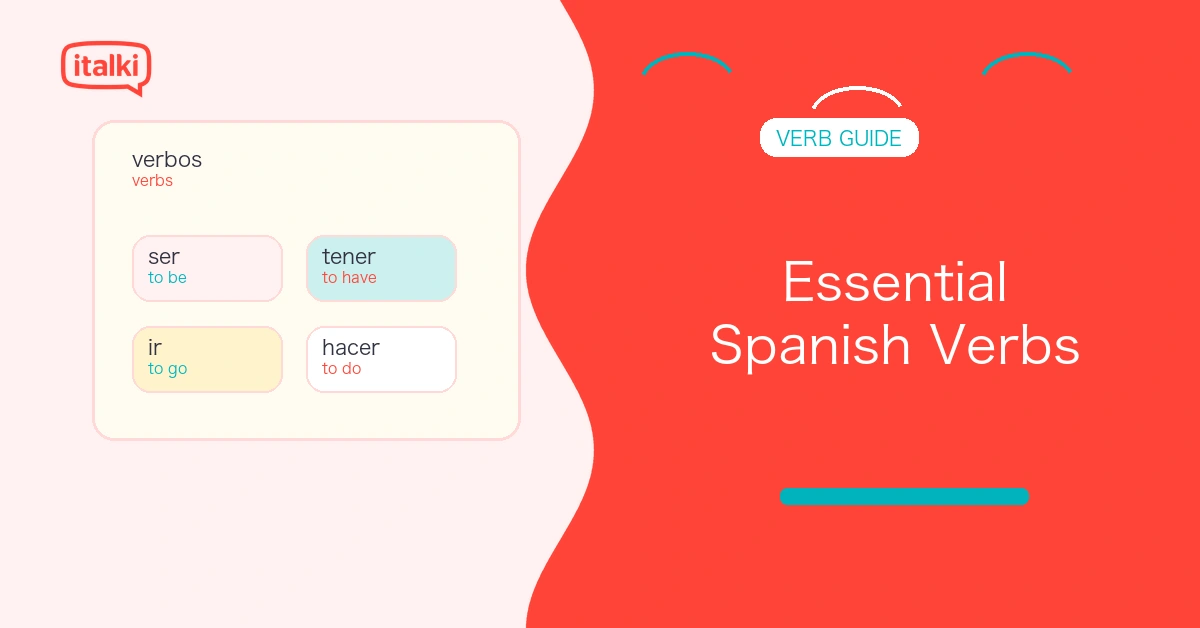
- The 10 most essential Spanish verbs (ser, estar, tener, ir, hacer, poder, querer, saber, venir, decir) cover the majority of everyday Spanish conversation and should be the first verbs any learner masters completely in the present tense.
- Spanish verbs divide into regular (-ar, -er, -ir) and irregular. Many of the most commonly used verbs are irregular, which is why they are worth prioritizing: the verbs you use most are also the ones whose irregular forms you will internalize fastest through practice.
- Several verbs have English false friends: saber and conocer both translate to to know, but saber is for facts and skills and conocer is for people and places. Ser and estar both translate to to be, but they are used in different contexts. These distinctions define natural Spanish use.
- Mastering 80 verbs at a functional level, meaning you can conjugate them in the present tense and use them in real sentences, gives you the vocabulary foundation for genuine everyday conversation in Spanish.
Verbs are the engine of Spanish sentences. A noun like coffee or book names a thing; a verb lets you say what you do with it, how you feel about it, and what happens because of it.
The 80 verbs in this guide are the ones that appear most often in everyday Spanish across all topics of conversation. italki connects learners with Spanish tutors who can help you use these verbs correctly in real conversation from your first lesson.
This guide presents all 80 verbs organized by category, with conjugation examples for the most important ones and usage notes where needed.
Work with a Spanish language tutor to practice these verbs in real sentences and build the conjugation fluency that makes Spanish feel natural.

Find your perfect teacher
Build real speaking confidence with personalized lessons from a teacher who matches your goals, schedule, and learning style.
Book a trial lesson
The 10 core verbs
These 10 verbs are the foundation of Spanish conversation. Know them completely before moving on to the rest.
| Verb | Meaning | Present tense (yo / tú / él / nosotros / ellos) | Key note |
|---|---|---|---|
| ser | to be (permanent) | soy / eres / es / somos / son | identity, profession, origin |
| estar | to be (temporary) | estoy / estás / está / estamos / están | location, state, mood |
| tener | to have | tengo / tienes / tiene / tenemos / tienen | possession, age, obligations |
| ir | to go | voy / vas / va / vamos / van | also used for near future: voy a comer |
| hacer | to do / to make | hago / haces / hace / hacemos / hacen | very broad use; also weather: hace frío |
| poder | can / to be able | puedo / puedes / puede / podemos / pueden | ability and permission |
| querer | to want / to love | quiero / quieres / quiere / queremos / quieren | both wanting and loving people |
| saber | to know (facts/skills) | sé / sabes / sabe / sabemos / saben | facts and skills; not for people |
| venir | to come | vengo / vienes / viene / venimos / vienen | movement toward the speaker |
| decir | to say / to tell | digo / dices / dice / decimos / dicen | one of the most-used irregular verbs |
Usage example sentences:
- Soy de Colombia. (I’m from Colombia.) (ser, for origin)
- Estoy en casa. (I’m at home.) (estar, for location)
- Tengo 28 años. (I’m 28 years old.) (tener, for age)
- Voy al mercado. (I’m going to the market.) (ir, for movement)
- ¿Qué haces? (What are you doing?) (hacer, for action)
- No puedo venir hoy. (I can’t come today.) (poder, for ability)
- Quiero un café. (I want a coffee.) (querer, for desire)
- No sé la respuesta. (I don’t know the answer.) (saber, for knowledge)
- ¿Vienes esta noche? (Are you coming tonight?) (venir, for coming)
- Dice que sí. (He says yes.) (decir, for communication)
Note that ir + a + infinitive is used for near future: voy a comer (I’m going to eat), van a llegar tarde (they’re going to arrive late). This makes ir especially high-value as a verb.
For stem-changing verbs like querer and poder, the guide to stem-changing verbs in Spanish covers the conjugation patterns in full.
Communication verbs
| Verb | Meaning | Example |
|---|---|---|
| hablar | to speak / to talk | Hablo español e inglés. (I speak Spanish and English.) |
| escuchar | to listen | Escucha, es importante. (Listen, it’s important.) |
| leer | to read | Leo el periódico cada mañana. (I read the newspaper every morning.) |
| escribir | to write | ¿Me escribes un email? (Can you write me an email?) |
| preguntar | to ask | Pregunta al profesor. (Ask the teacher.) |
| responder | to respond / to answer | No respondió a mi mensaje. (He didn’t respond to my message.) |
| llamar | to call | Te llamo luego. (I’ll call you later.) |
| explicar | to explain | ¿Puedes explicarme esto? (Can you explain this to me?) |
| contar | to tell / to count | Cuéntame lo que pasó. (Tell me what happened.) |
| gritar | to shout | No grites, por favor. (Please don’t shout.) |
Find your perfect teacher
Build real speaking confidence with personalized lessons from a teacher who matches your goals, schedule, and learning style.
Book a trial lesson
Movement verbs
| Verb | Meaning | Example |
|---|---|---|
| llegar | to arrive | Llegamos a las tres. (We arrive at three.) |
| salir | to leave / to go out | Salgo a las ocho. (I leave at eight.) |
| entrar | to enter | Entra, por favor. (Come in, please.) |
| volver | to return | ¿A qué hora vuelves? (What time do you return?) |
| regresar | to go back / to return | Regresa pronto. (Come back soon.) |
| caminar | to walk | Caminamos por el parque. (We walk through the park.) |
| correr | to run | Corro cada mañana. (I run every morning.) |
| subir | to go up / to climb | Sube las escaleras. (Go up the stairs.) |
| bajar | to go down | Baja del coche. (Get out of the car.) |
| quedarse | to stay / to remain | Me quedo en casa hoy. (I’m staying home today.) |
Daily life verbs
| Verb | Meaning | Example |
|---|---|---|
| comer | to eat | ¿A qué hora comes? (What time do you eat?) |
| beber | to drink | Bebo mucha agua. (I drink a lot of water.) |
| dormir | to sleep | Duermo ocho horas. (I sleep eight hours.) |
| despertarse | to wake up | Me despierto a las siete. (I wake up at seven.) |
| levantarse | to get up | Se levanta temprano. (He gets up early.) |
| cocinar | to cook | ¿Sabes cocinar? (Do you know how to cook?) |
| limpiar | to clean | Limpio la casa los domingos. (I clean the house on Sundays.) |
| comprar | to buy | Compro la comida en el mercado. (I buy food at the market.) |
| pagar | to pay | ¿Quién paga? (Who’s paying?) |
| trabajar | to work | Trabajo ocho horas al día. (I work eight hours a day.) |
Find your perfect teacher
Build real speaking confidence with personalized lessons from a teacher who matches your goals, schedule, and learning style.
Book a trial lesson
Thinking and feeling verbs
| Verb | Meaning | Example |
|---|---|---|
| pensar | to think | Pienso que tienes razón. (I think you’re right.) |
| creer | to believe / to think | Creo que sí. (I think so.) |
| sentir | to feel | Me siento bien hoy. (I feel well today.) |
| gustar | to like | Me gusta el café. (I like coffee.) |
| amar | to love (deeply) | Te amo. (I love you.) |
| odiar | to hate | Odio las mañanas. (I hate mornings.) |
| necesitar | to need | Necesito ayuda. (I need help.) |
| esperar | to wait / to hope | Espero que sí. (I hope so.) |
| recordar | to remember | No recuerdo su nombre. (I don’t remember his name.) |
| olvidar | to forget | Olvidé mi teléfono. (I forgot my phone.) |
Note the structure of gustar: in Spanish, gustar works the reverse of to like. Instead of I like coffee, Spanish says Coffee pleases me: me gusta el café. The thing liked is the subject, and the person is the indirect object.
Action and handling verbs
| Verb | Meaning | Example |
|---|---|---|
| dar | to give | Dame el libro. (Give me the book.) |
| poner | to put / to place | Pon la mesa. (Set the table.) |
| traer | to bring | ¿Traes el vino? (Are you bringing the wine?) |
| tomar | to take / to drink | Tomo el autobús. (I take the bus.) |
| dejar | to leave / to let | Déjame en paz. (Leave me alone.) |
| abrir | to open | Abre la ventana. (Open the window.) |
| cerrar | to close | Cierra la puerta. (Close the door.) |
| buscar | to look for | Busco mis llaves. (I’m looking for my keys.) |
| encontrar | to find | No encuentro mi pasaporte. (I can’t find my passport.) |
| ayudar | to help | ¿Puedes ayudarme? (Can you help me?) |
Find your perfect teacher
Build real speaking confidence with personalized lessons from a teacher who matches your goals, schedule, and learning style.
Book a trial lesson
Social verbs
| Verb | Meaning | Example |
|---|---|---|
| ver | to see | Te veo mañana. (I’ll see you tomorrow.) |
| conocer | to know (people/places) | ¿Conoces Madrid? (Do you know Madrid?) |
| reunirse | to meet up | Nos reunimos los viernes. (We meet up on Fridays.) |
| invitar | to invite | Te invito a cenar. (I’m inviting you to dinner.) |
| visitar | to visit | Visito a mis padres los domingos. (I visit my parents on Sundays.) |
| jugar | to play | Juego al fútbol. (I play soccer.) |
| ganar | to win / to earn | Ganamos el partido. (We won the match.) |
| perder | to lose | Perdimos el tren. (We missed / lost the train.) |
Linking and change verbs
| Verb | Meaning | Example |
|---|---|---|
| parecer | to seem / to appear | Parece cansado. (He seems tired.) |
| convertirse en | to become | Se convirtió en director. (He became director.) |
| cambiar | to change | Cambia de autobús aquí. (Change buses here.) |
| resultar | to turn out | Resultó ser verdad. (It turned out to be true.) |
| depender (de) | to depend (on) | Depende del tiempo. (It depends on the weather.) |
| empezar | to begin / to start | Empiezo a las nueve. (I start at nine.) |
| terminar | to finish / to end | ¿Cuándo terminas? (When do you finish?) |
Find your perfect teacher
Build real speaking confidence with personalized lessons from a teacher who matches your goals, schedule, and learning style.
Book a trial lesson
How to learn these verbs effectively
Priority order: Learn the 10 core verbs first, then communication and daily life verbs, then the rest. Each new verb should be practiced in at least three real sentences before you move on.
Learn conjugations in context, not in tables. Rather than memorizing the conjugation table of hablar in isolation, practice: Hablo español pero no hablo muy bien (I speak Spanish but I don’t speak very well). The conjugation is absorbed through the sentence.
Pair with a tutor. The fastest way to move from I know this verb to I can use it instinctively is through live conversation with a native speaker who can respond to what you say, ask follow-up questions using the same verb, and correct you in the moment.
Practice with a tutor
Learning 80 verbs is an achievable goal, but using them fluently in real-time conversation requires practice with a live partner. A Spanish tutor can introduce new verbs in context, drill the irregular conjugations you are likely to forget, and build conversation around the topics where these verbs are most useful.
italki’s 30,000+ expert tutors include native Spanish speakers from across the Spanish-speaking world who can build verb-focused lessons around your current level and goals. Trusted by over 10 million learners worldwide, the platform lets you find a tutor who fits your schedule. Book a trial lesson and start using these 80 verbs in real sentences from your first conversation.
Find your perfect teacher
Build real speaking confidence with personalized lessons from a teacher who matches your goals, schedule, and learning style.
Book a trial lesson
FAQ
What are the most important Spanish verbs to learn first?
Ser (to be, permanent), estar (to be, temporary), tener (to have), ir (to go), hacer (to do/make), poder (can), querer (to want), saber (to know), venir (to come), and decir (to say) are the 10 most essential. These appear in almost every conversation in Spanish.
What is the difference between saber and conocer in Spanish?
Both translate to to know in English, but they are used differently. Saber is for knowing facts, information, and skills: sé su nombre (I know his name), sé cocinar (I know how to cook). Conocer is for being acquainted with or familiar with a person, place, or thing: conozco a María (I know María), conozco Madrid (I know Madrid).
Are Spanish verbs hard to conjugate?
Regular Spanish verbs follow consistent patterns (-ar, -er, -ir endings), which makes them predictable once you learn the pattern. Irregular verbs (ser, ir, tener, hacer, etc.) have unique forms that must be memorized, but because they are also the most-used verbs, you encounter them constantly and internalize them quickly through practice.
What does ir + a + infinitive mean?
Ir + a + infinitive is the standard way to express near future in Spanish: voy a comer (I’m going to eat), van a llegar tarde (they’re going to arrive late). It works exactly like the English going to + verb construction. Because ir is already one of the most essential verbs, learning this pattern immediately expands how much you can express in Spanish.
How do you use gustar correctly in Spanish?
Gustar does not work like the English to like. The Spanish construction reverses the subject and object: me gusta el café (literally coffee is pleasing to me = I like coffee). The thing being liked is the subject; the person who likes it is expressed as an indirect object pronoun (me, te, le, nos, os, les). For plural subjects: me gustan las películas (I like films).
Want to learn a language at italki?
Here are the best resources for you!