Key takeaways:
- Combining structured lessons with immersive practice improves your Spanish fluency
- The most effective approach pairs personalized Spanish tutoring and self-study tools
- Free and paid resources work best when organized into a strategic learning stack
- Speaking practice from day one prevents comprehension-only learning plateaus
- Focus on quality over quantity when selecting Spanish learning material
Finding the best resources for learning Spanish can feel overwhelming with thousands of apps, courses, and tools competing for your attention. The good news? You don’t need everything. This guide shows the best way to learn Spanish by helping you combine the right resources with your learning style and goals.
Whether you’re an absolute beginner starting from scratch or pushing towards fluency, you’ll find proven resources for learning Spanish across every category ranging from conversation practice to grammar drills.
The biggest mistake Spanish learners make is collecting resources without using them strategically. Real progress comes from building a simple stack that covers all four language skills: speaking, listening, reading, and writing. Speaking practice should start early, which is why working with experienced Spanish tutors makes such a difference in your learning path.

Find Your Perfect Teacher
Your Spanish doesn’t have to sound like a textbook. Get personalized lessons from native tutors who’ll help you speak naturally, not just correctly.
Book a trial lesson
Best Spanish learning resources
1. Online tutoring platform (italki)
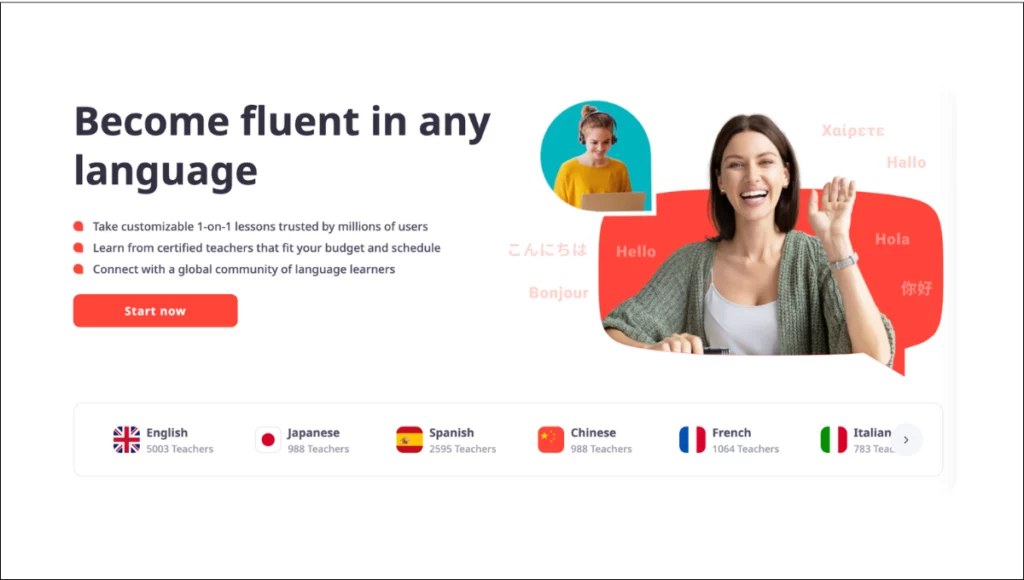
Online Spanish tutoring gives you something no app can replicate: real conversation with feedback tailored to your specific mistakes and goals. italki connects you with professional Spanish teachers for one-on-one online Spanish lessons that adapt to your pace.
Why italki works as your core resource:
- Choose from 2500+ Spanish tutors online who match your budget, schedule, and learning focus
- Book affordable trial lessons to find the perfect teaching style before committing
- Practice speaking Spanish from lesson one instead of waiting until you “feel ready”
- Get personalized corrections on Spanish pronunciation, grammar, and natural phrasing
- Learn Spanish that matches your real-life needs, whether that’s travel, business, or casual conversation
- Access teachers across different dialects from Latin America and Spain
- Schedule lessons around your life with 24/7 availability
- Track your progress with lesson notes and personalized study plans
- Learn Spanish online, wherever you are, from Spanish classes in NewYork or Spanish classes in Miami
- English speakers can easily find Spanish tutors for English speakers, who explain concepts in English, making lessons easier to follow.
With over 10 million learners worldwide and 15+ years of connecting students with teachers, italki has become the go-to platform for learners who want structured lessons without the traditional classroom. Learn Spanish online at your own pace with guidance from real people who understand the challenges you’re facing.
Find Your Perfect Teacher
Your Spanish doesn’t have to sound like a textbook. Get personalized lessons from native tutors who’ll help you speak naturally, not just correctly.
Book a trial lesson
2. Apps and software
Duolingo
- Gamified bite-sized lessons that build vocabulary and basic grammar through repetition
- Best for absolute beginners who want a gentle, habit-forming introduction to the Spanish language
If Duolingo isn’t your style, there are plenty of Duolingo alternatives that offer different approaches to learning Spanish
Babbel
- Structured courses designed by language experts with clear grammar explanations
- Focuses on practical conversation topics you’ll use in everyday situations
Busuu
- Combines lessons with community feedback from native speakers on your exercises
- Offers official McGraw-Hill certificates to validate your steady progress
Anki
- Spaced repetition flashcard system that optimizes vocabulary retention
- Completely customizable with thousands of shared Spanish decks available
LingQ
- Import any Spanish content (articles, videos, podcasts) and turn it into interactive lessons
- Tracks every new word you’ve learned while building reading fluency naturally
3. Textbooks

Practice Makes Perfect: Complete Spanish Grammar
- Comprehensive grammar reference with hundreds of exercises and answer keys
- Clear explanations that clarify tricky concepts like the subjunctive mood and Spanish verbs
Easy Spanish Step-by-Step
- Builds grammar knowledge progressively from simple to complex structures
- Written in plain English with logical sequencing that prevents overwhelm for most students
Madrigal’s Magic Key to Spanish
- Shows English speakers how to instantly recognize thousands of Spanish words
- Eases vocabulary learning by highlighting similarities between English and Spanish
Breaking Out of Beginner’s Spanish
- Tackles the intermediate level plateau with advanced grammar and idiomatic expressions
- Perfect for learners stuck between basic conversation and true fluency
4. Listening and audio resources
Coffee Break Spanish
- Podcast series that teaches through natural conversation and cultural insights
- Progresses from absolute beginner to advanced with clear seasonal structure and a slower pace for new learners
News in Slow Spanish
- Current events read at reduced speed with transcripts and vocabulary support
- Offers Latin American and European Spanish version options for dialect preference
Españolistos
- Native speakers discuss interesting topics at natural speed with transcripts
- Teaches authentic expressions and Spanish culture
SpanishPod101
- Thousands of audio and video lessons organized by level and topic
- Includes detailed explanations, vocabulary lists, and grammar breakdowns
Audible Spanish audiobooks
- Immersive listening practice through novels, memoirs, and non-fiction
- Start with learner-friendly titles before advancing to native-level content
5. YouTube channels
Butterfly Spanish
- Teaching style makes complex grammar concepts click
- Focuses on Mexican Spanish with cultural context and practical usage from the Spanish-speaking world
SpanishDict
- Short, focused videos on specific grammar points and vocabulary themes
- Includes pronunciation guides and common mistake corrections
Dreaming Spanish
- Comprehensible input method using visuals and context to teach naturally
- Thousands of videos organized by difficulty level from super beginner to advanced learners
Why Not Spanish?
- Breaks down grammar rules with humor and relatable examples
- Addresses common questions that textbooks often skip over
Easy Spanish
- Street interviews with real Spanish speakers and English subtitles
- Shows how Spanish is actually spoken in different countries and contexts

6. Grammar books & guides
A New Reference Grammar of Modern Spanish
- The definitive academic reference for serious learners and teachers
- Covers every grammatical structure with detailed explanations and examples for learning grammar
English Grammar for Students of Spanish
- Explains Spanish grammar by first clarifying the English grammar concepts
- Particularly helpful for learners who never formally studied their native language
Spanish Verb Conjugation Guide by Quid+
- Visual reference charts for every verb tense and mood
- Laminated quick-reference format perfect for keeping at your desk
The Ultimate Spanish Verb Review and Practice
- Targeted exercises that drill verb conjugations until they become automatic
- Includes contextualized practice sentences instead of isolated fill-in-blanks
If you’re struggling with verb conjugations specifically, check out this guide on Spanish verb conjugation for additional strategies.
7. Translators & dictionaries
WordReference
- Includes forum discussions showing how words are used in real contexts
- Provides conjugation tables and regional usage variations for every entry
SpanishDict
- Clean interface with conjugation tools, grammar articles, and pronunciation audio
- Shows example sentences from real usage to clarify meaning with English translations
Reverso Context
- Shows millions of real translation examples from human-translated documents
- Helps you understand how phrases work in actual sentences, not just word-for-word
DeepL
- AI-powered translator that produces more natural-sounding results than competitors
- Useful for checking your writing, but shouldn’t replace active learning
8. Language exchange & community
HelloTalk
- Text, voice, and video chat with native speakers learning your language
- Built-in correction tools make it easy to help each other improve
Tandem
- Matches you with conversation partners based on interests and goals
- Includes professional tutors if you want structured lessons alongside exchanges for a complete learning experience
ConversationExchange
- Find language exchange partners for face-to-face, correspondence, or text chat practice
- Completely free platform connecting learners worldwide
Reddit r/Spanish
- Active community answering questions, sharing resources, and offering encouragement
- Weekly discussion threads for practice and feedback from learners and natives
Language exchange works best when you understand proper etiquette and conversation strategies. Learn more about finding language exchange websites to make the most of these platforms.

9. AI and interactive practice
ChatGPT (Spanish mode)
- Practice conversation on any topic with instant feedback and explanations
- Ask grammar questions and get personalized example sentences for clarification
Langotalk
- AI conversation partner designed specifically for language learning with role-play scenarios
- Provides corrections and adapts difficulty to your current level
Speakable
- Voice-based AI tutor that evaluates pronunciation and conversational fluency
- Offers structured conversation practice when human partners aren’t available
Further reading: Best AI Spanish Learning Apps
Find Your Perfect Teacher
Your Spanish doesn’t have to sound like a textbook. Get personalized lessons from native tutors who’ll help you speak naturally, not just correctly.
Book a trial lesson
Recommended resource stacks
Complete beginners
- italki for weekly conversation lessons that build confidence and correct mistakes early
- Duolingo or Babbel for daily practice with vocabulary and grammar (15-20 minutes)
- Coffee Break Spanish podcast during commutes or exercise
- SpanishDict for quick word lookups and pronunciation checks
- Dreaming Spanish YouTube videos for comprehensible input exposure that teaches just the basics
If you’re just starting out, this guide on how to speak Spanish offers a complete roadmap with essential phrases and grammar basics for your first months.
For beginners who want a clear starting point rather than a list of tools to figure out alone, our learn Spanish in 30 days plan combines the right resources into a single week-by-week structure.
Intermediate learners
- italki for twice-weekly lessons focused on specific weaknesses and conversation fluency
- LingQ for reading practice with content that matches your interests
- News in Slow Spanish to build new vocabulary around current events
- Practice Makes Perfect: Complete Spanish Grammar for reference when confused
- HelloTalk for daily text practice with native speakers between lessons
Moving past the intermediate level takes regular practice and a solid grasp of Spanish grammar rules to help you speak more naturally.
Advanced learners
- italki for maintaining fluency and polishing specific skills like business Spanish or academic writing
- Native Spanish podcasts, Netflix shows (watching TV in Spanish), and YouTube channels in your areas of interest
- A New Reference Grammar of Modern Spanish for mastering subtle grammatical distinctions
- Spanish novels, newspapers, and online articles for reading practice
- Tandem or local language meetups for unstructured conversation practice
Find Your Perfect Teacher
Your Spanish doesn’t have to sound like a textbook. Get personalized lessons from native tutors who’ll help you speak naturally, not just correctly.
Book a trial lesson
Tips for getting the most from Spanish resources
- Start speaking immediately. Waiting until you “know enough” keeps you stuck in perpetual preparation mode. Book a trial lesson and speak from day one, even if it’s introducing yourself. Learning Spanish happens through use, not endless preparation.
- Study in focused blocks, not marathon sessions. Three 20-minute study sessions beat one exhausting hour every time. Your brain retains more through spaced practice, making the process less time-consuming overall.
- Match resources to specific skills. Use apps for vocabulary, textbooks for grammar reference, podcasts for listening, and online Spanish tutors for speaking. Don’t expect one great resource to do everything.
- Review before consuming new content. Spend the first five minutes of each session reviewing yesterday’s material. Spaced repetition beats constant novelty when learning a new language.
- Set process goals, not just outcome goals. Instead of “become fluent,” commit to “complete three lessons weekly and speak with a Spanish tutor twice monthly.” You control the process, not the timeline. Understanding realistic timelines helps. Learn more about how long it takes to learn Spanish to set appropriate expectations.
- Immerse yourself outside formal study. Change your phone to Spanish, follow Spanish social media accounts and listen to Spanish music. Passive exposure reinforces active learning and connects you to Spanish culture.
- Track what actually works for you. Some people love apps. Others need a traditional Spanish textbook. Pay attention to which resources you naturally return to and double down on those for steady progress.
Learn Spanish faster with the right resources
The difference between learners who reach fluency and those who give up isn’t talent or time. It’s having the right resources used consistently in the right combination. You don’t need every tool on this list. You need a focused stack that covers speaking, listening, reading, and grammar, then you need to show up daily.
Learn Spanish faster with personal guidance from 2500+ expert Spanish teachers online, trusted by over 10 million learners worldwide. Book a trial lesson and experience the difference personalized tutoring makes.
Find Your Perfect Teacher
Your Spanish doesn’t have to sound like a textbook. Get personalized lessons from native tutors who’ll help you speak naturally, not just correctly.
Book a trial lesson
FAQs
What is the most effective way to learn Spanish?
The most effective approach combines regular conversation practice with a professional tutor alongside consistent self-study using apps and immersive content. Speaking from day one with structured feedback prevents the common trap of understanding Spanish without being able to produce it. Pair weekly lessons on italki with daily practice through podcasts, apps, and reading to cover all four language skills.
What is the 80/20 rule for learning Spanish?
The 80/20 rule suggests that 20% of Spanish vocabulary and grammar structures account for 80% of everyday communication. Focus first on the 1,000 most common words, present tense conjugations, and basic sentence patterns before diving into advanced grammar.
This approach gets you conversational faster, then you fill gaps based on real communication needs rather than theoretical completeness. Start with practical phrases for everyday situations before tackling complex grammar. The easiest way to learn Spanish follows this principle of prioritizing high-frequency content.
What is the most effective program for learning Spanish?
The most effective approach combines a tutoring platform like italki for speaking practice with complementary resources like apps for vocabulary building, Spanish podcasts for listening skills, and grammar references when questions arise. Your “program” should be a strategic combination of the best resources that work together, not a single solution.
Want to learn a language at italki?
Here are the best resources for you!