Key takeaways:
- Children who start learning French before age 10 are more likely to develop natural pronunciation and fluency, but kids who start later still make strong progress with the right support.
- One-on-one lessons with a French tutor who specializes in teaching kids will move your child forward faster than any app or group class.
- Short daily practice of 10 to 15 minutes is more effective than longer, infrequent sessions. Consistency is what makes vocabulary and grammar stick.
- You don’t need to speak French yourself to support your child at home. Simple habits like using a few French words at mealtimes or watching French videos together make a real difference.
- The best learning plans combine structured lessons with fun at-home resources like songs, stories, and games, so French starts to feel like a normal part of your child’s life, not just schoolwork.
If you’re looking into how to learn French for kids, you’ve already given your child a head start. French is one of the most widely spoken languages in the world, with around 321 million French speakers across five continents, and it opens real doors in education, travel, and future careers. Organisation internationale de la Francophonie
Your child doesn’t need to be especially academic to pick up a new language. Kids are naturally good at this. With the right French learning resources and a little consistency, most children take to the French language faster than their parents expect.
This guide is for parents at any stage, from those only starting to think about French lessons to those who are already comparing their options. By the end, you’ll have a clear picture of what works and how to get started.
Want expert help right away? Browse French tutors for kids and book a trial lesson today.

Make French Fun for Your Child
Start French lessons that use games, songs, and stories to keep kids engaged and speaking with confidence.
Book a trial lesson
Why should kids learn French?
Learning French gives kids a practical life skill they’ll use well beyond the classroom. It is an official language in 32 states and governments France Diplomatie and one of the six official languages of the United Nations. United Nations. It’s spoken across Europe, Canada, large parts of Africa, and the Caribbean, so it genuinely travels well.
There are real benefits for your child’s development too. Kids who learn a second language tend to develop stronger reading skills, pick up certain pre-reading concepts faster than their peers, and perform better academically across subjects. Waterford
Then there’s the cultural side. Kids who learn French gain a window into French culture, from its literature, music, and food to the history of French-speaking communities spanning France, Canada, West Africa, and beyond. It’s a perspective that’s hard to get any other way, and one that stays with them for life.
French is also a smart starting point for anyone who wants to learn more languages later. Because it shares so much vocabulary with English, picking up Spanish, Italian, or Portuguese becomes a lot easier down the line. This guide on the best languages to learn goes into more detail on why French ranks so highly.
And career-wise, French fluency is genuinely valuable in fields like diplomacy, international business, fashion, culinary arts, and academia.
Ready to give your child a head start? Explore French lessons for kids on italki and find the right tutor today.
What is the best age to learn French?
Kids who start learning a second language before age 10 have the best shot at sounding like a native speaker later on, according to child development and language experts. Care.com. The young brain picks up new sounds and grammar patterns quickly and naturally, without the conscious effort adults typically need.
That doesn’t mean older kids are at a disadvantage. Children who start at 10, 12, or older still make great progress, and in some ways find it easier to understand grammar rules and build vocabulary quickly because they can apply what they already know from English. Age is an advantage, not a requirement.
For toddlers and preschoolers, songs, play, and audio exposure are a natural place to begin. School-age kids can move straight into structured online lessons and often surprise their parents with how fast they progress when they have a tutor who knows how to keep them engaged.
Looking for the right teacher for your child’s age and level? Find online French tutors for kids and give your child a real head start in French.
What is the best way for kids to learn French?
1. Immersion and natural conversation (The most effective approach)
The single best thing you can do is give your child regular opportunities to use French, not simply hear it. Listening to French in the background is helpful, but it won’t build fluency on its own. Your child needs to speak, respond, and interact in the language regularly.
This is where a French tutor for kids makes the biggest difference. A good tutor who works with children creates a relaxed, structured space where your child is speaking French from lesson one. Unlike a classroom setting where kids sit quietly and coast, one-on-one online lessons keep children active and on their toes throughout.
With over 30,000 professional teachers and tutors across 150+ languages, italki makes it easy to find a French tutor who specializes in teaching children italki.Read real reviews from other parents, and book a trial lesson before committing. This guide to French classes for kids walks you through what to expect.
Curious about what a typical session looks like? Book a trial lesson today.
Give Your Child the Gift of Bilingualism
Fun, interactive lessons with friendly tutors help your child gain confidence, speak naturally, and fall in love with French!
Book a trial lesson
2. Songs, games, and stories
Young children learn through play, full stop. Songs work especially well because they get vocabulary and pronunciation into a child’s head through rhythm and repetition, without it ever feeling like work. For younger kids especially, learning French this way feels like a fun adventure rather than a school exercise.
Beyond songs, interactive games and French stories build listening skills and vocabulary in a way that feels natural rather than academic. This list of French games for kids has a solid range of options for different games, from board games to social games and even online games.
The goal is to make French so much fun that your child stops thinking of it as a subject altogether.
3. Short, consistent practice
Trying to do too much in one go is one of the most common mistakes parents make. A focused 10 to 15 minutes every day will take your child much further than a two-hour session once a week. Language learning is cumulative. The more regularly kids encounter French words, phrases, and sounds, the more naturally they stick, and the less likely they are to forget what they’ve learned between lessons.
Small habits help a lot here. Saying “bonjour” at breakfast, counting things in French around the house, or asking “qu’est-ce que c’est?” when pointing to objects are all small touchpoints that reinforce what your child is picking up in lessons.
The right mix of conversation practice, fun activities, and consistent daily habits makes a real difference. If you want to give your child all three from day one, find French tutors on italki.
Best ways to teach kids French at home
1. Hire a French tutor for kids
This is the biggest single step you can take. A great program starts with a great teacher. A good tutor gives your child structured lessons built around their age and level, catches pronunciation habits before they become ingrained, and keeps sessions engaging enough that kids look forward to them.
You can browse online French lessons for kids, read real reviews from other parents, and try a trial lesson before you commit. Over 10 million learners have used the platform and students of all ages and backgrounds have found tutors that genuinely work for them.
Start your child’s French journey with a qualified French teacher today.
Watch Your Child Shine in French
Friendly tutors help kids explore French in a creative and interactive way. Build speaking skills and love for the language!
Book a trial lesson
2. Use French apps and games
Apps and online games are a useful tool for reinforcing vocabulary and phrases between lessons, and kids tend to enjoy the format. Think of them as practice in between tutor sessions, not a replacement for them. Many free options are available that cover new words, basic phrases, and listening exercises in a way that feels more like playing than studying.
To compare what’s out there, explore the best apps to learn French and what each one does well.
3. Watch French videos and shows
French videos, cartoons, and kids’ shows are one of the easiest wins available. Children get used to the sounds and rhythms of the French language without any pressure, and over time it builds listening comprehension and spoken fluency in a way that’s hard to replicate through lessons alone. Even watching for 15 minutes a few times a week adds up.
For recommendations, check out these French movies for kids to get started.
4. Read French books together
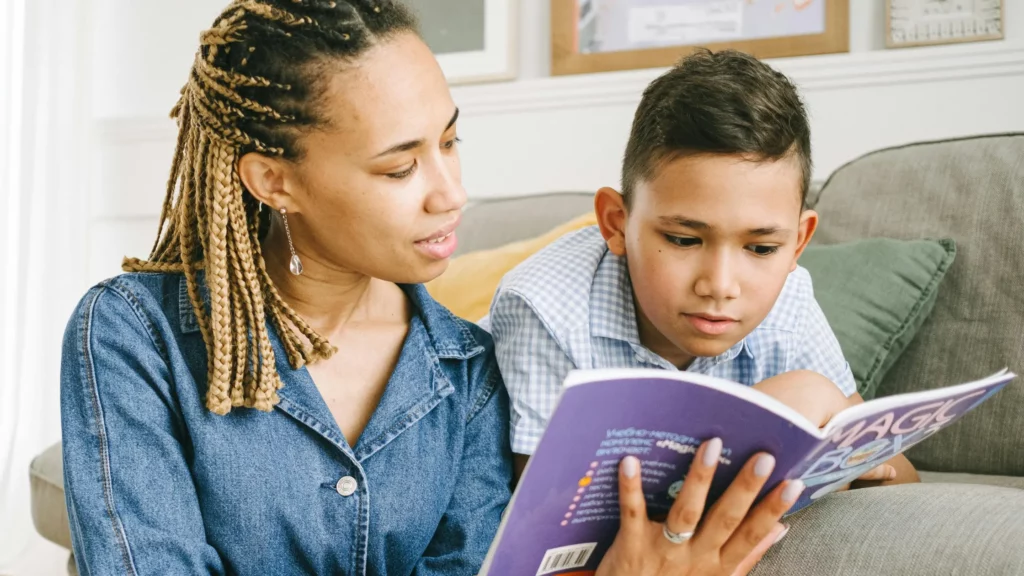
Picture books and bilingual stories put new words and phrases into context, and reading together keeps it low-pressure and enjoyable for both of you. You don’t need to be a confident French reader yourself. Working through a simple bilingual book together can be a genuinely fun shared activity, and it shows your child that French is something worth spending time on.
Cute, illustrated books with simple text are especially good for younger learners who are starting to recognize French words on the page. You can also find free printables online that pair well with whatever your child is working on in lessons.
5. Speak simple French at home
You don’t have to be a native French speaker to bring the language into your daily routine. Starting with a handful of everyday basic French words and using them consistently, things like “bonjour,” “merci,” “s’il vous plait,” and “bonne nuit,” signals to your child that French is a real, living language, not simply something that happens during lessons.
If your child has friends who are also learning French, practicing together outside of school makes it feel even more normal and social. Kids pick up on that more than you’d think.
Recommended reading: Best French course for children
Give your child the opportunity to learn French faster with personal guidance from expert French tutors trusted by over 10 million learners worldwide. Book a trial lesson today.
Give Your Child the Gift of Bilingualism
Fun, interactive lessons with friendly tutors help your child gain confidence, speak naturally, and fall in love with French!
Book a trial lesson
FAQ
How can I teach my child French?
The most practical starting point is booking an online French tutor who specializes in teaching kids. From there, build a simple daily routine around short practice sessions at home, a few French words at mealtimes, French videos a couple of times a week, and the occasional French book together. When you combine these methods, you’ll start seeing real progress.
What is the best French learning app for kids?
Apps like Duolingo Kids and Gus on the Go are popular for younger children, but they have real limits. They are great for picking up words and phrases, but they can’t correct your child’s pronunciation, adapt to how they learn, or hold a real conversation in French. For parents who want their kids to speak the language with confidence, French tutoring for kids will take them much further.
Want to learn a language at italki?
Here are the best resources for you!