Key takeaways:
- The best websites to learn Spanish each serve a different purpose. Picking the right ones depends on what skill you want to build.
- Most learners spend months on apps and still can’t hold a basic conversation. The gap is almost always speaking practice, not vocabulary or grammar.
- Most free sites teach you about the Spanish language but won’t help you speak it in everyday situations with real people.
- The learners who reach fluency fastest share one thing: they speak early and often, with native speakers, not just with apps.
- italki solves the one problem the other tools can’t. It connects you with a native speaker for a live, one-on-one conversation, so the vocabulary and grammar you’ve been building actually get used.
The best website to learn Spanish depends on what’s holding you back. If you’re struggling with grammar, you need something different than if you can read Spanish fine but freeze the moment someone speaks to you.
The problem most learners run into is spending too long on tools that teach you about Spanish: vocabulary drills, grammar exercises, flash card apps , without ever practicing the thing that actually builds fluency: real conversation with a real person.
This guide covers the five best websites for learning Spanish online in 2026. We’ve looked at what each one does well, where it falls short, and how to use them together so you’re not just studying Spanish, you’re actually speaking it.
Ready to start speaking? Find your Spanish tutor and book a trial lesson today.

Find Your Perfect Teacher
Your Spanish doesn’t have to sound like a textbook. Get personalized lessons from native tutors who’ll help you speak naturally, not just correctly.
Book a trial lesson
Quick comparison: Which Spanish website is right for you?
| Website | Best for | Typical pricing |
| italki | Speaking practice with real native tutors | From $4/lesson |
| Duolingo | Building a daily habit and staying consistent | Free / $12.99/mo |
| Babbel | Structured grammar and vocabulary for beginners | $15.99/mo (3-mo min) |
| SpanishDict | Grammar reference, translation, and vocabulary lookup | Free with ads$12.99/mo |
| News in Slow Spanish | Listening practice and comprehension at your own pace | $22.90/month (audio and transcripts) |
Best websites to learn Spanish
1. italki: best for speaking and live conversation
What it is
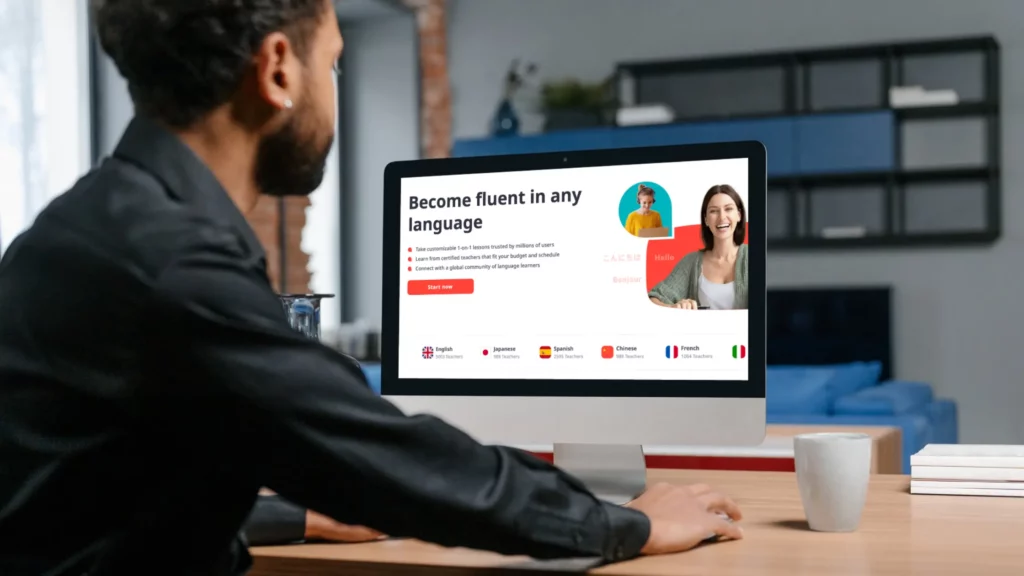
italki connects you directly with over 2500 Spanish tutors for personalized language lessons online. More than 10 million learners worldwide use it to study 150+ languages, including Spanish. Tutors are native language speakers from Spanish-speaking countries all over the world, including Spain, Mexico, Argentina, Colombia, and beyond, so you can choose Latin American or Castilian Spanish.
Why it’s the best for speaking and conversation
No Spanish program, app or podcast can match a live lesson with a native speaker. With italki, you get:
- Immediate feedback on pronunciation, word choice, and sentence structure
- Practical Spanish, how people talk in day to day life instead of formal textbook language
- Real conversation from lesson one, rather than isolated grammar exercises
If you’re starting from scratch and wondering how to speak Spanish, working with a native Spanish tutor early on helps you build good habits rather than spending months unlearning mistakes.
Key differentiator
The unique advantage of italki is real-time conversation with a real person. Apps and courses teach rules or exercises. Podcasts let you listen. Unlike other websites, italki lets someone hear you, correct you, and respond in the moment, the kind of interaction that builds fluency in real life.
Most learners skip speaking practice because it feels harder than clicking exercises, but speaking is what truly accelerates progress. Beginners and intermediates who reach fluency fastest all share one habit: they speak a lot.
Who it’s for
- Beginners who want to build speaking skills and get pronunciation right from day one
- Intermediate learners who feel stuck and need real conversation to push through
- Anyone getting ready to travel, work, or spend time in a Spanish-speaking country
- Anyone seeking flexible scheduling and lessons at an affordable price
Limitation:
- italki is for live lessons, not solo study. Progress depends on how consistently you show up and practice between sessions. It rewards self-motivated learners more than passive ones.
Before your first session, it’s worth taking a look at how the italki classroom works so you know what to expect.
Bottom line
If you’ve been studying with apps and still struggle to speak, the solution is simple: practice with a native speaker. Book a trial lesson and see how fast your Spanish improves when you focus on speaking, not just studying.
Find Your Perfect Teacher
Your Spanish doesn’t have to sound like a textbook. Get personalized lessons from native tutors who’ll help you speak naturally, not just correctly.
Book a trial lesson
2. Duolingo – best for building a daily habit
Duolingo Spanish is a language learning app that teaches Spanish through short, gamified exercises covering vocabulary, reading, listening skills, and basic Spanish grammar. Lessons take a few minutes a day and you can get started for free.
Why it makes the list
Consistency is key when learning a new language, and Duolingo is built to keep you coming back. Features like streaks and daily reminders make it easy to practice a little each day. For total beginners, it’s a low-pressure way to learn vocabulary and get a feel for Spanish structure.
Duolingo’s bite-sized lessons and interactive games make it one of the most fun ways to get started with Spanish before moving on to more comprehensive courses.
Limitations
- It won’t teach you to speak. The speaking exercises are short, automated, and nothing like a real conversation with native speakers.
- The grammar section is thin. You’ll absorb some patterns through repetition, but Duolingo rarely explains concepts or tells you why things work the way they do.
- Once you’re past beginner level, you’ll outgrow it. The same material comes up again and again and the content gets easy fast.
- There are no interactive activities with real people.
Before making Duolingo your main resource, it’s worth reading Duolingo Spanish review, which gives an honest look at what it does well and where it runs out of steam.
Best used as
- A short daily warm-up to keep Spanish in your routine
- A supplement to live lessons on platforms like italki, rather than a standalone Spanish course
Pro tip: Complement your Duolingo practice with real conversation lessons on italki. Book your Spanish lessons online today.
3. Babbel – best for structured grammar and vocabulary
Babbel is a subscription-based language learning program for adult learners. It covers Spanish grammar, vocabulary, and practical phrases through structured lessons, with separate tracks for Castilian Spanish (Spanish spoken in Spain) and Latin American Spanish.
Why it makes the list
Where apps like Duolingo rely on guessing and repetition, Babbel explains grammar clearly. Lessons break down tenses, verb conjugations, and sentence structure, and interactive exercises let you practice what you’ve learned.
If your main goal is to strengthen grammar and vocabulary, Babbel is ideal for building a solid foundation.
Limitations
- No live practice. Babbel is entirely self-study, so you’re always working alone.
- You’ll cover a lot of the same material repeatedly at higher levels.
- Cannot replace real conversation. Apps can’t replicate the back-and-forth of speaking with a native speaker.
If you’re curious about other options, check out our guide to Babbel alternatives
Best used as
- A grammar and vocabulary foundation in the early stages
- A supplement between speaking sessions, not a replacement
- A tool to apply what you learn in real conversations with Spanish tutors
Protip: Combine Babbel with live Spanish lessons online to practice what you’ve learned. Book a trial lesson and start speaking confidently today.
4. SpanishDict – best for grammar reference and translation
What it is
SpanishDict is a free reference website with a Spanish dictionary, verb conjugation tool, grammar guides, vocabulary lists with audio, and short Spanish videos. It’s a handy supporting tool for learners who want quick answers while reading, writing, or studying Spanish.
Why it makes the list
- Quickly look up any verb in every tense and form
- Access grammar guides for common topics
- Listen to audio to hear proper pronunciation
- Watch short videos explaining basic grammar and pronunciation
SpanishDict is good for checking words or grammar on the go, making it a valuable reference for learners.
Limitations
- It’s a reference tool, not a course. There’s no guided path or structure.
- You can listen to audio, but you can’t have a real conversation with anyone.
- The video lessons are short and work better as a supplement than a main resource for learning to speak Spanish.
Best used as
- An always-open tab when studying, reading, or writing in Spanish
- A reference tool to check vocabulary and grammar
SpanishDict can tell you what a word means. Working with a native speaker can show you how to use it. Connect with Spanish teachers online today.
5. News in Slow Spanish – best for listening practice
News in Slow Spanish is a podcast and subscription platform that covers current events and cultural topics in Spanish, delivered at a slower pace than normal speech. It has separate tracks for beginner, intermediate level, and advanced Spanish learners, with versions for both Latin American Spanish and Castilian Spanish.
Why it makes the list
Listening is one of the hardest skills to develop on your own, and it’s often neglected. News in Slow Spanish slows down the pace so you can follow along and build ear training gradually.
Each episode includes vocabulary and grammar notes, adding structure to your listening practice and helping you understand context, not just words.
Limitations
- Listening is a one-way activity. You can work through every episode and still struggle when someone speaks to you at normal speed and expects a response.
- Limited free content. Most episodes require a paid subscription
- Better for learners with some vocabulary: Complete beginners should build a foundation first
Best used as
- A regular listening habit to train your ear between speaking sessions
- A supplement to live lessons, not a replacement for conversation
Protip: Pair News in Slow Spanish with live lessons to practice speaking what you hear. Book a trial lesson today.
Which Spanish website is right for you?

Each website on this list serves a different purpose:
- Duolingo helps you build a daily learning habit
- Babbel strengthens your grammar and vocabulary
- SpanishDict is perfect for quick lookups and reference
- News in Slow Spanish trains your listening skills
- italki is where you put all of it into practice
The skill most learners skip, and the one that ties everything together, is speaking.
This is where italki comes in. It’s where you take the vocabulary you’ve learned, the grammar you’ve studied, and the words you’ve heard, and put them into practice in real conversations with real people. That’s when Spanish stops being something you study and becomes something you can actually use.
For a broader look at tools beyond this list, our best resources for learning Spanish covers additional options worth knowing about.
Recommended reading:
Ready to speak Spanish like a native?
Learn Spanish faster with personal guidance from 2500+ expert Spanish tutors online, trusted by over 10 million learners worldwide. Book a trial lesson with Spanish teacher and experience the difference personalized tutoring makes.
Find Your Perfect Teacher
Your Spanish doesn’t have to sound like a textbook. Get personalized lessons from native tutors who’ll help you speak naturally, not just correctly.
Book a trial lesson
FAQ
What is the best website to learn Spanish?
italki is the best platform to learn Spanish if your goal is to speak Spanish. It’s the only platform that provides live, one-on-one lessons with native speakers, which is essential for real progress. Other popular tools, like Duolingo, Babbel, SpanishDict, and News in Slow Spanish, focus on building supporting skills such as grammar, vocabulary, and listening.
Which website is best for learning Spanish for beginners?
italki tutors specialize in teaching complete beginners, so you can start speaking Spanish from your very first lesson. Duolingo and Babbel can help you get started, but speaking with a native tutor is the best way to gain confidence fast, something italki is designed for.
Can I become fluent in Spanish using free websites?
Not fully. Free tools can help you build vocabulary, learn grammar rules, and train your ear, but fluency requires speaking with real people. Regular Spanish lessons on italki, even once or twice a week alongside self-study, will accelerate your progress far more than free websites alone.
If you want a structured breakdown of what actually moves the needle, the fastest way to learn Spanish covers it in detail.
Is italki good for learning Spanish?
Yes, especially if speaking is where you want to improve. Many learners find they can read or understand Spanish reasonably well but struggle to turn that into real conversation, feel nervous speaking, or hit a wall with apps and self-study tools. italki addresses that specific gap: you get live, one-on-one lessons with native Spanish tutors, immediate feedback on your pronunciation and sentence structure, and real conversation practice from day one.
Spanish lessons start from $4, tutors are available across time zones, and you can filter by country if you want to focus on a specific accent or dialect.
What is the best website to practice Spanish conversation?
italki is the best website to practice Spanish conversation because it connects you with native Spanish tutors for live, one-on-one lessons; the only format where you get real back-and-forth conversation and immediate feedback on your pronunciation and word choices. No grammar site or language app can replicate that because none of them can actually hear you and respond. If conversation practice is the gap, italki is the most direct way to close it.
Want to learn a language at italki?
Here are the best resources for you!